This article delves into the cultural foundations of Vietnam, exploring its geographical origins, historical influences, and the diverse ethnic groups that shape its identity. It highlights the significance of the triangular cultural space, the impact of climate on lifestyle and cuisine, and the historical interactions with neighboring cultures.
Vietnam's culture is deeply rooted in its geographical and historical context. This article aims to explore the foundational aspects of Vietnamese culture, focusing on its spatial origins, historical influences, and the diverse ethnic identities that contribute to its rich tapestry.
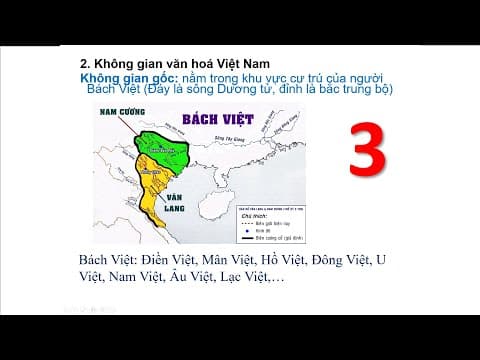
The cultural space of Vietnam can be visualized as a triangle, with its base extending from the southern regions along the Mekong Delta to the northern areas near the Red River. The apex of this triangle is located in the North Central region, particularly in Thanh Hóa and Nghệ An. This triangular formation represents the core area where the early Vietnamese communities, particularly the Kinh people, established their roots.
Historically, the Vietnamese people are descendants of various tribes, including the Âu Việt and Lạc Việt, which later unified to form the state of Âu Lạc. The historical narrative includes significant events such as the conquest of Âu Lạc by the Triệu dynasty in 179 BC and the subsequent period of Chinese domination, which lasted until the victory of Ngô Quyền in 938 AD at the Battle of Bạch Đằng River. This victory marked the beginning of Vietnam's independence and the establishment of its sovereignty.
Vietnam's cultural identity has been shaped by various influences over centuries, particularly from neighboring regions and cultures. The geographical location of Vietnam at the crossroads of Southeast Asia has facilitated cultural exchanges with both continental and insular Southeast Asia.
Vietnam's climate is characterized by high humidity and significant rainfall, which has influenced its agricultural practices and dietary habits. The traditional Vietnamese diet, primarily based on rice, vegetables, and fish, reflects the agricultural practices that have developed over time in response to the fertile alluvial plains.
The abundance of rivers and waterways has not only shaped the agricultural landscape but also the transportation and communication methods of the Vietnamese people. Historically, travel and trade were predominantly conducted via waterways, leading to a culture that is closely tied to its rivers. This connection is evident in various cultural practices, including traditional boat races and the significance of rivers in Vietnamese folklore.
Vietnam is home to 54 recognized ethnic groups, with the Kinh being the majority. Each ethnic group contributes unique cultural elements, enriching the overall cultural landscape of Vietnam. Despite this diversity, there exists a strong sense of unity among the various groups, often described as a harmonious blend of traditions and practices.
Language plays a crucial role in maintaining cultural identity. While the Kinh language dominates, many ethnic groups retain their languages, which are vital for preserving their cultural heritage. The interaction between different languages and cultures has led to a dynamic linguistic landscape in Vietnam.
Vietnam's cultural evolution has been marked by significant exchanges with various civilizations, including Chinese, Indian, and Western influences. The introduction of Buddhism from India and the subsequent spread of Confucianism from China have left lasting impacts on Vietnamese society.
The long period of Chinese rule introduced various cultural elements, including governance, philosophy, and art. However, the Vietnamese people have managed to retain their cultural identity, often adapting and integrating foreign influences into their own cultural framework.
The arrival of Western cultures, particularly during the colonial period, brought about significant changes in Vietnamese society. The introduction of the Latin alphabet for the Vietnamese language and the influence of Western education and religion have shaped modern Vietnamese culture.
The cultural foundations of Vietnam are a complex interplay of geographical, historical, and social factors. The triangular cultural space, the impact of climate, and the rich tapestry of ethnic diversity all contribute to a unique cultural identity. As Vietnam continues to evolve, it remains essential to recognize and celebrate the diverse influences that have shaped its cultural heritage, ensuring that the essence of Vietnamese culture is preserved for future generations.