This blog post explores the unique cultural blend of Islam and Buddhism in Qinghai, China, focusing on the Salar and Hui ethnic groups, their historical roots, and the architectural marvels of mosques that reflect this fusion.
In the heart of China, particularly in Qinghai province, a fascinating cultural blend exists where Islam meets Buddhism. This region is home to diverse ethnic groups, including the Salar and Hui people, who have rich histories and traditions that reflect their unique identities. This blog post delves into the architectural wonders, historical significance, and cultural practices that characterize this remarkable intersection.
The Salar people, believed to have originated from Central Asia, particularly Samarkand (modern-day Uzbekistan), share the Islamic faith. Their migration to China is said to have occurred over 800 years ago along the Silk Road. The Hui people, on the other hand, have a more mixed heritage, descending from Arab and Persian merchants who intermingled with various ethnic groups, including Mongols and Tibetans. This historical backdrop sets the stage for understanding the cultural dynamics in Qinghai.
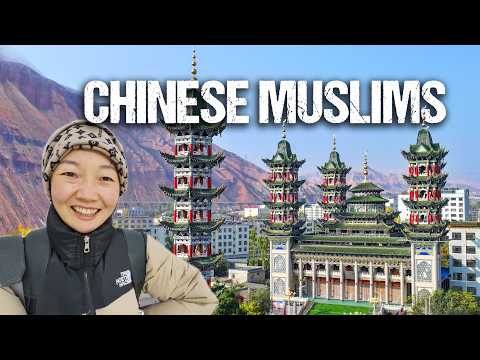
One of the most striking features of the mosques in Qinghai is their architectural style, which is heavily influenced by traditional Chinese design. For instance, the Ahetan Mosque, built during the Yuan dynasty in the 14th century, showcases a blend of Islamic and Chinese architectural elements. Its minaret resembles a traditional Chinese pagoda, constructed with wood and bricks, and features intricate wooden carvings.
The mosques in this region do not follow the typical dome structure found in many Islamic countries. Instead, they are built using traditional Chinese materials and techniques, such as interlocking brackets and mortise and tenon joints, without the use of nails. The minarets are often topped with Chinese-style pavilions, complete with flying eaves, creating a unique aesthetic that sets them apart from mosques elsewhere in the world.
Each mosque reflects a fascinating blend of Islamic calligraphy and Chinese painting, showcasing the creative freedom of builders who mix these two distinct cultural elements. The walls often feature Shanshui paintings, a traditional Chinese art form, alongside Islamic motifs, symbolizing the harmonious coexistence of these two faiths.
Eastern Qinghai and southern Gansu are home to some of the oldest and most vibrant Muslim communities in China, including the Hui, Salar, Dongxiang, and Baoan ethnic groups. The region is often referred to as the "Mecca of China" due to its rich Islamic culture and history. The majority of the population in areas like Xunhua Salar Autonomous County is Muslim, with many men wearing traditional white caps, a common headwear for Muslim men.
During my visit, I observed the daily life of the local Muslim communities. As prayer time approached, people gathered at the mosques, and I had the opportunity to witness the unique practices of the Salar people, including their use of the Salar language, distinct from the Mandarin spoken by the Hui. The presence of a handwritten Quran, believed to be one of the oldest in China, adds to the historical significance of the Salar community.
The journey through Qinghai is not just about cultural exploration; the natural landscapes are equally breathtaking. The region serves as a transitional zone from the Qinghai Tibetan plateau to the loess plateau, characterized by colorful mountains and clear waters of the Yellow River, which is often referred to as China's mother river.
While in Qinghai, I had the chance to visit several key attractions, including the Zhihe Monastery, known for its stunning Danxia landform, and the ancient Lajia ruins, which date back 4,000 years. These sites highlight the rich historical tapestry of the region, where different cultures and religions have coexisted for centuries.
Qinghai stands as a testament to the harmonious blend of Islam and Buddhism, where diverse ethnic groups have created a unique cultural landscape. The mosques, with their traditional Chinese architecture and Islamic features, symbolize this fusion beautifully. As I concluded my journey, I felt a sense of regret for the places I could not visit, but also a deep appreciation for the rich cultural heritage that Qinghai offers. This region is indeed a key point on the ancient Silk Road, where different ethnicities, cultures, and religions converge, creating a vibrant tapestry of life that continues to thrive today.