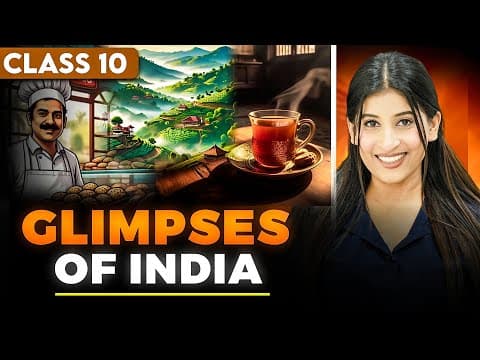
This blog post delves into three captivating stories from the chapter 'Glimpses of India', highlighting the traditional bakers of Goa, the scenic beauty and culture of Coorg, and the significance of tea in Assam, showcasing India's diverse heritage and customs.
In this blog post, we will explore three fascinating stories from the chapter "Glimpses of India". Each story offers a unique insight into the cultural heritage of India, focusing on the traditional bakers of Goa, the picturesque landscapes of Coorg, and the significance of tea in Assam. These narratives not only highlight the customs and traditions of these regions but also reflect the rich tapestry of Indian culture.
The story begins with the traditional bakers of Goa, known as "pader". This profession dates back to the Portuguese rule in India when bread became a staple in Goan households. The bakers were not just providers of bread; they were an integral part of the community, remembered fondly by the locals.
Bread making requires perfection in three key areas: mixing, molding, and baking. The old-fashioned ovens used for baking still exist in Goa, showcasing the continuity of this profession through generations. The descendants of these bakers continue to uphold this tradition, ensuring that the art of baking remains alive.
In the past, bakers would visit homes twice a day, ringing a bamboo stick adorned with bells to announce their arrival. Children would rush out to greet them, eager to buy sweet bread rings known as "bread bangles". The bakers would first greet the lady of the house before handing over the bread to the household servants, known as "paskin" and "bustin".
Bakers played a vital role in various celebrations, with specific breads associated with weddings and festivals. For instance, marriages were considered incomplete without the traditional sweet bread called "bol". Mothers would prepare sandwiches for their daughters' engagement ceremonies, and coconut cookies, known as "bolinhas", were essential for Christmas celebrations.
The second story takes us to Coorg, a small district in Karnataka, often referred to as the "Scotland of India". Known for its evergreen forests, coffee plantations, and diverse wildlife, Coorg is described as a piece of heaven descended from a heavenly kingdom.
Coorg is inhabited by brave and beautiful people, known for their hospitality. The locals are believed to have Greek and Arabic ancestry, with stories tracing back to Alexander the Great's army and the unique dress they wear, which resembles traditional Arabic attire.
The Coorgi people are renowned for their bravery and have a rich history of valor. The Coorg regiment has garnered the highest number of honors in the Indian Army, and they are the only community in India allowed to carry firearms without a license.
Coorg is also famous for its wildlife, with the Kaveri River flowing through its hills and forests. The region offers various adventure sports such as rafting, rock climbing, and mountain biking, attracting tourists from all over.
The final story revolves around Pranjal, a young boy from Assam, and his friend Rajveer. As they travel to Pranjal's home, they encounter a tea vendor selling hot cups of tea on the train. Rajveer shares fascinating facts about tea consumption worldwide, highlighting that around 80 crore cups of tea are consumed daily.
Pranjal's father manages a tea garden, and as they arrive at the garden, they notice neatly trimmed tea plants lining the road. Rajveer explains the significance of the "second flush" season, which yields the best quality tea from May to July.
Rajveer narrates two interesting stories about tea: one about a Chinese emperor who accidentally discovered tea when leaves fell into his boiling water, and another about a Buddhist monk, Bodhidharma, who cut off his eyelids to stay awake during meditation, leading to the emergence of tea plants from his eyelids.
As Pranjal and Rajveer reach the tea estate, they are captivated by the beauty of the tea gardens and the rich culture surrounding tea production. This journey through Goa, Coorg, and Assam not only showcases the diversity of Indian culture but also emphasizes the importance of preserving these traditions for future generations.
In conclusion, the stories of the baker from Goa, the scenic beauty of Coorg, and the cultural significance of tea from Assam reflect the rich heritage of India, inviting us to appreciate and celebrate our diverse customs and traditions.