Exploring the Ethical Implications of Famine, Affluence, and Morality
This blog post delves into Peter Singer's arguments regarding moral obligations to assist those in need, addressing common objections related to proximity, collective responsibility, and the distinction between entitlement and moral desert.
In the discourse surrounding global poverty and famine, philosopher Peter Singer presents compelling arguments about our moral obligations to assist those in need. This blog post will explore some of the key objections to Singer's views and his responses to them, providing a comprehensive understanding of the ethical implications of affluence and morality.
The Proximity Objection
One of the foremost objections to Singer's argument is the proximity objection, which posits that our moral obligation to help is diminished when those in need are far away. Critics argue that distance creates a psychological barrier, making it easier to ignore the plight of those we cannot see.
Singer counters this objection by asserting that proximity does not alter our moral responsibilities. He emphasizes that modern infrastructure allows aid to be directed effectively to those in need, regardless of distance. As he states, "expert observers and supervisors sent out by famine relief organizations can direct our aid to a refugee in Bengal almost as effectively as we could get it to someone on our own block." This assertion holds even more weight today, given the advancements in technology and communication that facilitate rapid aid distribution.
Furthermore, Singer addresses the skepticism some individuals feel towards charitable organizations. He argues that mere distrust is insufficient to dismiss the moral obligation to help. Instead, he encourages individuals to research charities and rely on evidence of their effectiveness, rather than allowing unfounded biases to dictate their actions.
The Collective Responsibility Objection
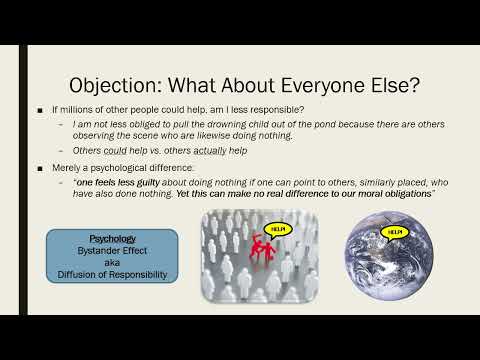
Another common objection arises from the tendency of individuals to point to others when confronted with the need for assistance. Many argue, "Why should I help when there are millions of others who could also help?" This perspective suggests that the presence of others diminishes personal responsibility.
To illustrate the flaw in this reasoning, Singer uses the analogy of a drowning child. If you are walking with friends and encounter a drowning child, the presence of others does not absolve you of your responsibility to help. If your friends act to save the child, your obligation may lessen, but if they do nothing, you are still morally compelled to intervene.
Singer highlights that the psychological effect of seeing others in similar situations can lead to a diffusion of responsibility, where individuals feel less accountable for taking action. However, he maintains that this psychological phenomenon does not change our moral obligations. Each person must assess their capacity to help, regardless of the actions of others.
The Hard Work and Entitlement Objection
A prevalent objection to the moral obligation to assist others is the belief that individuals should not be expected to help because they have worked hard for their money. This argument hinges on the distinction between entitlement and moral desert.