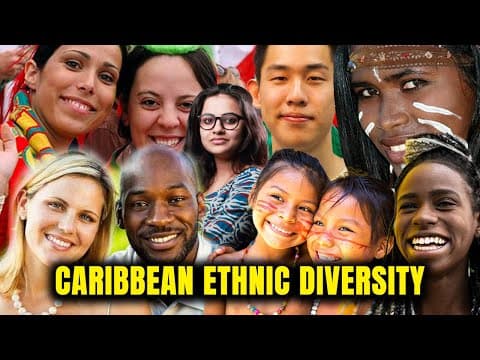
The Caribbean is a region rich in ethnic diversity, shaped by indigenous peoples, European colonization, African slavery, and immigration from India, China, and Portugal. This blog post delves into the various ethnic groups that contribute to the Caribbean's unique cultural identity, highlighting their histories and impacts on the region.
The Caribbean is one of the most ethnically diverse regions in the Western Hemisphere. With a broad geographic and cultural scope, the ethnicities across the region vary widely. Despite these differences, a sense of pan-Caribbean identity unites all Caribbean people. This article will explore the various ethnic identities in the Caribbean, tracing their origins and contributions to the region's rich cultural tapestry.
The first ethnic group to consider is the Amerindians, the ancestrally indigenous people of the Caribbean. This group encompasses a vast array of distinct tribes, including the Carib, Arawak, and Taino, who migrated from South America. These indigenous peoples inhabited the Caribbean for hundreds of years before the arrival of Europeans, engaging in cultural exchanges with other civilizations, including the Mayans and Aztecs.
Unfortunately, the arrival of Europeans brought diseases, enslavement, and persecution, leading to a drastic decline in the indigenous population. Today, descendants of these groups can still be found in pockets of the region, particularly in countries like Guyana, Suriname, and Dominica, where small indigenous populations persist.
Following the indigenous peoples, the next significant group in the Caribbean's ethnic landscape is those of European descent. The first Europeans to arrive were the Spanish in 1492, led by Christopher Columbus. Soon after, the Portuguese, English, Dutch, and French established colonies in the Caribbean, bringing with them hopes of new beginnings and wealth.
While Europeans initially constituted the majority of the population, their numbers were soon surpassed by the next group that would shape the Caribbean's demographic makeup.
The most profound impact on the Caribbean's ethnic identity came from the African diaspora. Although there is evidence that African sailors arrived in the Caribbean before Europeans, the majority were brought as slaves during the Atlantic slave trade, beginning in the 16th century. These enslaved Africans primarily came from regions such as Ghana, Ivory Coast, and Guinea.
Slavery lasted for over 300 years, inflicting severe psychological and social damage that continues to affect Caribbean society today. The overwhelming majority of Caribbean people are of African descent, with significant populations in Haiti, Cuba, Jamaica, the Dominican Republic, and Trinidad and Tobago.
Another major ethnic group in the Caribbean is the East Indians. Following the abolition of slavery in 1838, a labor shortage led to the introduction of indentured servitude, bringing nearly half a million East Indians to the Caribbean. This group became particularly prominent in Guyana, Trinidad and Tobago, and Suriname.
In Trinidad and Tobago, East Indians represent 38% of the population, while in Guyana, they make up 44%. Their cultural influence is evident in the region's cuisine and festivals, enriching the Caribbean's cultural landscape.
The Caribbean also has a notable population of Chinese descent. Between 1853 and 1879, approximately 14,000 Chinese laborers were brought to the British Caribbean to work on sugar plantations. Over time, many Chinese immigrants settled in Jamaica, Trinidad, and Guyana, contributing to the region's diversity.
Today, Jamaica has the largest population of Chinese Caribbeans, followed by the Dominican Republic and Cuba. Their influence can be seen in various aspects of Caribbean culture, particularly in culinary traditions.
The Portuguese, particularly those from the Madeira Islands, were also brought to the Caribbean as indentured laborers. Although their numbers were smaller compared to other ethnic groups, they established communities in Guyana, Suriname, and Trinidad and Tobago. The Portuguese contributed to the agricultural development of the region and have left a lasting cultural impact.
In addition to the major ethnic groups, the Caribbean is home to smaller communities that have integrated into the region's diverse culture. Arabs, for example, have established communities in several Caribbean nations, including Haiti, Cuba, and Trinidad and Tobago. Their presence is marked by the establishment of mosques and cultural contributions.
The Caribbean is a vibrant mosaic of ethnicities, each contributing to the region's unique identity. From the indigenous peoples to the descendants of European colonizers, enslaved Africans, and immigrants from India, China, and Portugal, the Caribbean's cultural landscape is shaped by a complex history of migration and integration.
Despite their diverse origins, the people of the Caribbean share a common identity that transcends individual backgrounds. The rich cultural influences from various ethnic groups have created a dynamic society where food, music, and traditions reflect a blend of histories. Ultimately, the Caribbean stands as a testament to the resilience and unity of its people, celebrating their shared identity as Caribbean first.