Wade Davis discusses the importance of cultural diversity and the threats facing indigenous peoples and their languages. He emphasizes the need to recognize the ethnosphere as humanity's legacy and the value of different worldviews in understanding our place on Earth. Through stories of various cultures, he illustrates the resilience of indigenous peoples and the significance of preserving their ways of life for future generations.
Travel and ethnographic research offer unique pleasures, particularly the chance to engage with cultures that have preserved ancient traditions. Wade Davis, an anthropologist, shares insights into the richness of these cultures and the critical importance of their survival in the modern world.
Davis introduces the concept of the ethnosphere, which he defines as the sum of all thoughts, dreams, myths, and ideas generated by human imagination throughout history. This cultural web is as vital to the planet's well-being as the biological web of life, known as the biosphere. However, the ethnosphere is under severe threat, with cultural diversity eroding at an alarming rate.
At the time of Davis's talk, there were approximately 6,000 languages spoken worldwide. Tragically, half of these languages are no longer being taught to children, leading to their extinction. Each language embodies the spirit of its culture, and the loss of a language signifies the loss of a unique worldview and wisdom. Davis poignantly describes the loneliness of being the last speaker of a language, emphasizing the urgency of preserving linguistic diversity.
Davis takes the audience on a journey through various cultures, illustrating the profound differences in worldviews. For instance, he describes the Barasana people of the Northwest Amazon, who do not distinguish between blue and green due to their deep connection with the forest. Their unique marriage customs and linguistic practices highlight the intricate relationship between language, culture, and identity.
Davis recounts his experiences with the Waorani, a tribe known for their fierce resistance to outsiders. Their remarkable knowledge of the rainforest contrasts sharply with their violent intertribal conflicts. This juxtaposition illustrates the complexity of human societies, where deep cultural knowledge coexists with practices that may seem contradictory.
Davis shares his experiences in Haiti, where he studied Vodoun, often misunderstood as a black magic cult. Instead, he reveals it as a rich metaphysical system that connects the living with the spirits of the dead. The rituals and beliefs surrounding Vodoun demonstrate the profound relationship between culture and spirituality, challenging Western perceptions of religion.
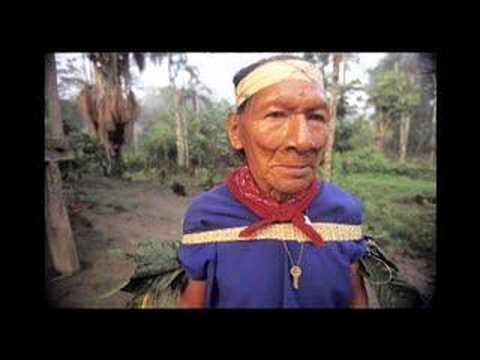
One of the most striking cultures Davis discusses is the Kogi of Colombia, descendants of the Tairona civilization. Their unique initiation practices and belief in maintaining ecological balance through prayer highlight their deep connection to the land. The Kogi view themselves as the "elder brothers" of humanity, urging the younger brothers (modern society) to protect the Earth.
Davis emphasizes that the threat to indigenous cultures is not merely a result of change or technology but stems from power dynamics and domination. He illustrates this with examples of deforestation affecting the Penan people and the impact of gold mining on the Yanomami. The destruction of cultural practices and languages is often overlooked in favor of development, leading to what Davis terms "ethnocide."
Despite the challenges they face, indigenous peoples demonstrate remarkable resilience. Davis shares a story of an Inuit elder who survived against all odds, symbolizing the strength and ingenuity of indigenous cultures. The Canadian government's recognition of Inuit land rights serves as a hopeful example of restitution and respect for indigenous sovereignty.
Davis concludes by urging the audience to appreciate the diversity of human cultures. He warns against the dangers of a homogenized world, where unique perspectives and ways of life are lost. By embracing the ethnosphere, we can foster a multicultural world that values all forms of wisdom and experience. Davis's work with National Geographic aims to tell these stories, inspiring a deeper understanding of the importance of cultural preservation for future generations.
In a world increasingly defined by uniformity, the call to recognize and celebrate our diverse cultural heritage is more crucial than ever. Through storytelling and engagement, we can ensure that the rich tapestry of human experience continues to thrive.