The discussion delves into the existence of God through a philosophical and mathematical lens, exploring concepts of reality, consciousness, and the properties attributed to God across various religions. It posits that God exists as the central principle of reality, harmonizing consciousness and processing within the universe.
In a thought-provoking discussion, the concept of God is examined through the lens of a Theory of Everything. The conversation begins with a fundamental question: Does God exist? The assertion is made that reality itself has an identity, which can be equated with the existence of God.
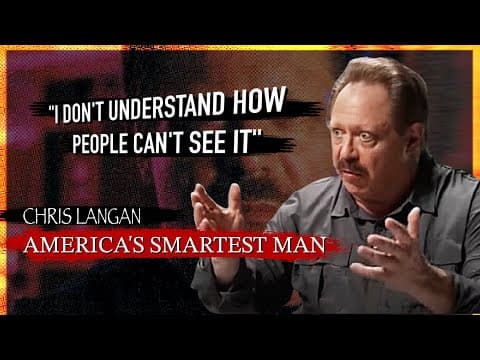
The speaker draws a parallel to the biblical account of Moses at the burning bush, where God identifies Himself as "I am that I am." This notion of identity is central to understanding reality. The mathematical structure proposed in the CTMU (Cognitive-Theoretic Model of the Universe) serves as a framework for building a coherent understanding of reality.
Once this framework is established, the properties of this identity can be explored. The speaker argues that these properties align with the characteristics of God as described in major world religions, including Buddhism, Daoism, and Hinduism. Each of these religions, while differing in their views, ultimately points to a central principle or consciousness that can be interpreted as God.
The properties attributed to God include omniscience, omnipotence, and omnipresence. Additionally, the speaker emphasizes that God must possess consciousness, allowing for a personal relationship between God and humanity. This relationship is likened to a mapping process where God reflects Himself in each individual.
The discussion also touches on the nature of the universe and whether God is confined to it or exists outside of it. The speaker introduces the simulation hypothesis, suggesting that our perceived reality may be a simulation, with God encompassing both the display of this simulation and the processing aspect behind it.
Consciousness is a key theme in this exploration. The speaker posits that consciousness exists throughout the universe, with varying levels of awareness. This leads to the idea that even inanimate objects may possess a form of generic consciousness, relying on human consciousness for recognition and interaction.
The conversation further delves into the relationship between consciousness and reality, suggesting that reality is not a fixed entity but rather a generative process. This perspective aligns with the principles of quantum mechanics, where events are probabilistic and not strictly determined.
A significant portion of the discussion revolves around the afterlife and the consequences of one's actions. The speaker asserts that individuals persist after death, with their fate determined by their relationship with God. If one denies God's existence or offends Him, they risk being cut off from divine presence, leading to a self-created hell.
The concept of hell is explored through the lens of John Milton's assertion that the mind can create its own reality, emphasizing the mental aspect of existence. The speaker argues that reality encompasses both physical and mental dimensions, making thoughts and intentions a crucial part of one's experience.
The conversation concludes with a discussion on the existence of spiritual entities such as angels and demons. The speaker affirms their reality, suggesting that the presence of evil, represented by Satan, is necessary for defining the nature of God. This duality highlights the complexity of existence and the interplay between good and evil.
In summary, the exploration of God's existence through philosophical and mathematical frameworks reveals a profound understanding of reality, consciousness, and the moral implications of our actions. The insights presented challenge conventional views and invite deeper contemplation on the nature of existence and the divine.