This blog post delves into the philosophical and spiritual implications of whether other people are real, suggesting that they are reflections of a single underlying consciousness rather than separate entities. It explores the concepts of non-duality, the nature of reality, and the interconnectedness of all beings, emphasizing that our interactions with others are opportunities for spiritual growth and self-realization.
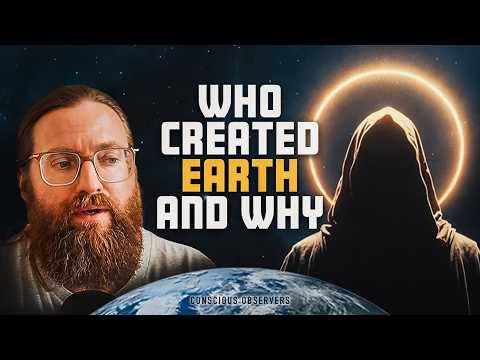
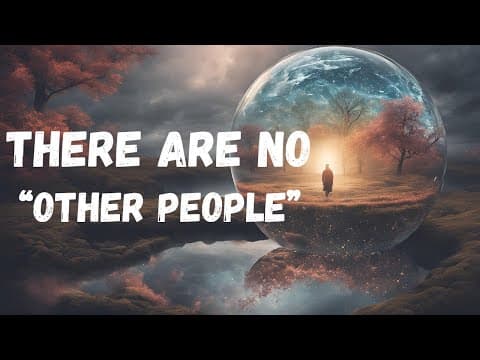
What if I told you that the people you interact with, the faces you see, and the voices you hear might not be real? Imagine for a moment that everything you know, including the people in your life, is part of a vast, intricate simulation, not unlike the vivid, immersive dreams we sometimes experience but never question in the moment. This idea might sound like science fiction, but for those who have delved deep into the realms of non-duality, spiritual enlightenment, and awakened spirituality, it is a concept worth exploring.
In the teachings of non-duality, we are constantly reminded that separation is an illusion. At the deepest level of existence, there is no other. The concept that others exist apart from us is a construct of the mind, a byproduct of living within a world defined by duality. In our everyday experience, we view ourselves as individuals interacting with a world filled with other individuals. However, this experience, as real as it feels, may be no different from a dream—a collective projection shaped by our minds.
We often mistake the form for reality, forgetting that at the core, there is only one consciousness, one being that permeates all. The question of whether other people are real becomes far more profound when seen through the lens of spiritual growth. The awakened mind begins to see through the veils of illusion and starts to perceive that all interactions and all people are reflections of the same underlying consciousness.
In this sense, other people are not truly separate from us; they are different expressions of the same source that animates us. They are real in the same way that we are real, but not in the way we typically understand it. They exist, but only as facets of the same diamond, not as separate entities with independent existence.
In non-dual philosophy, everything is consciousness. This consciousness is the source of all experiences, perceptions, and interactions. It is the backdrop upon which the entire play of life unfolds. Every person you meet, every relationship you form, is a projection of this single unified consciousness, shaped by the belief in separation.
What happens when the belief in separation dissolves? What occurs when the realization dawns that everything is interconnected and that the self you cling to as a distinct individual is not real? For the spiritually awakened, this shift in perception is both liberating and disorienting. In awakening, there is a profound sense of recognition—what some refer to as self-realization—that there is only one consciousness experiencing itself through countless forms.
This means that the person standing next to you, the stranger on the street, your closest friend, and even your greatest enemy are all you. They are manifestations of the same consciousness wearing different masks, playing different roles in this grand cosmic theater. Thus, in a sense, they are real and unreal simultaneously. They exist within the simulation of life, but beyond the simulation, they are merely reflections of the same source.
If we dive deeper into this concept, we must confront the idea of a simulated reality. However, this simulation is not run by machines or technology; it is a simulation created by the mind, by consciousness itself. The spiritual journey is one of waking up to the recognition that what we perceive as the external world, including other people, is a reflection of the internal.
Everything we see, hear, and experience is filtered through the lens of consciousness. The people in your life are reflections of your inner state—your beliefs, thoughts, and emotions. They are real in the sense that they exist as experiences within the simulation, but they are not independent entities outside of it.
One of the core teachings of non-duality is that there is no objective world out there. The external world and the people within it exist only as experiences in consciousness. They are projections, much like characters in a dream. When you dream at night, the people you interact with feel real while you're dreaming, but upon waking, you realize that they were simply constructs of your mind—reflections of your consciousness in a dream state.
This waking life can be seen in a similar light from the perspective of spiritual enlightenment. When we awaken to the reality of oneness, the illusion of otherness begins to fade. We no longer see ourselves as separate from the people around us, nor do we see others as independent self-contained beings. Instead, we recognize that every interaction, every relationship, is a form of communication between different aspects of the same consciousness.
This realization can lead to profound compassion and empathy. How could you harm another when that other is, at the deepest level, yourself? In this view, the reality of others becomes secondary to the realization of unity. The simulation we experience—this world of form, time, and space—is not inherently real; it is a temporary projection of consciousness, a stage upon which the dance of life unfolds.
So, are other people real? The answer depends on how you define reality. From the perspective of the mind and the ego, others are real and distinct. But from the perspective of awakened consciousness, others are not separate; they are merely different expressions of the same underlying reality.
Spiritual growth often involves the gradual dissolution of the ego—the sense of being a separate individual self. As this process unfolds, the illusion of separation between self and other begins to break down. We start to see through the veil of duality and recognize that we are not isolated beings living in a world full of others. Instead, we are part of an interconnected web of consciousness where the boundaries between self and other dissolve.
This shift in perception can be jarring at first because it challenges the very foundation of how we've been taught to understand the world. Yet, the more we open ourselves to this truth, the more we begin to see that the external world, including the people in it, is a reflection of our internal state. The people in your life are mirrors showing you different aspects of yourself. Some of these mirrors reflect qualities you love, while others reflect qualities you may find difficult to accept.
Whether you like what you see or not, these reflections are all part of your spiritual growth. They are opportunities to learn, to heal, and to awaken further to the truth of your being. In this simulated reality, the roles that people play in your life are not random. Each person serves a purpose, even if that purpose is not immediately clear. Some may come into your life to help you grow, while others may trigger deep emotional reactions that lead you to confront unresolved aspects of yourself.
The simulation provides the perfect environment for spiritual evolution because it constantly reflects back to you what you need to see in order to awaken. When we ask, "Are other people real?" we are essentially questioning the nature of reality itself. In the spiritual journey, reality is not defined by form but by consciousness.
The people in your life, whether close or distant, are real in the sense that they exist within the dream of consciousness. They are characters in the story you are currently experiencing. However, just like characters in a dream, ultimate reality lies in the consciousness that dreams them into existence. This understanding doesn't diminish the significance of your relationships or the experiences you share with others; instead, it deepens them.
It allows you to approach every interaction with the awareness that you are interacting with another aspect of yourself, another expression of the same consciousness. The more we embrace this perspective, the more we begin to see that separation is the true illusion. In reality, there is only one consciousness, one being experiencing itself through the myriad forms of life.
The people you encounter in this life are real in so far as they exist as experiences within this unified field of consciousness, but they are not separate from you. Their existence is intertwined with yours, and your spiritual growth is interconnected with theirs. As you awaken, you begin to recognize the truth of this oneness, and the illusion of otherness begins to dissolve.
Spiritual enlightenment is not about escaping the world or denying the reality of others; it is about seeing the world and the people in it for what they truly are—expressions of the same infinite consciousness. In this sense, the people in your life are as real as you are, but their reality is not separate from yours. You are all part of the same dream, the same cosmic play unfolding within the vastness of consciousness. The question of whether other people are real in a simulated reality becomes less important when we recognize that the simulation itself is a tool for awakening. The people in your life are part of that process; they are not random or insignificant. They are essential aspects of your journey towards self-realization. Every interaction, every relationship is an opportunity to see through the illusion of separation and to recognize the underlying unity that connects all of life.