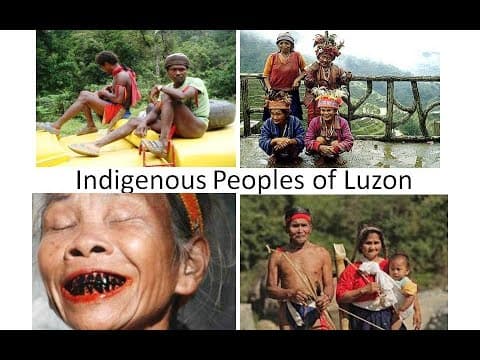
This blog post delves into the diverse indigenous communities of Luzon, Philippines, focusing on the Negrito groups, Ivatan people, Cordillera peoples, and the challenges they face today, including displacement and loss of language.
In this exploration of the indigenous peoples of Luzon, we will examine various communities, their histories, cultures, and the challenges they face today. This overview is presented by Dr. Nestor Castro, a professor of anthropology at the University of the Philippines.
The term "Negrito" derives from the Spanish word meaning "small black" and refers to the aboriginal peoples of the Philippines. Believed to have migrated from mainland Asia approximately 30,000 years ago, Negritos are found throughout the Philippine archipelago, including Luzon.
In Luzon, Negrito groups are known by various names, including the Aeta and the Batak. These communities have distinct linguistic and cultural identities. For instance, the Aeta are primarily located in the mountainous regions, while the Batak inhabit Palawan. Traditionally, these groups engage in hunting and gathering, with some remaining nomadic.
Negritos have lost many of their original languages and now speak Austronesian languages borrowed from neighboring populations. Their traditional practices include nomadic hunting and gathering, which are increasingly rare in the modern world.
The Ivatan people inhabit the Batanes Islands, which are situated within the typhoon belt. Historically, they were pushed back into Taiwan during Spanish colonization.
Ivatan culture has adapted to the frequent typhoons, leading to unique agricultural practices such as land fragmentation and the cultivation of root crops like yam and taro. Their traditional houses, originally made of logs, are now constructed from stone with thatched roofs to withstand harsh weather.
The Ivatan people possess a rich linguistic heritage, with specific terms for different types of typhoons, showcasing their deep understanding of their environment.
The Cordillera region is home to various indigenous groups, including the Ifugao, Bontoc, and Kalinga. These communities inhabit the largest mountain range in the Philippines and have a complex social structure based on autonomous villages called "ili."
The Cordillera peoples have a rich cultural heritage, including rice terraces and traditional houses. They practice a unique form of land ownership that is often not recognized by the state, leading to conflicts over land rights.
The Cordillera peoples have faced significant challenges, including displacement due to development projects. A notable figure in their history is Macli-ing Dulag, a Kalinga leader who opposed the construction of hydroelectric dams that threatened their ancestral lands. His legacy is celebrated annually on Cordillera Day.
Indigenous communities in Luzon face ongoing threats from displacement due to ethnic migration, government projects, and large-scale mining operations. Many indigenous peoples lack formal land titles, making them vulnerable to encroachment.
The languages of Negrito groups are among the most endangered in the Philippines, with many communities losing their linguistic heritage.
Planned large-scale mining projects and hydropower developments pose significant risks to indigenous lands and cultures. These projects often lead to conflicts between indigenous peoples and government or corporate interests.
The indigenous peoples of Luzon represent a rich tapestry of cultures and histories that are increasingly threatened by modern development and environmental changes. Understanding their struggles and preserving their heritage is crucial for ensuring their survival and the continuation of their unique identities.
For further inquiries or discussions, Dr. Nestor Castro invites interested individuals to reach out via email or subscribe to his YouTube channel for more insights into the lives and cultures of these indigenous communities.