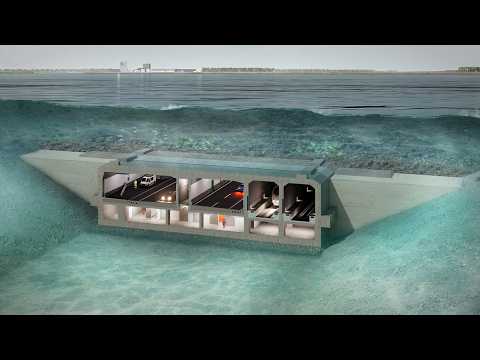
Immersed tube tunneling is a revolutionary construction technique that allows for the creation of underwater tunnels without the need for deep boring. This blog post delves into the complexities, advantages, and challenges of this method, highlighting its significance in modern engineering.
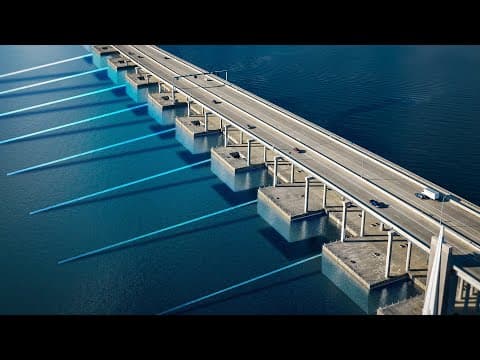
The construction of infrastructure over navigable waterways often presents significant challenges, particularly when it comes to bridges. The original plan for I-95 over the Baltimore Harbor was to build a double-deck bridge, but this posed a problem: the bridge would need to be extremely high to allow large ships to pass underneath. This would overshadow Fort McHenry, a historical landmark that played a crucial role in the War of 1812 and inspired the national anthem. To preserve the character of this landmark, engineers opted for a more innovative solution: constructing a tunnel beneath the harbor using a method known as immersed tube tunneling.
Immersed tube tunneling is a construction technique where tunnel sections are prefabricated and then installed from the water surface, rather than boring through soil and rock as seen in traditional tunneling methods. This approach simplifies the construction process and allows for the creation of tunnels that are both efficient and cost-effective.
At first glance, immersed tube tunneling may seem straightforward, but it involves a series of complex steps:
Immersed tube tunnels offer several advantages over traditional tunneling methods:
The installation of immersed tube tunnels is a delicate process:
The joints between tunnel segments are critical for the integrity of the structure. They must accommodate small movements due to temperature changes and water pressure. The initial seal is created by the rubber gaskets, and once the segments are in place, valves are opened to drain water between them, enhancing the seal through hydrostatic pressure.
While immersed tube tunneling has many benefits, it is not without its downsides. The dredging required for construction can disrupt marine habitats and stir up sediment, potentially releasing contaminants. Mitigation strategies, such as using sealed clamshell buckets, can help reduce these impacts, but some level of disturbance is unavoidable.
Around 150 immersed tube tunnels have been constructed worldwide, with notable examples including:
Immersed tube tunneling is a fascinating engineering method that combines simplicity with complexity. The process of constructing these tunnels is akin to assembling a massive puzzle underwater, requiring precision and careful planning. As engineering continues to evolve, the development of immersed tube tunnels will likely play a significant role in future infrastructure projects, providing efficient solutions for navigating challenging waterways. The ingenuity behind this method exemplifies the remarkable capabilities of modern engineering, allowing us to create pathways that seamlessly connect communities while preserving historical landmarks and minimizing environmental impact.