The Washington Bridge in Rhode Island, initially deemed safe, faced imminent collapse due to design flaws and poor maintenance, leading to its demolition and a complex legal battle over responsibility.
The Washington Bridge, which carries I-195 over the Seekonk River in Providence, Rhode Island, has become a focal point of engineering scrutiny following its abrupt closure in early 2024. Initially marked as being in poor condition yet passing inspection in July 2023, the westbound span of the bridge was closed just six months later due to imminent collapse risks. This incident has not only caused significant traffic disruptions but has also raised questions about the complexities of bridge design, maintenance, and inspection protocols.
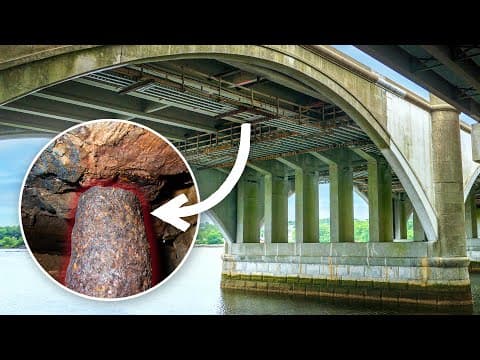
The original bridge over the Seekonk River was completed in 1930, featuring a graceful design with concrete and stone multiple arch spans. However, as traffic increased, particularly after the expansion of I-195 in 1959, the need for a new bridge became apparent. The federal government proposed a simple steel girder bridge, but Rhode Island insisted on a design that matched the aesthetic of the historic bridge. Eventually, a compromise was reached, leading to the construction of a bridge with false concrete arch facades.
The Washington Bridge was unique in its design, featuring 18 spans of varying structural types. The engineers utilized both post-tensioned and pre-tensioned beams, a relatively new construction method at the time. The cantilever beams, which were supported at their center, posed a challenge in terms of balance and structural integrity. To mitigate potential rotation at the piers, tie-down rods were installed on the unbalanced cantilevers.
However, as the bridge aged, significant issues began to surface. During a construction project aimed at repairing damaged concrete and widening the deck, engineers discovered that several tie-down rods were broken. A detailed inspection revealed that half of the unbalanced cantilevers were not performing as designed, prompting the Rhode Island Department of Transportation to close the bridge.
As investigations progressed, engineers found alarming conditions within the bridge's structure. The concrete was deteriorating due to freeze-thaw cycles, and the post-tensioning system was compromised. Corroded anchorages and voids in the cable ducts indicated severe neglect in maintenance. The inspections revealed that the bridge was not only unsafe for traffic but also that failure could occur without visible warning signs.
One of the critical questions raised by this situation is why these issues were not identified during routine inspections. Access limitations meant that many structural elements, such as the tie-down rods and post-tension anchorages, were not adequately visible to inspectors. Historical inspection reports showed little mention of these crucial components, raising concerns about the thoroughness of the inspection process.
In August 2024, the state of Rhode Island filed a lawsuit against 13 companies, including those responsible for the bridge inspections, alleging negligence in identifying the structural issues. This legal battle, compounded by a federal investigation into potential misuse of funds, has turned the situation into a high-stakes conflict.
Faced with the overwhelming evidence of structural failure and the complexity of potential repairs, the state ultimately decided to demolish the bridge entirely. The demolition process has been fraught with challenges, including contractor hesitance due to the bridge's deteriorating condition and the associated risks. The state has since revised its approach, opting to demolish not only the bridge but also its substructure to ensure a clean slate for future construction.
The Washington Bridge saga serves as a cautionary tale about the importance of thorough inspections and the risks associated with hidden structural elements. The design decisions made decades ago, driven by aesthetic considerations and budget constraints, have led to a situation that could have resulted in catastrophic failure.
While the bridge's collapse is a significant setback for Rhode Island, it also highlights the necessity for proactive infrastructure management. As the state moves forward with plans for a replacement bridge, it is crucial to learn from these mistakes to prevent similar issues in the future.
The Washington Bridge incident underscores the complexities of bridge engineering and the critical need for rigorous maintenance and inspection protocols. As Rhode Island navigates the aftermath of this collapse, the lessons learned will be vital in shaping the future of infrastructure in the state and beyond. The ongoing legal battles and the eventual construction of a new bridge will be closely watched as a reflection of how we manage and maintain our critical infrastructure.