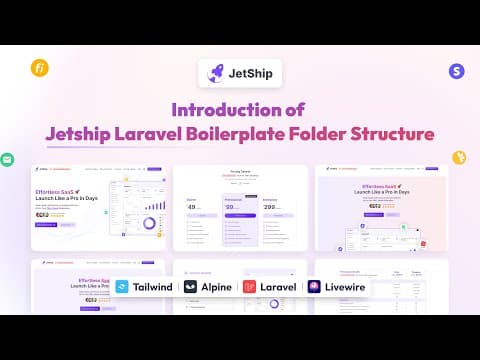
This blog post provides a comprehensive overview of the folder structure of the JetShip Laravel Boilerplate, detailing the purpose and contents of each directory and file, which aids developers in understanding and utilizing the framework effectively.
Welcome to our detailed exploration of the JetShip Laravel Boilerplate folder structure. In this post, we will walk through each directory and file, explaining their purposes and how they contribute to the overall functionality of the framework. This guide is essential for developers looking to maximize their efficiency while working with JetShip.
The JetShip Laravel Boilerplate is designed to streamline the development process by providing a well-organized folder structure. Understanding this structure is crucial for effective project management and development.
The first directory is vs code, which contains all the settings and configurations for Visual Studio Code. It also includes a list of recommended extensions that developers should install to enhance their development experience.
The app directory is the core of any Laravel project. Here, we will explore its subdirectories:
The bootstrap directory contains files that bootstrap the framework, including a cache directory for performance optimization and a providers file listing all service providers used in the project.
This directory holds all configuration files for the application. Familiarizing oneself with these files is crucial for understanding the available configurations.
The database directory includes database factories, migrations, and seeders. It is essential for managing database structure and initial data.
This directory supports the building of HTML emails, containing all related files, settings, and configurations.
Contains all package dependencies required to run the project.
The public directory is the entry point for all requests to the application, containing the index.php file and static assets like images and JavaScript files.
The resources directory includes:
The routes directory defines all route configurations, including API routes, console commands, and web routes for user interactions.
This directory is critical for storing various types of data, including logs, cache files, user uploads, and session files. It contains three subdirectories: app, framework, and logs.
The tests directory is where all test cases for unit testing are written. It includes configuration files for the testing framework.
The vendor directory contains all Composer dependencies required for the project.
In addition to the directories, several important files are present:
In this post, we have thoroughly explored the folder structure of the JetShip Laravel Boilerplate. Understanding this structure is vital for developers to effectively utilize the framework and streamline their development process. We hope this guide has been helpful in enhancing your knowledge of JetShip. Thank you for reading!