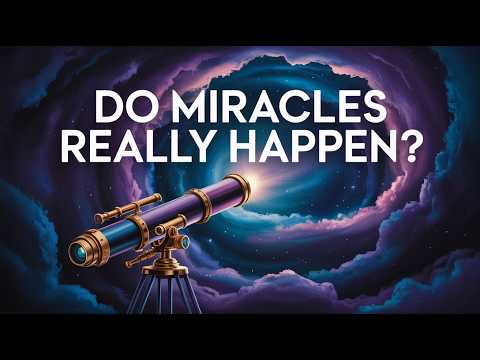
This blog post delves into the concept of miracles, examining their definitions, the psychological factors behind belief in them, and the implications of such beliefs on human behavior and society. It argues that while miracles are often seen as extraordinary events, they can often be explained through natural laws and human perception, emphasizing the importance of critical thinking and action over reliance on supernatural explanations.
The word miracle carries an emotional weight that often makes us pause and wonder if the universe has taken a break from its natural laws. But what is a miracle really? Most people define it as something extraordinary that cannot be explained by natural laws, suggesting divine intervention. This powerful claim leads us into the realm of belief, where things can become blurry.
When someone claims to have seen a dog with wings flying across the sky, most would question the validity of such a statement. They would seek explanations: Was it a drone? A hallucination? A misunderstanding? However, when the claim is religious in nature—such as a bleeding statue or a sudden healing—people often hesitate to question it. This hesitation arises because miracles come with built-in stories, meanings, and messages from a higher power. In moments of desperation, grief, hope, or fear, people desire these events to mean something significant.
Just because something feels meaningful does not make it true. No miracle has ever been verified under controlled conditions. There are no documented cases of amputated limbs regrowing instantly on camera, nor has any prayer been proven to change the laws of physics. The miracles people believe in tend to occur in private, undocumented, and unverifiable settings, often passed down as anecdotes that change over time. This is not necessarily due to dishonesty; rather, human perception is unreliable, and our memories can be flawed, especially when emotions are involved.
Eyewitness testimony is often the least reliable form of evidence in court, yet it is the most common form of evidence when discussing miracles. Stories like, "My aunt was sick, and the doctor said there was no hope, but then she got better overnight," are compelling. While these personal accounts are moving, statistically unexplained recoveries do occur, often due to misdiagnosis, spontaneous remissions, placebo effects, or sheer luck. In hospitals, unexpected recoveries are labeled statistical outliers, while in religious contexts, they are deemed miracles.
When examining historical miracles—such as parting seas, turning water into wine, or raising the dead—these claims are often found only in religious texts written decades or centuries after the events supposedly occurred. These texts are in languages that most modern believers cannot read. We would not accept ancient texts about dragons or gods transforming into animals as literal truth, yet miracles often receive a pass.
Interestingly, as technology has advanced, miracles have become less dramatic and more subtle, shifting from physical manifestations to emotional experiences. This trend suggests that the more we can verify reality, the fewer miracles we observe. If a deity were truly performing supernatural acts, we would expect to see them consistently, yet we do not.
Belief in miracles is not a reflection of intelligence; it is often rooted in human need. People want to believe in a world where the impossible is possible, where death is not the end, and where justice exists even when it is invisible. This comforting thought does not equate to truth. If miracles were real in the way most people envision—literal interruptions of natural law—we would expect them to occur equally under observation as they do in private settings. However, they tend to happen in remote locations or to individuals already part of a specific religious tradition.
Miracles often align with cultural expectations. In Catholic areas, people may see the Virgin Mary in toast, while in Hindu regions, idols may drink milk. Different religions report different miracles, which ultimately prove contradictory. This cultural bias makes it difficult to objectively evaluate evidence, as we filter it through our pre-existing beliefs.
The placebo effect illustrates how belief can lead to real changes in the body. Pain relief, drops in blood pressure, and measurable changes in brain chemistry can occur simply because of expectation. While these experiences are genuine, they do not constitute miracles. When a thousand people pray for healing and one person recovers, we label it divine intervention. Conversely, when nothing happens, we attribute it to God's will. This unfalsifiability means that no outcome can disprove the belief, as every outcome is integrated into the narrative.
Belief in miracles can lead to detrimental consequences. If individuals believe prayer will end a famine, they may donate less. If they think a healing is supernatural, they might abandon real medical solutions. This belief can distract from the complex realities of the world and reduce accountability. Tragically, there have been cases where individuals have died because they relied solely on miracles for healing, refusing medical care in favor of faith healing.
When someone sells a miracle, they are not selling reality; they are selling certainty. This certainty can be seductive, but a healthy mindset should prioritize curiosity over certainty. It is acceptable to acknowledge that life is filled with randomness and coincidence. This acceptance does not render life meaningless; rather, it enhances its reality.
We inhabit a tiny rock orbiting a star in a galaxy among billions, and yet we are conscious and capable of asking profound questions. This reality is already astonishing without the need for supernatural events. The beauty of life arises from its complexity and the intricate patterns that govern it. When a child survives against all odds, it is a testament to biology, science, and sometimes luck—not a divine act.
When we label something a miracle, we often focus on the exceptional while ignoring the mundane. For every miraculous survival story, there are countless untold stories of those who did not survive. This selection bias leads us to perceive the world as filled with magic, when in reality, it is governed by patterns. Statistically rare events will occur frequently across a large population, leading to the perception of miracles.
Our brains are wired to find meaning and patterns, which can lead to conspiracy theories and superstitions. When emotionally charged coincidences occur, we remember and build narratives around them. However, stepping back to observe the full picture reveals a different truth—one based on careful observation and repeatable evidence.
Science separates itself from superstition by demanding consistency. If something is real, it should not hide; it should be observable and verifiable. Miracles, however, often exist only in stories and not in shared reality. Even religious institutions recognize the difficulty of verifying miracles, with many claims being rejected due to the ease of being misled by emotion or psychology.
Fraudulent miracle healers and manipulative shows exploit the human desire to believe, often leading to tragic outcomes. The need for miracles stems from a genuine desire for healing and connection, but false hope can be more damaging than no hope at all. Reality is already filled with complexity and wonder, and we do not need to add magic to it to find meaning.
The real divide is not between belief and disbelief but between those who are comfortable with uncertainty and those who seek certainty, even if it is based on shaky ground. The notion that the universe makes exceptions raises more questions than it answers. If miracles were real, we would not need stories to believe in them; we would witness them ourselves.
Instead of labeling extraordinary events as miracles, we can acknowledge them as rare, powerful, and human. Surprise does not equate to proof of the supernatural; it serves as a reminder of our limited understanding. Accepting the world as it is—unpredictable, sometimes unfair, and often beautiful—allows us to find dignity in our existence without attributing every fortunate moment to divine intervention.
Ultimately, we do not need to wait for miracles. We can become the agents of change, acting with compassion and care for one another. The world, as it stands, offers ample reason to be astonished and a profound responsibility to act. Miracles may not need to happen for us to find meaning; our actions and connections can create the extraordinary in our everyday lives.