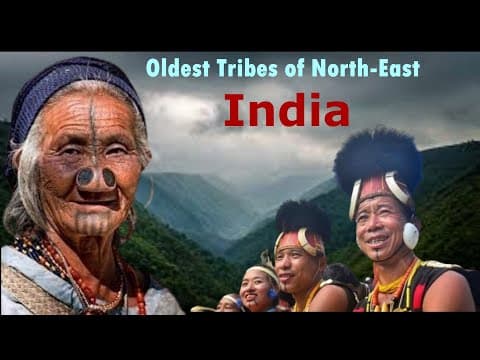
Northeast India is home to a diverse range of indigenous tribes, each with unique cultures, traditions, and lifestyles. This blog post delves into the characteristics and lifestyles of several prominent tribes, including the Garo, Sumi, Khasi, Deori, Bodo, Bhutia, Apatani, Angami, and Adi tribes, highlighting their social structures, customs, and contributions to the region's rich cultural tapestry.
Northeast India is a region characterized by its rich tapestry of tribal cultures, predominantly comprising Scheduled Tribes. This area, which includes the states of Arunachal Pradesh, Assam, Manipur, Meghalaya, Mizoram, Nagaland, Sikkim, and Tripura, is renowned for its unique traditions, lifestyles, and vibrant cultural heritage. Millions of visitors are drawn to this region to experience its beauty and the distinctiveness of its tribal communities.
The Garo tribe primarily resides in the Garo Hills of Meghalaya, making up about one-third of the state's population. This tribe is notable for its matrilineal society, where children inherit their lineage from their mothers. The youngest daughter in a family inherits property, while sons typically leave home during adolescence to live in dormitories. After marriage, they move into their wives' homes.
Located in Nagaland, the Sumi tribe is one of the major ethnic groups in the region. Historically, they were known as a hunting tribe before the arrival of missionaries. Today, they celebrate two significant festivals that reflect their rich cultural heritage.
The Khasi tribe is one of the prominent indigenous communities in Meghalaya, constituting nearly half of the state's population. They primarily inhabit the Khasi and Jaintia hills and follow a matrilineal social structure. Women in the Khasi community play crucial roles and hold significant decision-making power within the tribe.
The Deori tribe is found in Assam and Arunachal Pradesh, particularly in the districts of Sivasagar, Jorhat, Dibrugarh, Lakhimpur, and Tinsukia in Assam, as well as Lohit and Changlang in Arunachal Pradesh. They are related to the Mongoloid ethnic group and historically served as priests in temples.
Primarily associated with Assam, the Bodo tribe has also migrated to other parts of the country. They are known for their agricultural practices, including rice cultivation, tea gardening, and poultry farming. Weaving and silk production are also integral to their livelihoods, along with the production of rice wine.
The Bhutia tribe migrated from Tibet to Sikkim and currently resides in the northern region of Sikkim, particularly in the Lachung area. They speak Bhutia, a dialect of the Tibetan language, and are recognized as one of the most educated and developed tribes in the region. Bhutia women are famous for wearing heavy gold jewelry, and their unique rectangular houses, known as "khim," are a hallmark of their architecture.
The Apatani tribe, one of the most distinctive tribes in Arunachal Pradesh, is known for its impressive agricultural productivity and unique ecological preservation methods. They are easily identifiable by their tattoos, which are a significant aspect of their cultural identity.
The Angami tribe is a prominent community in Nagaland, primarily engaged in agriculture, particularly rice and grain cultivation. Men typically wear shawls, while women don traditional attire such as mekhela and round skirts. Their diet includes various dishes, with pork being a staple.
The Adi tribe, native to Arunachal Pradesh, is known for its distinct village laws and councils. They are divided into several sub-tribes, and their men are often seen wearing helmets that signify their tribal affiliation. Women dress according to their age and marital status, with unmarried women wearing multiple brass ornaments beneath their skirts. The Adi are skilled in hunting and trapping animals, showcasing their deep connection with nature.
The tribes of Northeast India represent a rich cultural heritage that is both diverse and vibrant. Each tribe contributes uniquely to the region's identity, showcasing a blend of traditions, social structures, and lifestyles that have evolved over centuries. Understanding these tribes not only enriches our knowledge of human diversity but also highlights the importance of preserving these cultures for future generations.