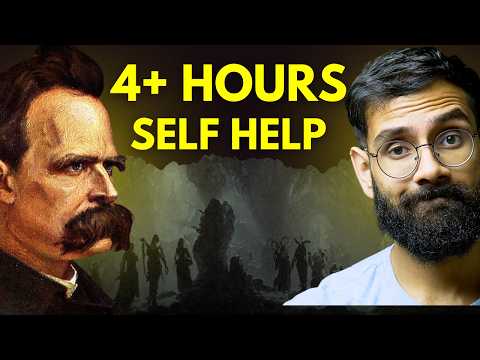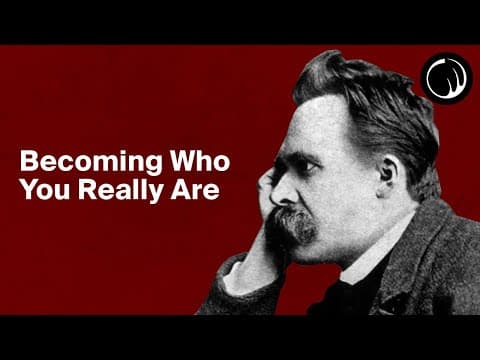
Friedrich Nietzsche, a pivotal figure in modern philosophy, sought to navigate the collapse of religious faith and the rise of nihilism by proposing a new path centered on individual meaning and the concept of the 'overman.' His philosophy emphasizes self-overcoming, the will to power, and the transformative potential of suffering, challenging individuals to create their own values and purpose in a world devoid of universal truths.
Friedrich Nietzsche stands at a significant crossroads in Western history, where the decline of religious faith has left a void filled with pessimism and nihilism. His work addresses this emerging issue, forging a new path toward meaning and human value.
Born in 1844 in Saxony, Prussia (now eastern Germany), Nietzsche grew up in a modest family. His father, Carl Ludwig Nietzsche, was a Lutheran pastor, which introduced young Friedrich to Christian faith. However, this faith was soon challenged by personal tragedy; his father died of a terminal brain disease when Nietzsche was just five, followed by the death of his younger brother a year later. This early exposure to suffering likely influenced Nietzsche's later philosophical inquiries.
Nietzsche's academic journey began with a study of theology at the University of Bonn, where he excelled in Christian theology. However, after just one semester, he became increasingly critical of Christianity, leading him to abandon his faith. He then shifted his focus to philology at the University of Leipzig, where he excelled and became the youngest professor of classical philology at the University of Basel.
Despite his early success, Nietzsche left academia due to dissatisfaction and declining health, which was exacerbated by genetic ailments and possibly syphilis. He lived a largely isolated life, traveling across Europe and spending significant time in the Swiss Alps, where he wrote many of his influential works, including Human, All Too Human, The Gay Science, Thus Spoke Zarathustra, Beyond Good and Evil, and On the Genealogy of Morals.
One of Nietzsche's most famous declarations is "God is dead. God remains dead. And we have killed him." This statement reflects not a celebration of lost faith but a profound concern about the implications of this loss. Nietzsche believed that the collapse of Christian faith would lead to the disintegration of European morality and values, leaving humanity in despair and nihilism without a clear system of meaning.
Nietzsche argued that there is no universal, objective truth. He famously stated, "There are no facts, only interpretations," suggesting that the pursuit of absolute truth disconnects individuals from the subjective experience of meaning in life. He turned his focus to the arts and humanities, believing they could communicate deeper truths and fill the void left by the absence of higher meaning.
In his quest for a new philosophy, Nietzsche introduced the concept of the Übermensch, or overman, in Thus Spoke Zarathustra. The overman represents an idealized individual who defies collective norms, pursues personal desires, and embraces a new morality that values strength and greatness over weakness and modesty. This concept serves as a model for individuals to strive toward, embodying the potential for self-overcoming and personal growth.
Nietzsche proposed that life operates on the "will to power," an insatiable desire to manifest power, not in the sense of dominance over others but as self-mastery and continuous growth. He believed that the pursuit of the overman ideal fuels this process, transforming life's suffering into something meaningful and redeemable.
Contrary to his predecessor Arthur Schopenhauer, who viewed suffering as something to be minimized, Nietzsche argued that suffering should be embraced as a catalyst for strength and psychological power. He posited that the meaninglessness of suffering, rather than suffering itself, was the true curse of humanity. By leaning into suffering, individuals could find purpose and strength.
As Nietzsche continued to write, he faced declining mental health. A pivotal moment occurred when he witnessed a horse being mistreated, leading to a mental breakdown. This episode marked the beginning of his descent into madness, culminating in his death from a stroke in 1900 at the age of fifty-five.
During his lifetime, Nietzsche struggled for recognition, with his works largely overlooked. However, posthumously, his ideas gained immense traction, influencing modern thought and culture. His aphorisms and concepts continue to resonate, prompting discussions about the nature of existence, morality, and the human experience.
Nietzsche's philosophy challenges individuals to confront their suffering and create their own values in a world devoid of universal truths. His notion of self-overcoming and the pursuit of the overman serves as a powerful reminder of the potential for personal growth and transformation. While his ideas invite critique and interpretation, they ultimately encourage a journey toward self-discovery and the creation of meaning in life. Nietzsche's life and work exemplify the struggle to become who we truly are, often at great personal cost, yet offering profound insights into the human condition.