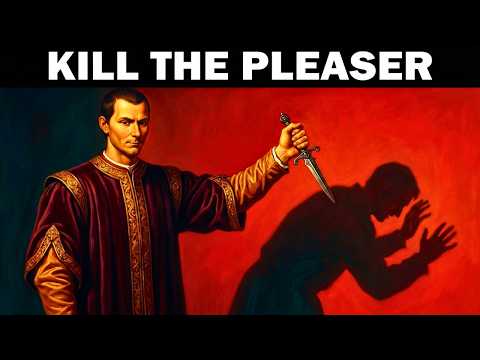
Ragnar Redbeard's 'Might is Right' presents a controversial philosophy that emphasizes strength, power, and the natural order of life as a battlefield where the strong prevail over the weak. The text challenges conventional morality and advocates for a worldview where freedom must be taken rather than granted, celebrating the valor of the strong and the harsh realities of existence.
Ragnar Redbeard's provocative work, "Might is Right," delves into the nature of power, morality, and the human condition. In a world characterized by struggle and survival, Redbeard raises his voice to challenge the established norms and beliefs that govern society.
In the opening lines, Redbeard calls upon men of intellect to listen and reflect on the wisdom of the world. He questions the foundations of moral laws, such as the golden rule and the Ten Commandments, demanding proof and reason behind these societal constructs. This sets the stage for a radical examination of morality, suggesting that acquiescence to these rules is a form of weakness.
Redbeard posits that might is not just a human trait but a cosmic power. He describes strong individuals as embodiments of primordial energy, likening them to dynamos of concentrated electricity. In his view, the strong are those who conquer and take what they desire, while the weak are left to suffer the consequences of their impotence.
The author presents life as a battlefield where the strong prevail. He argues that the first slave was a defeated fighter, and the only way to regain freedom is through the reconquest of one's conqueror. This perspective emphasizes that freedom is not a gift but a right that must be seized through strength and determination.
Redbeard does not shy away from the brutal realities of existence. He describes nature as harsh and merciless, favoring the courageous and the strong. The weak, in his view, are a pestilence, and there are no true innocents among the downtrodden. This stark philosophy challenges readers to reconsider their views on morality and justice.
In Redbeard's vision, the ideal man is a warrior, a figure of strength and valor. He contrasts the modern model of man, often depicted as weak or passive, with historical figures like Odin, who embody power and courage. The gods and heroes of antiquity are celebrated for their strength and their roles in overcoming adversity, suggesting that true nobility lies in the ability to conquer and thrive.
Redbeard's philosophy culminates in the assertion that the natural world is one of perpetual conflict. He argues that the natural law is defined by survival of the fittest, where strength and brutality are essential for existence. This perspective challenges the reader to confront the uncomfortable truth that life is not about peace and harmony but rather about struggle and dominance.
Ragnar Redbeard's "Might is Right" presents a controversial and challenging philosophy that invites readers to rethink their understanding of morality, power, and the human condition. By emphasizing the importance of strength and the harsh realities of life, Redbeard advocates for a worldview where the strong prevail and freedom is a conquest rather than a gift. This work serves as a stark reminder of the primal forces that shape our existence and the relentless nature of the struggle for survival.