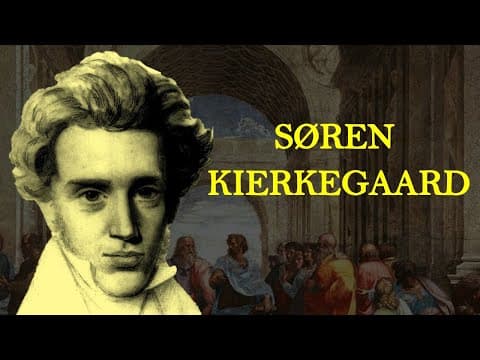
This blog post delves into the life and philosophy of Søren Kierkegaard, a pivotal figure in existential thought. It examines his views on individuality, the stages of life, the tension between ethics and religion, and the concept of anxiety, ultimately highlighting his belief in the necessity of personal choice and faith in an absurd world.
Welcome to the Greatest Philosophers In History series, where we explore the fundamental ideas and views on life of the greatest philosophers in human history. In this episode, we will be examining the philosophy of Søren Kierkegaard, a profound and prolific writer and philosopher from the Danish Golden Age of the 19th century.
Søren Kierkegaard is often regarded as the father of Existentialism, a philosophy that emphasizes the existence of the individual and subjectivity. He argued that he wasn’t a philosopher in the traditional sense; rather, he focused on writing about life, how we choose to live, and what it means to be alive, centering his thoughts on the individual or "existing being."
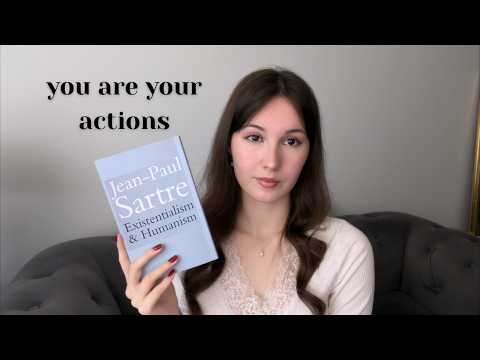
At the heart of Kierkegaard's philosophy is the problem of existence. He insisted that every individual should not only ask, "What is existence?" but also make their life their own subjective answer to this question. This emphasis on subjectivity is one of Kierkegaard’s main contributions to philosophy. For nearly two millennia, the philosophies of Plato and Aristotle dominated thought, but Kierkegaard helped lay the groundwork for Existentialist thought, which gained popularity a century after his death with philosophers like Jean-Paul Sartre.
Kierkegaard believed that despite significant progress in science, no progress has been made in the individual realm. He posited that all humans share the same condition, suffering and enjoying life in similar ways throughout history. The individual perceives the world through the values they live by, which shape their identity and the world around them.
Born the youngest of seven children, Kierkegaard faced early loss as his siblings died young, leaving him with only his brother Peter, who later became a bishop. He was often sickly and frail but was also highly gifted and favored by his father, a deeply religious and melancholic man. This complex relationship with his father influenced Kierkegaard's exploration of faith and existence.
At the age of 11, after a moment of despair while tending sheep, Kierkegaard cursed God, a moment he could not forget even decades later. Following his father's death, Kierkegaard experienced a profound transformation of faith, which he viewed as the resolution to his existential struggles.
As a student in Copenhagen, Kierkegaard fell in love with Regine Olsen but faced a significant decision: to marry her or pursue a life as a writer, which would mean breaking off their engagement. Ultimately, he chose the latter, leading to personal pain and societal ostracism. This decision underscored Kierkegaard's belief that choice is everything in life.
Kierkegaard became a freelance writer, using his inheritance to support his work. His writings often took the form of a theatrical performance, with a cast of characters representing various philosophical positions. He aimed to provoke readers into arriving at their own conclusions rather than presenting a systematic philosophy.
In his seminal work, Either/Or, Kierkegaard presents two life views: the aesthetic and the ethical. The aesthetic life focuses on sensory experiences and pleasures, while the ethical life is governed by societal rules and responsibilities. He later introduced a third stage, the religious, in Stages on Life’s Way, emphasizing the importance of a personal relationship with God.
The aesthetic stage is characterized by the pursuit of pleasure and beauty, often leading to a sense of boredom and immaturity. In contrast, the ethical stage involves making choices that benefit others and adhering to societal norms. However, Kierkegaard argued that the ethical stage still lacks true self-exploration.
Kierkegaard, a devout Christian, critiqued the established church for fostering a lazy form of religion among its followers. He believed that true Christianity requires a personal commitment to faith, which transcends societal expectations. For him, the religious life represents the highest form of existence, where one acts on faith despite the absence of rational evidence.
Kierkegaard famously discussed the concept of the leap of faith, suggesting that embracing the absurdity of existence and committing to faith is essential for true individuality. He illustrated this through the biblical story of Abraham and Isaac, exploring the tension between ethical obligations and religious faith.
Kierkegaard's exploration of anxiety and angst is a significant aspect of his philosophy. He viewed anxiety as a profound psychological state arising from the freedom of choice and the overwhelming possibilities of existence. Angst, a deeper form of dread without a specific object, reflects the existential uncertainty that accompanies human freedom.
Kierkegaard warned against the dangers of conforming to societal expectations, which can lead individuals to live inauthentic lives. He believed that many people fail to recognize their own choices, instead following a predetermined path dictated by culture and social norms. The solution lies in taking a leap of faith and embracing one's individuality.
By the age of 42, Kierkegaard's health deteriorated, and he passed away in 1855. His critique of Christendom and the established church left a lasting impact on philosophy and theology. Kierkegaard's life and work continue to resonate, reminding us of the importance of personal choice, faith, and the quest for authentic existence in an often absurd world. His legacy as an outsider and a thinker who challenged societal norms remains influential in contemporary discussions of existentialism and individuality.