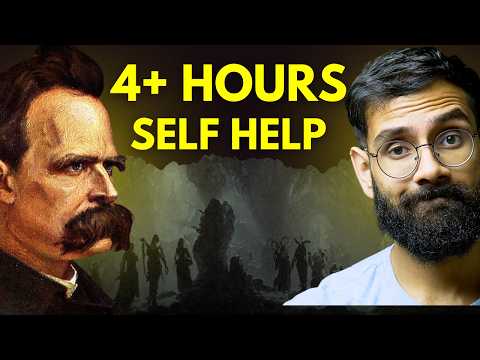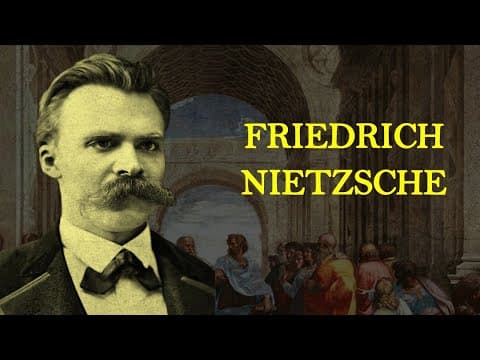
Friedrich Nietzsche, a 19th-century German philosopher, challenged traditional morality and religion, particularly Christianity. His philosophy emphasizes self-overcoming, the will to power, and the creation of personal values in a world devoid of objective meaning. Nietzsche's concepts, including the eternal recurrence and the overman, advocate for embracing life's struggles and affirming existence.
Welcome to the Greatest Philosophers In History series, where we delve into the most fundamental ideas and views on life. In this episode, we will explore the philosophy of Friedrich Nietzsche, a pivotal figure in Western philosophy and intellectual history.
Friedrich Nietzsche was a German philosopher of the 19th century, known for his revolutionary ideas that challenged the traditional European morality and religious fundamentalism, particularly Christianity. His life was marked by personal struggles, including ostracism from the intellectual community and chronic health issues. In 1889, Nietzsche experienced a mental breakdown after witnessing a horse being whipped, leading to a decline in his mental health that lasted until his death in 1900.
Despite his profound influence, Nietzsche achieved little success during his lifetime, often selling only a few copies of his works each year. It was only after his death that his writings gained popularity, largely due to his sister Elisabeth's editorial work, which unfortunately misrepresented his views to align with her own, including associations with Nazism. Contrary to this misrepresentation, Nietzsche held a deep respect for Jewish intellectual contributions to European culture.
Nietzsche's philosophy is rich with concepts that challenge conventional thinking. Here are some of the most significant:
Nietzsche proposed the idea of amor fati, or the love of fate, advocating for an acceptance of everything that happens in life. He believed that happiness should not be contingent on external circumstances but rather on our internal acceptance of life as it is.
One of Nietzsche's most important works, Thus Spoke Zarathustra, lays the groundwork for his philosophical ideas. In this text, he introduces the concept of the overman (or ubermensch), a figure who transcends conventional morality to create personal values.
Nietzsche's notion of the will to power posits that the fundamental driving force in humans is not merely survival or knowledge, but a desire to assert and enhance one's power and influence. This concept is central to understanding human behavior and motivation.
Nietzsche's perspectivism asserts that our understanding of truth is inherently subjective, shaped by our individual perspectives. He argued that no single philosophy can claim absolute truth, and that different viewpoints can enrich our understanding of the world.
The idea of eternal recurrence challenges individuals to live as if they would have to relive their lives repeatedly. This thought experiment encourages a life-affirming attitude, where one embraces both joy and suffering as integral parts of existence.
Nietzsche describes three stages of personal development in Thus Spoke Zarathustra: the camel, the lion, and the child.
The Camel: Represents the burden of societal expectations and traditions. Most people live as camels, carrying the weight of others' demands.
The Lion: Symbolizes the struggle for independence and the rejection of imposed values. The lion must confront the dragon of tradition, asserting its own will.
The Child: Embodies creativity and a fresh perspective on life. The child is free from the burdens of the past and approaches the world with curiosity and wonder.
Nietzsche was critical of Christianity, which he viewed as promoting a slave morality that values obedience and subservience over strength and individuality. He believed that this morality stifles human potential and leads to a culture of mediocrity. Nietzsche famously declared that "God is dead," signifying the decline of traditional religious values in modern society.
Nietzsche called for a revaluation of all values, urging individuals to create their own values in a world devoid of objective meaning. He believed that the noble and brave individuals would rise above the herd mentality, fostering a culture of greatness and creativity.
Nietzsche's philosophy ultimately revolves around the question of how to live and endure life. He challenges us to confront our suffering, embrace our individuality, and create meaning through our actions and choices. The concepts of the overman, the will to power, and eternal recurrence serve as guiding principles for those seeking to navigate the complexities of existence.
In summary, Nietzsche's revolutionary ideas encourage us to reject complacency, embrace our struggles, and affirm life in all its facets. His work remains a powerful call to self-overcoming and the creation of personal values in an ever-changing world.