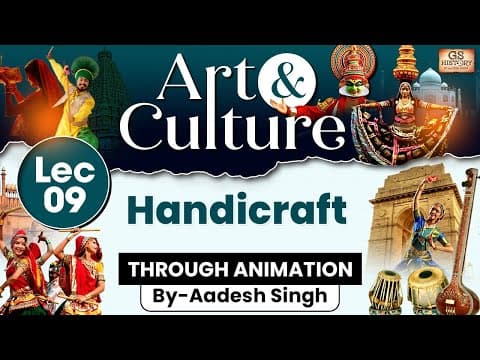
This blog post delves into the diverse world of Indian handicrafts, highlighting their historical significance, various forms, and economic importance, while emphasizing the need for awareness and promotion to sustain this vital cultural industry.
Indian handicrafts represent a vibrant aspect of the country's art and culture, showcasing the skills and traditions passed down through generations. In this blog post, we will explore the various forms of handicrafts, their unique features, and their economic significance in India.
Handicrafts are decorative or functional objects made by hand without the use of machines. Each state in India boasts a unique style of handicrafts that reflects its local skills, art, culture, and traditions. The production of handicrafts requires minimal capital investment, making it a viable livelihood option for many artisans.
India is one of the major producers and suppliers of handicrafts globally. The economic importance of handicrafts lies in their ability to generate income and employment, particularly in rural areas. The small-scale nature of this industry plays a crucial role in the development of the Indian economy.
Cloth handicrafts encompass various techniques such as weaving and printing. Notable techniques include:
The art of glassmaking in India dates back to around 1000 BC, with evidence found in the Ganga Valley. Major centers for glassware production include Maharashtra, Uttar Pradesh, and Bihar, where unique items such as bangles, decorative beads, and hookahs are crafted.
Ivory crafting has been a significant art form since the Vedic period. Artifacts from the Harappan civilization indicate that ivory objects were traded with regions like Turkmenistan and Afghanistan. Traditional centers for ivory crafting include Delhi, Jaipur, and parts of West Bengal.
Terracotta, meaning "baked earth," is used in sculpture, architecture, and pottery. Notable examples of terracotta craftsmanship can be found in West Bengal, particularly in the Bankura district, and in ancient Buddhist sites.
Silver jewelry is often crafted using the intricate technique of filigree work. Odisha is known for its unique anklets, while Karnataka's Bidar village is famous for its silver inlay work.
Pottery is considered one of the oldest forms of handicrafts. Evidence of pottery dates back to the ancient period, with notable styles including painted greyware and black pottery found in various regions of India.
Bronze crafting is one of the oldest metal arts in India, with significant evidence found in Mohenjo-Daro. Major centers for bronze work include Uttar Pradesh and Tamil Nadu, where decorative items and statues are produced.
Metal crafts involve the use of various metals for casting, with techniques like engraving and damascening being prominent. Leather crafts, which date back to 3000 BC, are primarily used for making footwear, bags, and wallets, with Rajasthan being a major hub.
Embroidery in India involves creating designs using gold, silver, silk, or cotton threads. Various regional techniques include:
In this exploration of Indian handicrafts, we have seen how these art forms have been practiced since ancient times. Despite facing challenges during the British rule, the handicraft industry has managed to survive and thrive. In recent years, the importance of handicrafts has increased due to their cultural and financial value. The small-scale handicraft industry plays a significant role in the economic development of rural communities. To harness the full potential of this industry, there is a need for increased awareness, market promotion, and technological support, which can benefit both our culture and economy.