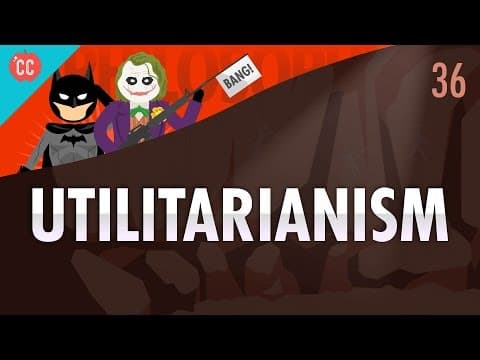
This blog post delves into the ethical theory of utilitarianism, contrasting it with Kantian ethics through the lens of Batman's moral choices regarding the Joker. It discusses the implications of utilitarianism, including its principles, challenges, and variations, while using thought experiments to illustrate its complexities.
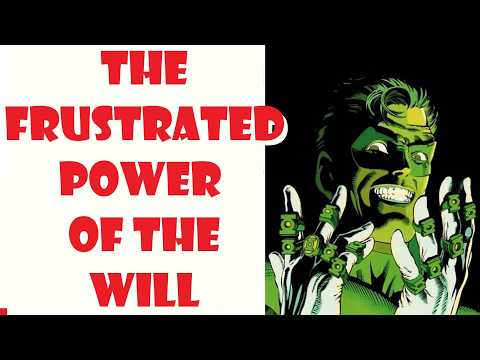
Should Batman kill the Joker? This question raises significant ethical considerations, particularly when we examine Batman's strict no-killing rule. Batman embodies a Kantian approach to ethics, adhering to moral absolutes regardless of the consequences. However, this raises a critical question: if Batman has the power to stop the Joker from killing again and chooses not to, is he morally justified?
Kantianism, based on the philosophy of Immanuel Kant, emphasizes adherence to moral rules without exceptions. For Batman, killing is a line he refuses to cross, even if it means allowing the Joker to continue his reign of terror. This perspective prioritizes intent over consequences, suggesting that moral purity is maintained by following one’s ethical code.
In contrast, utilitarianism focuses on the outcomes of actions rather than the intentions behind them. This moral theory, developed by philosophers like Jeremy Bentham and John Stuart Mill, posits that the rightness of an action is determined by its ability to produce happiness or pleasure. The core idea is that actions should be evaluated based on their consequences, with the ultimate goal being the greatest good for the greatest number.
Utilitarianism is often described as a hedonistic moral theory, where pleasure is equated with good. However, it is important to note that utilitarianism is not egoistic; it advocates for the happiness of all sentient beings, not just oneself. The principle of utility states that we should act in ways that maximize overall happiness, even if it requires personal sacrifice.
While utilitarianism promotes a collective approach to morality, individuals often struggle with self-interest. We tend to prioritize our own happiness over that of others, which can complicate moral decision-making. To counteract this bias, utilitarians suggest adopting the perspective of a benevolent, disinterested spectator when making moral choices. This approach encourages fairness and impartiality, allowing for a more objective evaluation of what actions would yield the greatest good.
To illustrate the complexities of utilitarianism, we can consider thought experiments that challenge its principles. One notable example is presented by philosopher Bernard Williams:
In this scenario, Jim encounters a group of soldiers who are about to execute 20 indigenous people. The soldiers offer Jim a choice: if he shoots one prisoner, the other 19 will be spared. If he refuses, all 20 will be killed. From a utilitarian perspective, Jim should shoot one person to save the greater number. However, Williams argues that no moral theory should demand the taking of an innocent life, highlighting a significant critique of utilitarianism.
Utilitarianism can be a demanding moral framework. It requires individuals to take action to prevent harm, even if it means compromising their own moral beliefs. In Jim's case, he must grapple with the moral implications of his decision, which could lead to feelings of guilt and complicity in murder.
Utilitarianism is not a monolithic theory; it has evolved into different forms:
This classical form of utilitarianism suggests that one should choose the action that produces the greatest good in any given situation. However, this can lead to morally questionable decisions, such as sacrificing an innocent person for the greater good.
In response to the challenges posed by act utilitarianism, rule utilitarianism advocates for adherence to rules that generally promote the greatest good. This approach emphasizes long-term consequences and societal norms, suggesting that a society where innocent people are harmed for the sake of utility would ultimately be less desirable.
Utilitarianism presents a compelling yet challenging moral framework that contrasts sharply with Kantian ethics. While it encourages actions that maximize happiness for the majority, it also raises difficult questions about individual rights and moral integrity. In the case of Batman and the Joker, a utilitarian perspective might argue for the necessity of killing the Joker to prevent future harm, while a Kantian approach would staunchly oppose such an action. As we continue to explore moral theories, the debate between utilitarianism and other ethical frameworks remains a vital part of philosophical discourse.