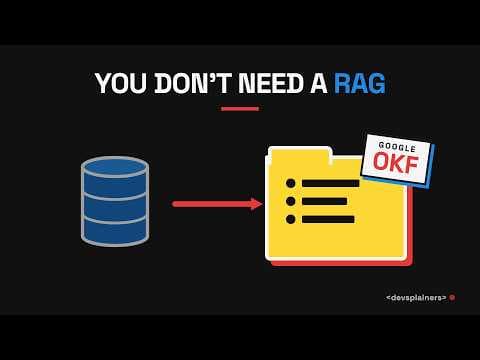
For years, AI memory relied on complex vector databases, but Andrej Karpathy's LLM Wiki concept flipped this by using simple folders of linked text files. Google formalized this as the Open Knowledge Format (OKF), emphasizing simplicity, flexibility, and efficiency. Despite some challenges, this approach is revolutionizing AI knowledge management by replacing costly infrastructure with straightforward, maintainable text folders.
For two years, the AI industry largely agreed on a method to give AI models memory: chopping documents into thousands of fragments, converting each into vectors (long lists of numbers), and storing them in specialized vector databases. This approach, known as Retrieval-Augmented Generation (RAG), allowed AI to retrieve relevant information by matching queries to vectorized chunks. However, this method had limitations, especially in maintaining persistent memory.
The RAG method involves slicing documents into chunks, embedding each chunk into a vector space, and storing them in a vector database. When a question is asked, the system retrieves the closest matching chunks and feeds them to the AI model. While effective, this process starts fresh with every query, forcing the model to re-derive connections repeatedly without true memory.
Every query begins from zero, with the model receiving disconnected snippets and having to reconstruct the same relationships it had previously established. This inefficiency highlighted the need for a better solution.
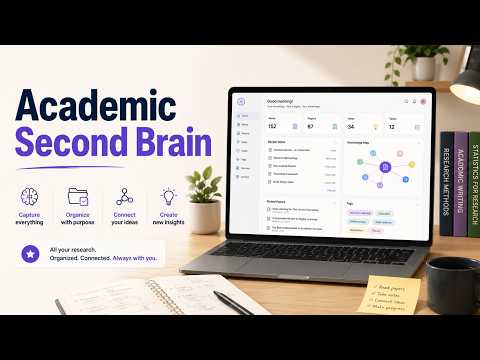
In April, Andrej Karpathy, co-founder of OpenAI and former head of AI at Tesla, introduced a simple yet powerful concept called the LLM Wiki. Instead of re-deriving knowledge at query time, the LLM Wiki builds knowledge once upfront into a folder of plain text files that link to each other, forming a living encyclopedia.
This folder acts like a codebase that the AI can read and maintain. Contrary to assumptions, humans do not write the notes; the AI does. Users provide new material and ask insightful questions, while the AI handles summarizing, cross-referencing, filing, and upkeep — tasks humans often neglect.
Karpathy likened this to a software development environment: Obsidian is the IDE, the LLM is the programmer, the wiki is the codebase, the folder is the owned asset, and the model is the worker maintaining it.
On June 12th, Google Cloud formalized this community-driven idea into an official specification called the Open Knowledge Format (OKF). The spec is remarkably concise:
The OKF encourages forgiving readers that tolerate unknown fields, broken links, and unparseable files. This permissiveness allows flexibility and resilience, making it easy to build and maintain.
However, Google omitted Karpathy's instructions on how the AI maintains the wiki, leaving only the folder structure without the upkeep process.
The folder method outperforms vector databases for three main reasons:
When the Work Happens: RAG does its thinking at query time, while the wiki builds connections and summaries once upfront. This one-time cost means queries simply read finished answers.
Skill and Scale: Models have limited context windows. A large company may have thousands of files, but each folder includes a short table of contents. The model reads this first, selects the needed file, and ignores the rest, avoiding overload.
Simplicity and Accessibility: The knowledge lives as plain text in Git, just like code. It can be diffed, reviewed, zipped, and used offline without databases, servers, or API keys. If you can open a file, you can use it.
An agent is essentially a folder of markdown files. Anyone can write markdown, but the skill lies in organizing the folder, deciding what is locked versus editable by AI, and preventing knowledge drift over time. Two identical folders can have vastly different longevity in production, and no format can guarantee this.
Interestingly, OKF originated not from Google's AI lab but from the BigQuery team. Sample datasets ship on BigQuery, the reference tool that writes bundles runs on Gemini, and the easiest place to use a finished bundle is Google’s own knowledge product, recently renamed to align with this initiative.
This suggests a strategic move by Google to integrate OKF into its ecosystem, leveraging Gemini and BigQuery.
At launch, OKF had minimal adoption outside Google. A standard with only one user is more a suggestion than a standard and could easily become another abandoned Google project. However, the underlying idea has already won.
The AI field spent years and significant resources believing that machine memory required complex infrastructure. Now, a simple folder of text files does the job better. Regardless of OKF’s fate, this paradigm shift is unlikely to be reversed.
Google’s Open Knowledge Format and Andrej Karpathy’s LLM Wiki concept demonstrate that simplicity can outperform complexity in AI memory management. By using linked folders of text files, AI systems gain persistent, maintainable knowledge bases without the overhead of vector databases. While challenges remain in upkeep and consistency, this approach is reshaping how AI models remember and interact with information, marking a significant evolution in the field.