Discover how two free AI tools, Google's NotebookLM and Anthropic's Claude, can be combined to create a powerful workflow that replaces costly teams. NotebookLM acts as a research assistant providing verified, cited insights, while Claude executes those insights into deliverables. Learn how to set up this system, avoid common mistakes, and apply it to content creation and competitive research to transform your productivity and income potential.
What if there were two free AI tools you probably already have access to that, when combined correctly, form a system more powerful than most paid AI stacks? This isn't just theory—people are actively building real workflows with this combination right now. The reason most people miss out isn't because it's difficult, but because no one has shown them exactly how to set it up. There's also a common mistake that nearly everyone makes with these tools that kills the results. This article will walk you through everything you need to know.
There are two AI tools, one from Google and one from Anthropic, that complement each other perfectly.
Together, they cover each other's blind spots in a way no single tool can match alone. This combination not only speeds up your work but also improves the quality of your output.
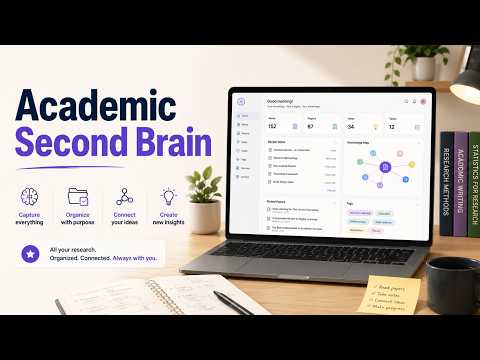
NotebookLM is Google's AI research assistant. What sets it apart is that it only works from sources you provide. You upload documents, paste YouTube links, articles, PDFs, websites, and NotebookLM becomes a smart assistant that knows everything inside those sources. Every answer it gives comes with a clickable citation that traces back to the exact sentence it came from. This means no hallucinations or made-up facts—just clean, grounded answers based on your real material.
NotebookLM doesn't just answer questions; it can also turn your sources into audio overviews, briefing documents, study guides, and slide decks. It transforms a pile of raw, chaotic information into structured, usable material quickly—something every content creator and online business owner needs.
Claude is Anthropic's AI assistant and one of the best tools for building things. Claude can write, code, and reason through complex problems without losing track. It has one of the largest context windows available, meaning it can hold a massive amount of information at once without confusion.
You can give Claude a rough set of research, and it will return a polished strategy. Give it a strategy, and it will execute it. Claude also connects directly to other tools through a system called MCP (Model Context Protocol), which is where the combination with NotebookLM becomes truly powerful.
Many users of NotebookLM make the mistake of asking generic questions like "Summarize all of this." This wastes the tool's potential, akin to having one of the world's best researchers on call and asking them to file your papers.
The real power comes from asking specific, targeted questions such as:
Specific questions unlock specific insights, which are essential for building content and offers that truly resonate with your audience.
There are two ways to wire these tools together:
Research in NotebookLM, extract key insights, and manually bring them into Claude for execution. This method alone is a massive upgrade for most people, turning scattered raw information into structured, actionable output quickly.
MCP acts like a direct cable between apps. Connecting Claude to NotebookLM through MCP allows Claude to interact directly with your notebooks without manual intervention. You can instruct Claude to create notebooks, add sources, pull key insights, and build content strategies—all in one conversation without copy-pasting or tab switching.
One of the biggest challenges in online business is the gap between knowing something and doing something with it. The path from research to creation often breaks down due to time, overwhelm, and loss of momentum.
This combination closes that gap almost completely:
When connected, the entire loop from research to finished deliverable can happen within a single conversation, dramatically increasing what one person can achieve alone.
Choose a niche, such as AI tools for freelancers. Load 20-30 YouTube videos, articles, and forum threads into a NotebookLM notebook. Ask targeted questions about pain points, overlooked angles, and audience demands. Receive cited, grounded insights.
Bring those insights into Claude and ask it to write, for example, 10 video scripts based on those angles. The content you get is not generic but built from real conversations happening in your niche, helping you build a genuine audience.
Load a client's top competitors' websites, YouTube channels, and blog posts into a notebook. NotebookLM extracts their messaging, offers, gaps, and unanswered audience questions.
Claude then turns this into a competitive brief with clear positioning recommendations. Many businesses lack real visibility into their competitors, making this a valuable service you can deliver in just a few hours using this stack.
This is not just a productivity trick but a fundamentally different way of working. Systems multiply your output without multiplying your time. This combination exemplifies that principle, changing what's possible for a solo operator.
Most people treat AI as a gimmick, using it for simple tasks like writing quick email replies. They miss the opportunity to build, connect tools, and leverage AI for real impact. If you're learning and applying these tools now, you're ahead of most people.
You don't need to be technical, have years of experience, a big team, or a large budget. You just need to start before the space becomes more crowded.
If you're wondering how to get paid for using AI workflows like this, consider joining an AI cash flow masterclass that offers a step-by-step blueprint for turning AI workflows into consistent income.
The masterclass covers:
The software taught in the masterclass is an all-in-one business platform that handles client outreach, automations, and billing—not NotebookLM or Claude—but it complements these tools perfectly.
Pick one topic you care about. Load five sources into NotebookLM. Ask one specific question. Take the answer into Claude and create one actual deliverable—a blog post, content plan, or client report.
This is how momentum starts, and momentum is everything.
Combining NotebookLM and Claude offers a free, powerful alternative to expensive teams, enabling individuals to research deeply and execute efficiently. By asking the right questions and leveraging the advanced integration through MCP, you can transform your workflow, build valuable services, and unlock new income streams.
If this article helped you, consider exploring further AI tools and workflows to stay ahead in this rapidly evolving space.