Stoicism, an ancient philosophy once revered for its teachings on resilience and virtue, has been co-opted by the manosphere and transformed into a commercialized, superficial trend. This blog explores the origins of stoicism, its modern misinterpretations, and the implications of its commercialization in today's society.
Stoicism, an ancient philosophy that has guided many towards a good and fulfilled life, is undergoing a significant transformation in the modern era. Once a source of wisdom from thinkers like Marcus Aurelius, it has now been co-opted by the manosphere, turning into a commercialized trend that often misrepresents its core teachings.
Stoicism was founded by Zeno of Citium, a wealthy trader who, after losing everything in a shipwreck, developed a philosophy centered on the idea that while we cannot control external events, we can control our reactions to them. This philosophy quickly gained traction across Greek society, influencing many, including former slaves like Epictetus and Roman Emperor Marcus Aurelius, whose writings, particularly Meditations, have inspired countless individuals over the centuries.
However, after the rise of Christianity, stoicism largely faded from prominence until a resurgence in the mid-20th century, spurred by figures in psychology and psychotherapy who found parallels between stoic principles and cognitive behavioral therapy (CBT).
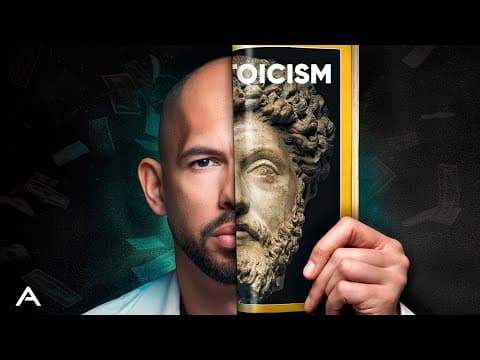
In recent years, stoicism has been repackaged and marketed as a self-help tool, often stripped of its deeper philosophical roots. Influencers and entrepreneurs have commodified stoic teachings, presenting them as quick fixes for achieving success, wealth, and fame. This trend has led to the emergence of what some refer to as "broism," a distorted version of stoicism that emphasizes emotional suppression and hyper-masculinity.
Broism, a term associated with the manosphere, represents a skewed interpretation of stoicism that promotes a tough, unemotional demeanor as the ideal masculine trait. This movement has gained traction among young men seeking guidance in a world where traditional male role models are often absent. Influencers within this space exploit vulnerabilities, offering simplistic solutions to complex problems, often at the expense of genuine emotional understanding.
The commercialization of stoicism is exemplified by figures like Ryan Holiday, whose book The Obstacle Is the Way became a bestseller, popularizing stoic maxims in the self-help genre. Holiday's success has led to a proliferation of stoic-themed merchandise and courses, often lacking depth and genuine philosophical engagement. Many of these resources are marketed to individuals seeking quick fixes rather than a true understanding of stoic principles.
The rise of social media has further exacerbated the dilution of stoicism. Platforms like Instagram and TikTok have turned stoic quotes into trendy soundbites, often divorced from their original context. This trend has made stoicism accessible but has also led to widespread misinterpretation, with many followers unaware of the philosophy's true teachings.
At its core, stoicism teaches the importance of character over external validation. The ancient stoics emphasized virtues such as wisdom, courage, and justice, advocating for a life of integrity and self-reflection. They believed that true happiness comes from within, not from material success or societal approval.
The misrepresentation of stoicism in the manosphere poses a significant risk. Young men seeking guidance may be led astray by superficial interpretations that prioritize toughness over emotional intelligence. This can result in a harmful cycle of emotional suppression and misguided beliefs about masculinity.
As stoicism continues to gain popularity, it is crucial to return to its roots and understand its true teachings. The philosophy encourages individuals to cultivate inner strength, resilience, and compassion, rather than chasing external markers of success. By embracing the genuine principles of stoicism, individuals can find a path to personal growth and fulfillment that transcends the superficial trends of the modern world.
In the words of Zeno, the founder of stoicism, we should listen more than we speak, reminding us that true wisdom comes from understanding ourselves and our place in the world, rather than from the fleeting allure of fame and fortune.