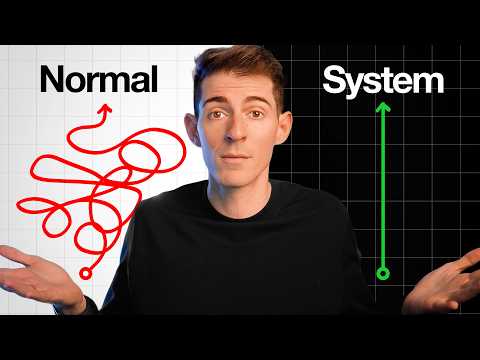
Creating great content consistently can be challenging, especially when trying to maintain originality and speed. This article breaks down a proven six-step AI-powered content system designed to help you produce premium short-form videos efficiently and effectively. This system has been personally used to generate millions of followers and billions of views, posting over 50 unique videos monthly on platforms like Instagram.
Content creation often involves repetitive and draining tasks. To overcome this, the system integrates AI to automate the boring parts, freeing up time for creativity. The workflow consists of six stages:
- Topic
- Format
- Substance
- Hook
- Script
- Edit
Each stage leverages AI to speed up the process without sacrificing creativity or originality.
Step 1: Topic Selection Using Data and AI
Choosing the right topic is crucial because a losing topic can undermine the entire content. Instead of relying solely on intuition, this system uses data-driven tools like Sandcastles.ai combined with Claude AI to identify winning topics.
Building a Watch List
- Compile a watch list of 20 to 30 top-performing channels in your niche, focusing on micro to medium-sized accounts (10,000 to 1 million followers).
- Use Sandcastles.ai to suggest channels if you are unsure.
Analyzing Top Videos
- Sort videos by outlier score and set filters for recent posts (3 to 6 months) and minimum engagement rate (2%).
- Deep analyze up to 100 videos to extract detailed information such as transcripts, hooks, storytelling formats, and more.
- Export this data into a CSV file for further analysis.
Automating Future Analysis
- Set automation rules in Sandcastles to automatically analyze new high-performing videos from your watch list.
Using Claude AI for Topic Research
- Upload the CSV to Claude AI and prompt it to:
- Screen out irrelevant videos.
- List videos by outlier score with topics and links.
- Cluster videos into 8 to 15 topic categories ranked by performance.
This process yields a curated list of proven topics to start from, ensuring you focus on content that resonates with your audience.
The format defines the structure, point layout, and visual execution of your video. There are about 20 dominant formats on social media, and creators typically use 2-3 core formats.
- Use intuition to pick from a visual database of top formats.
- Use data from Sandcastles and Claude AI to identify the best-performing formats in your niche.
- Analyze top videos within each format to understand visual execution.
- Breakdown format: flexible and narrative-free.
- S-tier ranking format: ranks items in tiers (S, A, B, C, D, F), dictating story flow.
Experimentation
- Add new formats occasionally to test if they outperform your core formats.
Step 3: Developing the Substance
This is the creative core of your content, consisting of:
- A contrarian or non-obvious take on the topic.
- Evidence supporting that take (facts, case studies, stories, metaphors, examples).
Crafting a Contrarian Take
- Identify what you believe about the topic that most people do not.
- Ensure the topic is specific enough to react to.
- Example: For "how to write better hooks," a contrarian take might be that the text hook matters more than the spoken hook.
Supporting Evidence
- Provide proof such as A/B comparisons, psychological explanations, or examples.
Using AI in Substance Development
- AI is less effective at generating novel contrarian takes but can assist in brainstorming supporting evidence.
- Use Claude AI as a research partner to generate ideas for evidence.
- Restrictive formats can guide and enhance creativity by providing guardrails.
- Looser formats allow more freestyle and wild ideas.
Step 4: Crafting the Hook
The hook consists of three elements:
- Visual hook: what is shown on screen.
- Text hook: title text displayed.
- Spoken hook: what is said and captioned.
Hook Development Process
- Analyze hooks from top videos in your niche using Claude AI.
- Bucket hooks by storytelling format and rank by performance.
- Extract Mad Lib-style hook templates to generate new hooks.
- Match hooks to your chosen format for consistency.
- Study visual and text hooks by watching top-performing videos.
- Mimic effective visual executions and note compelling text hooks.
Step 5: Writing the Script
With topic, format, substance, and hook ready, scriptwriting is next.
Creating a Script Profile
- Use transcripts from your own or a preferred creator's top videos to build a scriptwriting profile.
- Analyze 10-20 videos of similar style and format.
- Export transcripts and upload to Claude AI.
Prompting Claude AI
- Ask Claude to clean transcripts and build a short-form scriptwriting model.
- Provide topic, format, contrarian take, and hook to generate scripts in the desired tone and style.
Script Quality
- AI-generated scripts will be 90-95% complete.
- Minor tweaks may be needed for perfection.
Step 6: Editing the Video
Editing enhances visual storytelling through pacing and visuals.
Editing Approaches
- Choose formats requiring minimal editing (e.g., raw storytelling).
- Brute force editing yourself using tools like CapCut, Reals, or Premiere Pro.
- Use emerging AI tools like Claude Code and Remotion for automated editing (currently basic).
- Outsource editing to professional editors for scalability.
Recommendation
- Business owners should outsource editing to focus on high-leverage creative tasks.
The 10X Batch System for Scaling Content
Running Batches
- Run the full six-step process once to produce a batch of 10 videos.
- Post these videos daily over 10 days.
-
After posting, analyze three key metrics:
- Conversions per video/view (best metric).
- Followers gained per video/view.
- Total views.
-
Identify videos that perform at least 5x above average in any metric.
Iteration Based on Results
- If no video hits 5x, rerun the process with adjustments.
- If videos hit 5x-10x, consider them winners and tweak slightly for the next batch.
- If videos hit 10x or more, replicate the exact topic and format in subsequent batches.
Goal
- Develop three different 10x winning combinations to inform ongoing content creation.
Conclusion: Embracing AI-Enabled Creativity
This system exemplifies AI-enabled creativity, where AI handles repetitive tasks, freeing creators to focus on unique, contrarian ideas and storytelling. By combining data-driven insights with personal creativity, you can produce high-quality content at scale.
If you want to accelerate your social media growth and content creation process, adopting this AI-powered workflow and batch system can be transformative.
This comprehensive approach ensures you consistently create engaging, original content that resonates with your audience and drives meaningful results.