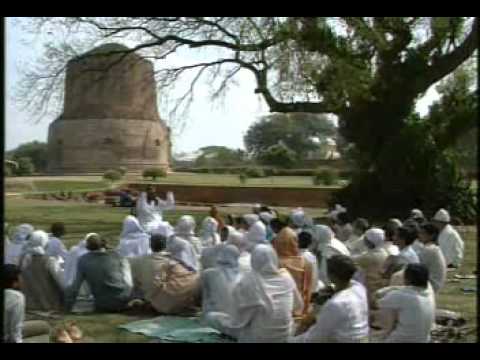
This blog post explores the rich spiritual and cultural heritage of India, tracing its historical evolution from ancient civilizations to modern times, highlighting the significance of pilgrimage, the impact of various invasions, and the enduring values of unity and diversity that define Indian society.
India is home to the largest gathering of people ever recorded in history, the Kumbh Mela, where millions converge to bathe at the confluence of the sacred rivers, the Yamuna and the Ganges. This festival not only symbolizes the spiritual essence of India but also reflects the deep currents of sacredness that run through its history.
Among the throngs of pilgrims are holy men and women who have renounced materialism for a life of austerity and meditation. India’s spiritual tradition emphasizes nonviolence, renunciation, and the inner life, contrasting sharply with Western ideals of individualism and materialism. Mark Twain once remarked that while India may appear poor in material wealth, it is rich in spiritual depth.
India's history, often overshadowed by colonial narratives, reveals a civilization that has thrived for millennia. The British colonization, lasting 200 years, is now seen as a temporary interruption in the continuity of Indian culture. The discovery of Sanskrit, akin to Greek and Latin, marked the beginning of a deeper understanding of India's ancient texts, particularly the Vedas, which date back to 2000 BC.
The Rig Veda, the oldest of the Vedas, contains hymns that narrate the migration of Sanskrit-speaking peoples into Northern India, where they encountered an already thriving civilization. This interaction led to a complex cultural exchange, with the sacred rivers playing a pivotal role in the development of early Indian cities.
The village has been the cornerstone of Indian life for thousands of years, with two-thirds of India's population still residing in rural areas. The belief that all life is sacred is deeply rooted in Indian culture, exemplified by the reverence for cows. This belief system is reinforced through rituals and prayers that connect the villagers to their deities and history.
Around 500 BC, city life revived in the Ganges Valley, leading to a cultural renaissance. The city of Varanasi, a pilgrimage site, embodies the spiritual aspirations of Hindus who seek redemption through ritual bathing in the Ganges. The Mahabharata, an epic poem, continues to resonate with audiences today, emphasizing the importance of moral conduct and the dangers of material attachment.
The period from the 6th to the 5th century BC, known as the Axis Age, saw the emergence of great thinkers like the Buddha, who preached that attachment to material desires leads to suffering. This philosophical inquiry into the nature of existence and morality shaped the trajectory of Indian civilization, contrasting with the monotheistic ideologies that emerged in the West.
The arrival of Alexander the Great in 326 BC marked the first significant clash between East and West. However, it was the Mauryan Emperor Ashoka, who, after witnessing the horrors of war, embraced nonviolence and moral governance, laying the groundwork for a secular ideal of human dignity that resonates even today.
The Mogul Empire, flourishing in the 16th century, exemplified a synthesis of Hindu and Muslim cultures. Akbar the Great's efforts to foster religious tolerance and pluralism were revolutionary, as he sought to unify diverse faiths under a common moral framework. His legacy of tolerance continues to inspire contemporary discussions on coexistence.
In the southern region of India, Tamil culture has preserved ancient traditions and artistic expressions, contributing significantly to India's rich tapestry. The Tamils' devotion to the Great Goddess symbolizes the enduring connection to India's primordial roots, emphasizing the importance of female divinity in a landscape often dominated by male gods.
The era of colonialism brought profound changes to India, as its resources were exploited and its cultural integrity challenged. However, the resilience of Indian civilization has allowed it to adapt and thrive, maintaining its spiritual quest at the center of life.
As India stands at the crossroads of tradition and modernity, the ideals of its ancient past continue to influence its future. The Kumbh Mela serves as a reminder of the enduring spirit of India, where millions gather to reaffirm their connection to the sacred and to each other. The legacy of India's spiritual quest remains a guiding light in a world often fraught with division, emphasizing the importance of unity in diversity.