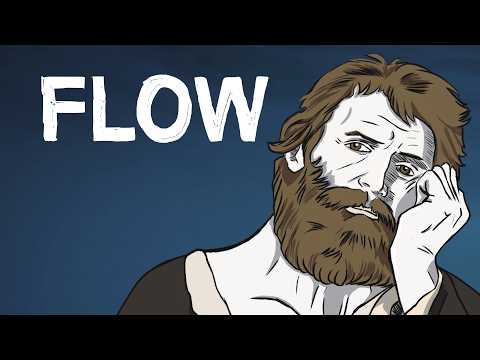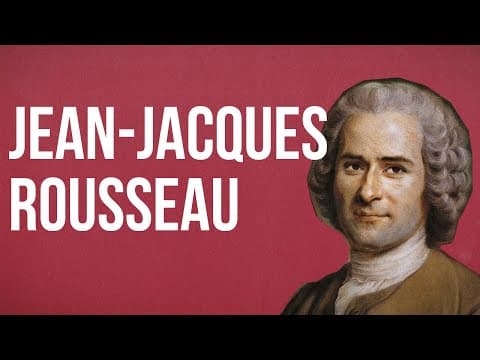
Jean-Jacques Rousseau, an 18th-century philosopher, argued that civilization corrupts human morality, contrasting the 'noble savage' of the state of nature with the vices of modern society. His ideas on education, child-rearing, and emotional depth have influenced modern thought and the Romantic Movement.
Modern life is often characterized by a belief in progress, particularly during the 18th century when European societies were becoming increasingly wealthy and technologically advanced. However, one philosopher from that era, Jean-Jacques Rousseau, vehemently disagreed with this optimistic view. His thoughts continue to resonate today, provoking reflection on the nature of civilization and morality.
Jean-Jacques Rousseau was born in 1712 to an educated watchmaker in Geneva. His childhood was marked by instability; when he was just ten years old, his family was forced to flee Geneva due to a legal dispute involving his father. This early experience of disruption and isolation shaped Rousseau's worldview.
As a young man, Rousseau moved to Paris, where he was exposed to the opulence and luxury of the time. This stark contrast to his sober upbringing in Geneva led him to question the values of society. In 1749, he encountered an advertisement in the newspaper Mercure de France that prompted him to reflect on whether advancements in the arts and sciences had contributed to the "purification of morals." This moment marked the beginning of his philosophical journey.
Rousseau's epiphany was profound: he believed that civilization had not improved humanity but had instead corrupted it. In his celebrated work, Discourse on the Arts and Sciences, he argued that individuals were once good and happy in their natural state but became plagued by vice and sin as they entered society.
He elaborated on this idea in his subsequent work, Discourse on the Origin and Basis of Inequality Among Men, where he envisioned a time he called the "state of nature." In this idyllic period, humans lived harmoniously in forests, untouched by the complexities of modern life. Rousseau depicted these individuals as possessing a natural understanding of their needs, fostering love for family, respect for nature, and a sense of curiosity.
Rousseau identified a key factor in the moral decline of humanity: the emergence of a destructive form of self-love, which he termed amour-propre. This unhealthy self-love, characterized by pride, jealousy, and vanity, arose as people began to compare themselves to one another in urban settings.
In civilized society, individuals lost sight of their true desires and instead imitated others, engaging in ruinous competitions for status and wealth. Rousseau's concept of the "noble savage" emerged from his belief that our ancestors were innocent and moral, contrasting sharply with the decadence of modern civilization.
During Rousseau's time, European society was captivated by the plight of Native American tribes. Reports from the 16th century described these communities as materially simple yet psychologically rich. However, the arrival of Europeans and their technology led to a transformation in these societies, resulting in increased desires for European goods and a rise in social issues such as alcoholism and suicide. Rousseau lamented that the modern world had devastated the lives of those who once thrived in the state of nature.
Rousseau's interest in natural goodness extended to his views on children. In 1762, he published Émile, or On Education, a groundbreaking work on child-rearing. Rousseau posited that children are born inherently good and that the role of education should be to prevent their corruption by society. This perspective shifted how parents viewed their children, leading to a more nurturing approach that emphasized play and exploration in natural settings.
He also advocated for breastfeeding, famously stating that if mothers nursed their children, it would lead to moral reform and a return to nature's sentiments. This idea sparked a cultural shift, encouraging breastfeeding even among the wealthy, who had previously rejected the practice.
Rousseau's writings often celebrated intense emotions over societal achievements. In his novel Julie, he portrayed the profound feelings of a woman caught in a love triangle, urging readers to appreciate the depth and honor of her emotions. His autobiographical work, Confessions, is one of the first modern autobiographies, where he explored his inner life and personal experiences, emphasizing the importance of self-reflection.
Rousseau passed away in 1778 at the age of 66, but his ideas continued to flourish posthumously. He became a significant figure in the French Revolution and an icon for many artists and writers of the 19th century. Rousseau is often regarded as a founding figure of the Romantic Movement, which valued the primitive over the civilized and emphasized the importance of emotion and individual experience.
Despite the modern world's obsession with status and materialism, Rousseau's insights remind us of the enduring value of introspection and the complexities of human nature. His provocative ideas challenge us to reconsider what we accept as common sense and to reflect on the true nature of progress in our lives.