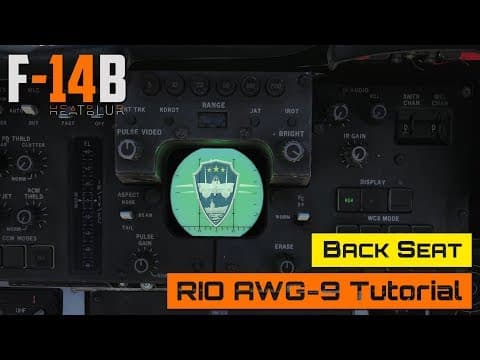
This blog post provides an in-depth tutorial on the F-14 Tomcat's AWG-9 radar system, covering its various modes, functions, and operational strategies to enhance your skills as a Radar Intercept Officer (RIO).
In this tutorial, we will explore the AWG-9 radar system used in the F-14 Tomcat, focusing on its functionality and operational modes. Our goal is to provide a solid understanding of how to effectively utilize this radar system, enhancing your skills as a Radar Intercept Officer (RIO).
The AWG-9 radar system is a complex piece of technology that requires familiarity with various components and modes. We will break down the key areas of the RIO pit that are essential for operating the radar:
The AWG-9 radar operates in two primary modes: Pulse Doppler and Pulse Mode.
Pulse Doppler modes utilize the Doppler effect to determine range and target information, making them ideal for gathering data on targets such as range, altitude, closure rate, and aspect. However, these modes have limitations:
When using the DDD display in Pulse Doppler mode, targets are shown based on their closure rate rather than distance. Higher positions on the display indicate faster closure rates, while lower positions indicate targets moving away.
In Pulse Mode, the AWG-9 does not use a Doppler filter, allowing it to detect targets at all aspects. This mode is beneficial for rudimentary ground mapping but has its drawbacks:
The DDD has four distinct Pulse Doppler modes:
Understanding azimuth and elevation scanning is crucial for effective radar operation. The Sensor Control Panel allows you to adjust the size of the scan along the azimuth plane and the elevation range. More bars increase the time between scans, so it is essential to choose the appropriate settings based on the situation.
The TID provides critical information about targets and their status. Key elements include:
The HCU is essential for manipulating the cursor on the TID and DDD displays. It allows you to hook targets and select various functions within the WCS. The HCU has different modes for controlling radar, TID, and DDD cursors, enabling you to effectively manage target tracking and data input.
To illustrate the concepts discussed, let's walk through a simple mission scenario:
This mission demonstrates the application of radar modes and the importance of situational awareness in combat scenarios.
Mastering the AWG-9 radar system in the F-14 Tomcat requires understanding its various modes, displays, and operational strategies. By familiarizing yourself with these components, you can enhance your effectiveness as a RIO and contribute to successful mission outcomes. If you have any questions or need further clarification on specific topics, feel free to reach out for additional guidance or resources.