Nietzsche's Critique of Stoicism: A Case for Embracing Strength Over Weakness
This blog post explores Friedrich Nietzsche's critique of Stoicism, arguing that it allows individuals to avoid facing harsh realities and promotes mediocrity. Nietzsche believes that true strength comes from embracing challenges and striving for greatness, rather than seeking comfort in moral victories.
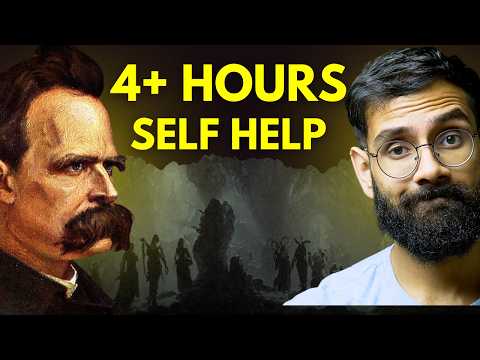
Stoicism has long been regarded as one of the most influential philosophies in human history. With works like Marcus Aurelius's Meditations serving as a guiding light for many, the philosophy has been popularized by modern authors such as Ryan Holiday. However, Friedrich Nietzsche presents a provocative critique of Stoicism, suggesting that it may serve as a crutch for the weak rather than a path to true strength. In this post, we will delve into Nietzsche's arguments against Stoicism, the potential dangers he sees in its philosophy, and his alternative vision for human flourishing.
1. Why Nietzsche Believes Stoicism is for Losers
Nietzsche had a profound disdain for weakness, viewing it as a moral flaw. He argued that weak individuals are not only incapable of controlling their impulses but also tend to deceive themselves to avoid confronting harsh truths. In his view, weakness leads to recklessness, impulsivity, and ultimately, untrustworthiness.
Nietzsche contended that Stoicism provides a convenient escape for these weak individuals, allowing them to claim moral victories without having to confront their failures. He believed that Stoics, by adopting a calm and detached mindset, avoid experiencing the full spectrum of human emotions. This emotional suppression, according to Nietzsche, prevents individuals from feeling the pain of loss, which is essential for personal growth and transformation.
He argued that true strength comes from experiencing the lows of life, which can motivate individuals to strive for improvement and success. By embracing the harsh realities of existence, one can cultivate resilience and ultimately emerge as a winner.
2. The Dangers of Stoicism
Nietzsche identified several dangers associated with Stoicism, particularly its rejection of elitism and its promotion of equality. He believed that this philosophy stunts human potential by encouraging mediocrity rather than excellence.
To illustrate his point, Nietzsche posed a rhetorical question: who has contributed more to society, Steve Jobs or a local fruit shop owner? He argued that individuals like Jobs, who possess a relentless drive to dominate their field, push not only themselves but also their competitors to improve. This competitive spirit fosters innovation and societal advancement.
Nietzsche used the example of Michael Jordan, whose desire to excel in basketball inspired others like Kobe Bryant and LeBron James to elevate their game. He suggested that if Jordan had embraced Stoicism and viewed himself as equal to his competitors, the NBA would not have reached the same heights of competitiveness and excellence.
In Nietzsche's view, Stoicism allows weak individuals to feel equal to the elite without putting in the necessary effort or overcoming significant challenges. This, he feared, would lead to a generation of individuals who exist in mediocrity, ultimately creating a harsh and untrustworthy world.