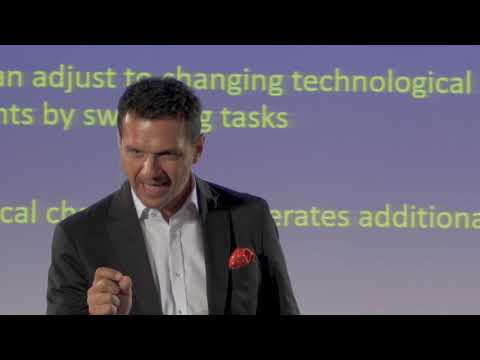
Markus Tomaschitz discusses the need for organizations and individuals to rethink their approach to digitalization, emphasizing the importance of adapting to change, fostering creativity, and reimagining education to prepare for the future.
In a thought-provoking TEDx talk, Markus Tomaschitz reflects on his childhood experiences and draws parallels between the world of boxing and the current landscape of digitalization. He uses the legendary Muhammad Ali's boxing strategy to illustrate the necessity for individuals and organizations to adapt and rethink their approaches in the face of technological advancements.
Tomaschitz begins by reminiscing about the popularity of boxing in the 1970s, particularly focusing on Muhammad Ali's revolutionary style. Ali, known for his agility and dancing around opponents, faced George Foreman in a historic match where he adopted a different strategy. Instead of his usual tactics, Ali absorbed punches, ultimately surprising everyone by defeating Foreman. This pivotal moment in boxing history serves as a metaphor for how organizations must adapt to the challenges posed by digitalization.
Many leaders and employees today feel threatened by the rapid advancements in technology, fearing that machines and algorithms will outperform them. Tomaschitz highlights a pervasive anxiety about automation, referencing studies that suggest nearly 50% of jobs in the U.S. could be replaced by machines. However, he argues that the focus should not be on job replacement but rather on the transformation of tasks within those jobs.
Contrary to popular belief, digitalization is a slow process. Tomaschitz points out that it has taken nearly a century for digital technology to evolve significantly. This slow progression provides ample time for individuals and organizations to prepare for the changes ahead. He emphasizes that while some jobs may be affected by automation, the need for human creativity, problem-solving, and intuition remains crucial.
A significant part of the discussion revolves around the education system, which Tomaschitz argues is outdated and not equipped to handle the challenges of the 21st century. He calls for a shift in educational focus from rote learning to fostering creativity, intuition, and adaptability. The current system, he asserts, is designed to produce replaceable workers rather than unique individuals capable of thriving in a digital world.
Tomaschitz identifies trust as a vital currency for the future. In organizations, excessive compliance and rigid processes often lead to dissatisfaction among employees. He advocates for a new kind of leadership that fosters an environment of trust, allowing individuals to perform to their fullest potential alongside machines.
The talk emphasizes that the future is not about humans versus machines but rather about humans and machines working together. While machines can outperform humans in specific tasks, the combination of human creativity and machine efficiency can lead to superior outcomes. Tomaschitz encourages organizations to leverage this collaboration rather than fear it.
Startups are portrayed as revolutionary forces that challenge the status quo. Entrepreneurs often identify problems with existing solutions and strive to create better alternatives. This innovative spirit is essential for organizations to remain competitive in a rapidly changing landscape.
In conclusion, Tomaschitz urges individuals and organizations to rethink their approach to digitalization. By embracing change, fostering creativity, and reimagining education, we can prepare for a future where humans and machines coexist harmoniously. The key lies in understanding our unique strengths as humans and leveraging technology to enhance our capabilities rather than diminish them.
As we navigate this digital revolution, the question remains: how do we want to work in the future? The answer lies in our ability to adapt, innovate, and collaborate with technology to create a better world for all.