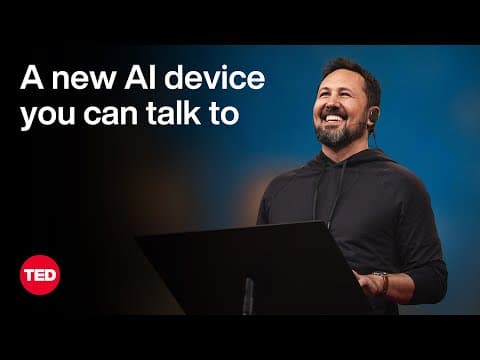
Jason Rugolo introduces a groundbreaking concept in technology: audio computers that facilitate natural language conversations, aiming to create a healthier relationship with technology by reducing screen time and enhancing user experience through intuitive auditory interfaces.
In a world where technology often isolates us, Jason Rugolo reflects on the paradox of our digital lives. He recalls a moment at a Chipotle, observing people engrossed in their phones, only to realize he was doing the same. This experience sparked a question: how can we foster a healthier relationship with technology?
Rugolo's journey began with a desire to explore what comes next in technology. After spending three years at ARPA-E and working at Google X, he founded a company called iyo. Over the past decade, he has been dedicated to envisioning a new kind of computer—one that communicates in natural language rather than through screens and clicks.
Today, Rugolo unveils a prototype of what he calls an "audio computer." Unlike traditional computers, this device does not have a screen. Instead, it aims to replace some functions of visual computers by utilizing an audio-based user interface. This interface relies on natural language for input and auditory space for output, allowing for genuine, engaging conversations with technology.
To illustrate the capabilities of this audio computer, Rugolo shares a conversation with an AI assistant named Q. In this exchange, Q provides encouragement and even shares a positive message from Rugolo's father, showcasing the intuitive and supportive nature of the interaction. This example highlights the difference between robotic voice commands and a natural conversation, emphasizing the importance of emotional connection in communication.
Rugolo explains that the foundation of this technology lies in spoken language, a uniquely human form of communication that has evolved alongside our consciousness. Modern neuroscience supports the idea that thinking is a collective process, enhanced through conversation. This understanding leads to the potential for computers to engage with us in a more human-like manner, utilizing superhuman processing speed and vast knowledge.
Imagine transforming mundane tasks like checking emails or searching for information into conversational experiences. Instead of swiping and typing, users could simply talk about what they need, making interactions feel more natural and less burdensome. Rugolo envisions a future where audio computers can replace many functions of smartphones, allowing users to engage with technology in a more meaningful way.
The audio computer is designed to be an all-day wearable device that enhances the auditory experience. Rugolo describes it as a mixed-reality device, akin to the Apple Vision Pro but focused on audio. Through extensive research in psychoacoustics, the team has developed technology that allows users to control their personal soundscapes, creating immersive auditory experiences.
To demonstrate the capabilities of the audio computer, Rugolo simulates a noisy restaurant scenario where the device enhances the sounds of friends at the table while reducing background noise. This showcases the potential for audio computers to improve communication in challenging environments, making conversations clearer and more enjoyable.
The potential applications for audio computers are vast. Rugolo imagines educational apps that adapt to individual learning styles, fitness coaches that provide motivation through conversation, and personalized soundscapes for relaxation and focus. The only limit is the imagination of developers who will create new applications for this technology.
Rugolo concludes by emphasizing that the goal of audio computers is not to monetize attention or create dependency on devices. Instead, the aim is to interface machines with humans in a way that feels natural and intuitive. As we move forward, it is time for a computer that speaks our language, fostering a more connected and engaged relationship with technology.
In summary, the introduction of audio computers represents a significant shift in how we interact with technology, promising a future where conversations with machines are as natural as those with fellow humans.