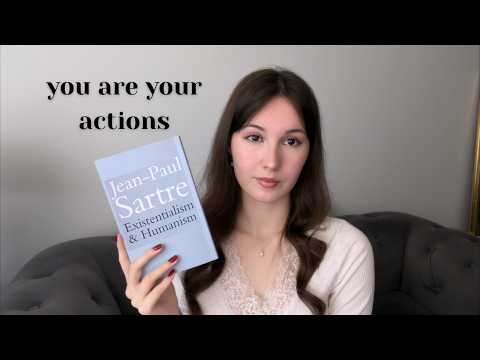
In section 34 of 'Counsels and Maxims', Schopenhauer explores why intelligent individuals often face social derision, while those of lower intelligence may achieve social success. He delves into the psychological underpinnings of this phenomenon, discussing envy, the dynamics of social interactions, and the implications for both men and women in society.
In section 34 of Counsels and Maxims, Arthur Schopenhauer provides a profound analysis of why intelligence is often met with derision and social rejection. He contrasts this with the social success of individuals with lower intelligence, offering insights into the psychological mechanisms that underpin these social dynamics. Schopenhauer's observations extend to the ways in which women judge each other based on beauty, adding another layer to his exploration of societal interactions.
Schopenhauer begins by asserting that a person who believes they can gain popularity through the display of intelligence is naive. He argues that for the vast majority, intelligence provokes feelings of hatred and resentment. This reaction is compounded by the fact that individuals often suppress their true feelings, making it difficult for them to understand the root of their anger.
When someone recognizes that they are conversing with a person of superior intellect, they may unconsciously conclude that this person holds a low opinion of their own abilities. This realization can lead to a deep-seated resentment, which Schopenhauer describes as a "pathos of distance"—a subconscious driver of hostility felt by those who perceive themselves as inferior.
Schopenhauer notes that to be well-liked, one must exhibit a simplicity of demeanor, akin to that of the most basic animals. He references the Spanish writer AR Graian, who suggested that simplicity is key to social acceptance. Displaying intelligence, according to Schopenhauer, is often perceived as an indirect reproach to others, highlighting their own limitations. This perception can lead to hostility, as individuals feel insulted by the mere presence of someone who is intellectually superior.
He further explains that it is natural for individuals of lower intellect to react with agitation when faced with opposition, such as the presence of a more intelligent person. Envy, he argues, is a hidden cause of this hostility, as people derive pleasure from interactions that bolster their vanity, which is often achieved through comparison with others.
Schopenhauer warns that revealing one's intellectual superiority can provoke vengeance from those who feel threatened. Insults often arise as a means of re-establishing a sense of equality in the realm of will, where individuals feel they have a fighting chance against their intellectual betters. In contrast, those of higher intellect may find themselves socially isolated, as their abilities can evoke resentment and hostility.
He emphasizes that while social rank and wealth often guarantee deference, intellectual ability does not enjoy the same privilege. Instead, it is frequently ignored or regarded as impertinent. When intellectual superiority is acknowledged, it can lead to attempts to humiliate the individual who possesses it, as others seek to restore their own sense of worth.
Schopenhauer observes that mediocrity is often favored in social settings. Individuals with lower intellectual abilities tend to be more affable and sociable, making them more likely to attract friends and support. In contrast, those with superior intellect may struggle to connect with others, as their pride and lack of flattery can alienate them.
This dynamic extends beyond personal relationships to various fields, including politics, science, and the arts, where mediocrity often prevails over merit. Schopenhauer reflects on his own experiences, suggesting that the recognition of intellectual merit is often delayed or overlooked in favor of more socially acceptable qualities.
Schopenhauer also draws parallels between intelligence and beauty, particularly in the context of women. He notes that attractive women often find themselves shunned by their peers, as others seek to avoid the discomfort of comparison. This phenomenon is less pronounced when a woman of beauty also possesses social rank, as rank provides a reflective glow that can enhance social standing rather than diminish it.
He concludes that just as intelligence can isolate individuals, beauty can create similar barriers among women. The desire to associate with those perceived as inferior in intellect or beauty is a fundamental aspect of human social behavior, driven by instinctual needs for validation and comfort.
In section 34 of Counsels and Maxims, Schopenhauer offers a compelling examination of the societal dynamics surrounding intelligence and beauty. His insights into the psychological underpinnings of social interactions reveal the complexities of human relationships, where envy, pride, and the quest for social acceptance often dictate behavior. Understanding these dynamics can provide valuable lessons for navigating the social landscape, particularly for those who find themselves on the intellectual or aesthetic periphery.