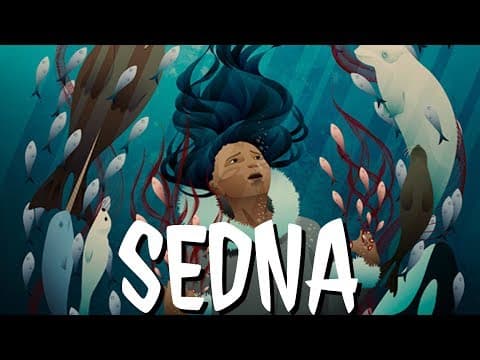
Sedna, known as the goddess of the sea in Inuit mythology, plays a crucial role in the survival of the Inuit people by controlling marine life. Her transformation from a beautiful maiden to a powerful spirit reflects themes of love, betrayal, and the importance of respecting nature. Sedna's story emphasizes the need for harmony between humans and the natural world, as well as the consequences of neglecting this balance.
Inuit mythology is rich with fascinating deities, and one of the most significant among them is Sedna, the goddess of the sea and marine animals. Known as Nuyoc in the Northwest Territories of Canada, Sedna holds a vital role in Inuit culture, revered as the mother of the sea. Her dominion over marine creatures makes her a central figure in the survival of the Inuit people, who depend on these animals for sustenance.
Sedna's significance stems from her control over the availability of essential sea creatures such as seals, walruses, fish, and whales. These animals are crucial for the Inuit hunters, who rely on them for food and materials necessary for their survival. The Inuit people worshipped Sedna, recognizing her as a powerful force that could either provide for them or withhold her bounty.
Sedna's story begins with her life as a beautiful young maiden living in the Arctic with her parents. Her father was a skilled hunter, ensuring that the family had plenty of food and furs. Sedna enjoyed the comforts of home so much that she refused to marry any of the suitors who sought her hand. Despite her parents' insistence that she should marry, Sedna remained steadfast in her decision.
One day, a man from the Anak tribe visited her and proposed marriage, promising to provide her with everything she needed. For the first time, Sedna agreed to marry, but soon discovered that her husband was not who he claimed to be. He revealed himself to be a mythical bird creature disguised as a man. Furious and trapped on his island, Sedna realized that he was a poor hunter, only able to catch fish, which she quickly grew tired of.
Meanwhile, Sedna's father missed her dearly and decided to kayak to the island to bring her back. Upon seeing her unhappy state, he killed the Birdman and took Sedna back with him. However, the Birdman's friends sought revenge for their fallen comrade, creating a storm that threatened to capsize the kayak. In a moment of panic, Sedna's father threw her into the icy waters, hoping to appease the vengeful spirits.
As Sedna clung to the kayak, her father, fearing for their lives, cut off her fingers. Each finger that fell into the sea transformed into a different sea creature. As she sank to the ocean's depths, Sedna became a powerful spirit, gaining a fish tail from the waist down, akin to that of a mermaid.
In her new form, Sedna was often viewed as a vengeful goddess. The Inuit believed that unsuccessful hunts were a sign of her displeasure. When hunters returned empty-handed, it was said that Sedna was in a bad mood and refused to share her creatures. To appease her, shamans would transform into fish and dive to the ocean floor to calm her tangled hair.
When Sedna was pleased, she would allow her sea creatures to be available to the hunters. However, they had to respect her by properly sacrificing the animals in her name. Failure to do so would invoke her wrath, resulting in raging waves that could capsize their kayaks and drown them.
Sedna remains one of the most worshipped deities among the Inuit people across various polar regions. She symbolizes the delicate balance between humanity and nature, providing food and shelter as long as she is honored and respected. The story of Sedna serves as a reminder of the importance of maintaining harmony with the natural world and the consequences of neglecting this vital relationship.
This concludes our exploration of Sedna, the goddess of the sea. Thank you for joining us, and we hope you learned something new about this captivating figure in Inuit mythology.