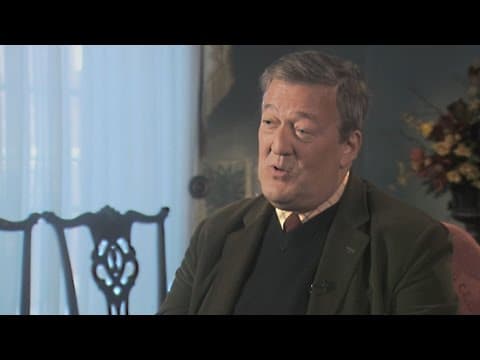
In a thought-provoking discussion, Stephen Fry confronts the concept of God, questioning the existence of a benevolent deity in light of human suffering and injustice. He argues that if God exists, He is monstrous for allowing such pain, particularly in children. Fry contrasts this with the Greek gods, who were more relatable in their flaws. Ultimately, he suggests that rejecting the notion of a capricious God leads to a more meaningful life.
In a compelling discussion, Stephen Fry presents a bold perspective on the existence of God, particularly in the context of human suffering and injustice. His thoughts challenge traditional views of a benevolent deity and delve into the philosophical implications of theodicy, the study of why a good God would permit evil.
Fry begins by imagining a scenario where he confronts God at the Pearly Gates. He poses a critical question: if he were to meet God, what would he say? His response is strikingly direct and confrontational. He would ask about the existence of bone cancer in children, expressing outrage at the suffering that exists in the world. Fry's argument centers on the idea that it is unacceptable for a deity to create a world filled with such misery, particularly when it is not the fault of the innocent.
Fry's critique extends to the very nature of God. He questions why anyone should respect a God who appears capricious, mean-minded, and indifferent to human suffering. He describes the world as one created by a "maniac"—a being who demands gratitude from humanity while allowing horrific injustices to occur. Fry's perspective is that the existence of such suffering is fundamentally at odds with the notion of a loving and just God.
In contrast to the traditional monotheistic view of God, Fry references the Greek pantheon. He suggests that the Greek gods were more relatable because they did not pretend to be all-knowing or benevolent. Instead, they embodied human flaws and appetites, which made them more understandable. Fry argues that if the universe were governed by such gods, there would be a greater acceptance of their nature, as they did not claim to be perfect.
Fry's argument leads to a broader discussion about the problem of evil. He highlights the existence of creatures that cause suffering, such as insects that burrow into the eyes of children, leading to blindness. He questions why a benevolent creator would allow such horrors to exist when it would be within their power to create a world free from such pain. This line of reasoning reinforces his view that if God exists, He is not deserving of respect.
Fry concludes that atheism is not merely about the absence of belief in God but also about the rejection of the idea of a monstrous deity. He argues that acknowledging the possibility of such a God complicates life unnecessarily. By banishing the concept of a capricious God, Fry believes that life becomes simpler, purer, and ultimately more worthwhile.
Stephen Fry's reflections on God and the problem of evil provoke deep philosophical questions about faith, suffering, and the nature of divinity. His candid critique challenges believers to reconsider their understanding of God in light of the suffering present in the world. Fry's perspective encourages a dialogue about the implications of belief and the moral responsibilities that come with it, ultimately suggesting that a life free from the constraints of a capricious deity can lead to a more meaningful existence.