Friedrich Nietzsche's philosophy, often misunderstood and controversial, has profoundly influenced 20th-century culture and thought. His ideas on nihilism, the death of God, and the concept of the Übermensch challenge traditional values and metaphysics, prompting a reevaluation of morality and existence.
Friedrich Nietzsche, a German philosopher, is as well-known as Socrates, Descartes, and Marx. However, his relationship with society, particularly in Russia, has been complex. During the Soviet era, his works were banned, but following the collapse of the Soviet Union, there was a surge of interest in his writings. This raises the question: why was Nietzsche's influence so significant, and what makes his ideas resonate even today?
Many people associate Nietzsche with the last decade of his life, spent in a psychiatric hospital, often interpreting it as a divine punishment for his blasphemous writings. However, it is essential to note that other philosophers, such as Paul Gauguin, Ludwig Feuerbach, and Karl Marx, also wrote controversial works and did not suffer the same fate. The reasons behind Nietzsche's mental decline remain a mystery, and instead of speculating on that, we should focus on the approximately 20 years of his life when he produced his most famous works.
Nietzsche's writings are not easily categorized as traditional philosophy. Instead, they often resemble a collection of aphorisms and thoughts that challenge conventional metaphysical philosophy. He positioned himself as a herald of a new era, one that would transcend traditional values and embrace the concept of the "Übermensch" or "superman."
Understanding Nietzsche requires grappling with several key concepts:
Nietzsche's work, The Gay Science, features a pivotal moment where a madman proclaims, "God is dead!" This declaration signifies a critical turning point in human history, suggesting that humanity has outgrown the need for a divine moral compass. Nietzsche's assertion is not about the literal death of God but rather a commentary on the decline of traditional values and beliefs.
Nietzsche's proclamation of the death of God reflects a broader cultural shift. He critiques the Platonic ideal of a higher, eternal world of forms, arguing that this perspective leads to a denial of life and existence. Instead, he emphasizes the importance of embracing the material world and living authentically.
In Twilight of the Idols, Nietzsche articulates that the true world has become a myth, and the values that once guided humanity are now obsolete. He argues that the rise of nihilism—an acknowledgment that life lacks inherent meaning—follows the decline of these traditional values.
Nihilism, for Nietzsche, is not merely a negative state but a necessary phase in the reevaluation of values. He identifies several stages of nihilism:
Central to Nietzsche's philosophy is the concept of the Übermensch, a figure who transcends conventional morality and creates new values. This idea is often misinterpreted, particularly in the context of its appropriation by Nazi ideology. However, Nietzsche's Übermensch is not a superhuman in the sense of physical prowess but rather an individual who has overcome societal constraints and embraces life fully.
The will to power is another crucial concept, representing the fundamental driving force in humans—not merely a desire for dominance but a creative force that seeks to assert and enhance one's existence. Nietzsche argues that traditional morality often serves the weak, allowing them to impose their values on the strong.
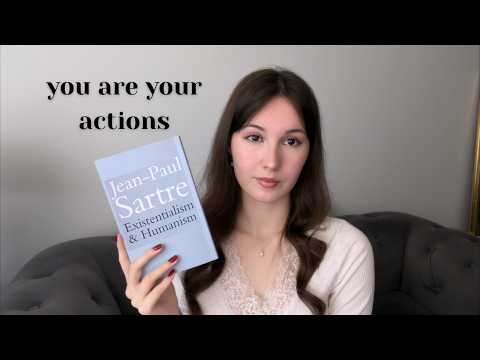
Nietzsche's ideas have had a profound impact on various philosophical movements, including existentialism and the philosophy of life. His rejection of objective truths and emphasis on individual experience paved the way for thinkers like Kierkegaard, Heidegger, and Sartre, who explored the complexities of human existence.
Despite Nietzsche's intention to dismantle traditional philosophy, his work inadvertently contributed to the emergence of new philosophical frameworks that prioritize individual experience and subjective truth. His critique of metaphysics and morality continues to resonate in contemporary discussions about ethics, existence, and the nature of reality.
Friedrich Nietzsche's philosophy, often shrouded in controversy, offers a compelling critique of traditional values and metaphysics. His exploration of nihilism, the death of God, and the concept of the Übermensch challenges us to reevaluate our understanding of morality and existence. Nietzsche's influence extends beyond atheism and radical ideologies, shaping modern thought and prompting a deeper inquiry into the nature of life and the human experience.