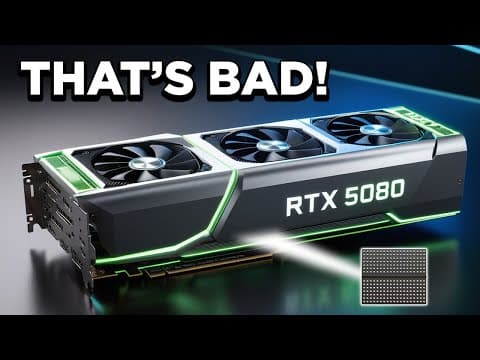
Nvidia's upcoming RTX 5000 series faces significant challenges, particularly regarding VRAM limitations, while AMD's RX 8000 series specs have leaked, revealing similar concerns. Intel is also making strides with its Druid GPUs, but the future of discrete GPUs remains uncertain.
In the ever-evolving landscape of graphics processing units (GPUs), both Nvidia and AMD are gearing up for their next-generation offerings. However, recent developments suggest that Nvidia's RTX 5000 series may encounter significant issues, particularly concerning VRAM limitations. Meanwhile, AMD's RX 8000 series specs have finally leaked, revealing a competitive yet concerning outlook. Additionally, Intel is making strides with its Druid GPUs, but the future of discrete GPUs remains uncertain.
Intel has recently announced its Battle Mage GPUs, but the company is already looking ahead to its next-generation Celestial and even further to the Druid architecture. Tom Peterson, a notable figure from Intel who previously worked at Nvidia, shared insights during a podcast, indicating that the architecture known as XC3 is well underway, while the hardware teams are already focused on XC4.
Despite these advancements, there are concerns regarding Intel's commitment to discrete GPUs. The company has made significant cuts to its discrete GPU teams, raising questions about the future of its offerings in this space. While some speculate that Intel may still support discrete GPUs, the uncertainty remains, especially given the architecture's integration into Intel's mobile division.
The RTX 5000 series, particularly the RTX 590, is reportedly facing a major issue related to VRAM. Recent benchmarks for the new Indiana Jones game have highlighted the growing demands for VRAM, with the game requiring at least 12 GB to run optimally. This requirement has raised alarms, especially for users with GPUs that have less than 12 GB of VRAM, as they struggle to achieve satisfactory performance.
Testing conducted by ComputerBase revealed that at 1080p resolution with the highest settings, GPUs with less than 12 GB of VRAM are severely hindered. For instance, the RTX 380 performed worse than the AMD A770 and was significantly outperformed by the 6700 XT and 7700 XT. This trend raises concerns about the RTX 5000 series, as leaks suggest that most cards, except for the RTX 590, will maintain the same VRAM as their predecessors. If true, this could lead to similar performance issues as seen with the current generation.
While Nvidia's challenges are becoming clearer, AMD's RX 8000 series specs have also been leaked, providing insight into what consumers can expect. According to reliable sources, the RX 8600 XT is expected to feature 32 compute units (CUs) and 8 GB of VRAM, mirroring the specifications of the previous generation. This raises concerns about AMD's ability to compete effectively against Nvidia, especially if both companies are adopting similar strategies regarding VRAM.
The RX 8800 XT is rumored to come with 64 CUs and 16 GB of VRAM, along with 64 MB of Infinity Cache. However, the performance expectations are tempered, as it may not significantly outperform the previous generation's offerings. The focus on ray tracing performance could provide a competitive edge, but the overall specs have left some consumers underwhelmed.
As the GPU market heats up with the impending releases of Nvidia's RTX 5000 series and AMD's RX 8000 series, both companies face significant challenges. Nvidia's potential VRAM limitations could hinder performance, while AMD's leaked specs suggest a cautious approach that may not excite consumers. Meanwhile, Intel's future in the discrete GPU market remains uncertain, despite ongoing developments. As gamers and tech enthusiasts await these new releases, the question remains: will these next-gen GPUs meet the growing demands of modern gaming?