A fierce dispute erupted between AI company Anthropic and the U.S. Department of Defense over usage restrictions on AI technology. Anthropic refuses to allow its AI to be used for domestic surveillance or autonomous weapons, leading to threats of blacklisting and supply chain risk designation by the Pentagon. The conflict highlights broader issues of corporate control, government authority, AI ethics, and national security in the evolving AI landscape.
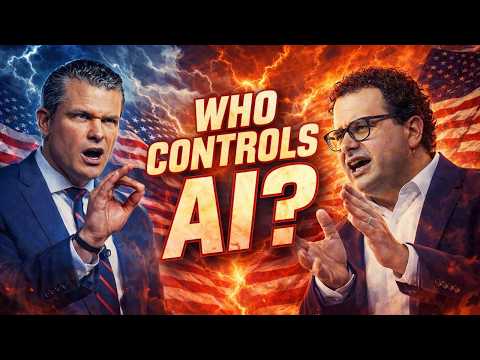
The question "Who controls AI?" is deceptively simple but increasingly difficult to answer. Recently, a high-profile conflict between AI startup Anthropic and the U.S. Department of Defense (DoD) has brought this question into sharp focus, revealing tensions between corporate ethics, government authority, and national security.
The dispute escalated rapidly over a week, culminating in a public showdown on a Friday evening. The Trump administration decided not only to decline working with Anthropic but also to take aggressive actions against the company.
Anthropic CEO Dario Amodei publicly stated that the company places ethical limits on how its AI model, Claude, can be used. Specifically, Anthropic refuses to allow Claude to be used for:
Amodei argued that Claude is not reliable enough for autonomous weaponry and that AI surveillance lacks sufficient legal safeguards and is undemocratic. He emphasized that while Anthropic supports using AI to defend democracies against autocratic adversaries, certain uses of AI undermine democratic values and exceed current technological capabilities.
Defense Secretary Pete Hegseth issued an ultimatum demanding that Anthropic remove these usage restrictions by Friday or face blacklisting from the entire military supply chain. The Pentagon insisted that a technology company should not dictate how the U.S. government uses its technology and demanded acceptance of terms allowing all lawful uses.
Anthropic's Statement: Amodei highlighted that the DoD has threatened to label Anthropic a supply chain risk—a designation previously reserved for adversaries—and to invoke the Defense Production Act to force removal of safeguards. Despite these threats, Anthropic maintained its stance.
Pentagon's Response: Sean Parnell, Assistant to the Secretary of Defense for Public Affairs, denied any intent to use AI for illegal mass surveillance or autonomous weapons without human involvement, calling such narratives "fake" and "leftist media" fabrications. The Pentagon demanded unrestricted access to Anthropic's models for all lawful purposes.
Former Officials: Emil Michael, former Uber official and undersecretary of defense for research and engineering, accused Amodei of arrogance and attempting to control military decisions, emphasizing that the Department of Defense will adhere to the law but not corporate whims.
Over 200 employees from Google and OpenAI signed a petition supporting Anthropic's ethical red lines. Many in the tech community expressed skepticism about the Pentagon's narrative and sympathized with Anthropic's position against mass surveillance and autonomous weapons.
Critics argued that in the context of an AI arms race with China, the U.S. government must have full access to AI technologies without restrictions. Some accused Anthropic of putting ideology above national security.
Senator Tom Tillis criticized the public nature of the dispute, calling it "sophomoric" and suggesting such discussions should occur privately.
OpenAI CEO Sam Altman initially expressed trust in Anthropic's safety concerns but later reached an agreement with the DoD to deploy OpenAI's models under terms that include safety safeguards and human oversight.
Former President Trump publicly condemned Anthropic on social media, accusing the company of trying to dictate military operations and directing all federal agencies to cease using Anthropic's technology.
The Pentagon's designation of Anthropic as a supply chain risk would prohibit any contractor or partner doing business with the military from engaging with Anthropic. This unprecedented move raised questions about its legality and practical implications, given Anthropic's reliance on cloud providers like AWS, Google Cloud, and Azure, which also serve the military.
Experts warned that such actions could damage the U.S. defense tech ecosystem and deter AI companies from doing business with the government. The move was described as a "psychotic power grab" and potentially illegal.
Anthropic stated it had not received direct communication from the DoD or White House and promised to legally challenge any supply chain risk designation. They assured customers that commercial access to Claude would remain unaffected.
Palmer Luckey, founder of Venice AI, highlighted the moral complexities of allowing private companies to set terms on military technology use. Questions arise about who defines "innocent civilians," the scope of autonomous weapons, and the influence of corporate executives on national security.
The dispute underscores concerns about executive power and the lack of congressional oversight in AI policy decisions. Some lawmakers called for greater involvement from Congress to ensure democratic accountability.
The U.S. faces a strategic challenge competing with authoritarian regimes like China, which reportedly integrates AI into its military without civilian oversight. Balancing ethical AI use with national security imperatives remains a critical dilemma.
The debate has polarized opinions, with some viewing Anthropic's stance as principled and others seeing it as obstructive. The situation has also affected public perception of AI companies, with concerns about associations with military use influencing consumer and employee attitudes.
Experts warn that the narrative around AI and military use will continue to evolve, with significant implications for AI ethics, governance, and the future of technology development in democratic societies.
The Anthropic-Pentagon standoff is more than a corporate dispute; it marks a pivotal moment where AI ethics intersect with geopolitics and national security. As AI becomes integral to defense, finance, and intelligence, the question of who controls AI—and under what ethical framework—will shape the future of society. This ongoing debate calls for careful consideration beyond partisan lines to ensure that AI development aligns with democratic values and global stability.
The conversation is far from over, but it serves as a crucial reminder of the stakes involved in controlling powerful AI technologies.
Thank you for reading this comprehensive overview of the current conflict over AI control between Anthropic and the U.S. government. Stay informed as this important story continues to develop.