The US and China are engaged in a multifaceted race for AI supremacy, with the US leading in advanced AI chips and models, while China excels in embedding AI into physical applications like robotics and manufacturing. Despite US claims of dominance, experts highlight China's rapid progress and unique strategies, including open-source models and energy-efficient AI deployment. The competition is intensifying amid allegations and geopolitical tensions.
The race for artificial intelligence (AI) supremacy between the United States and China is one of the defining technological competitions of our time. Recent discussions during President Donald Trump's state visit to Beijing, involving top American CEOs and Chinese Premier, have brought this rivalry into sharp focus. While US officials and some executives assert American leadership in AI, experts and analysts paint a more nuanced picture of the evolving landscape.
During the visit, Chinese Premier urged American CEOs to help maintain healthy bilateral relations. The delegation included influential figures such as Tim Cook, CEO of Apple, and Jensen Huang, CEO of NVIDIA. Discussions were expected to cover trade, investment, and the heated AI race between the two countries. Executives described the talks as productive and positive.
Tim Cook praised the meeting with Chinese President Xi Jinping, describing it as "marvelous" and highlighting the welcoming atmosphere. Meanwhile, NVIDIA's Jensen Huang's last-minute inclusion in the delegation underscored the critical role of AI technology and chip sales in the US-China relationship.
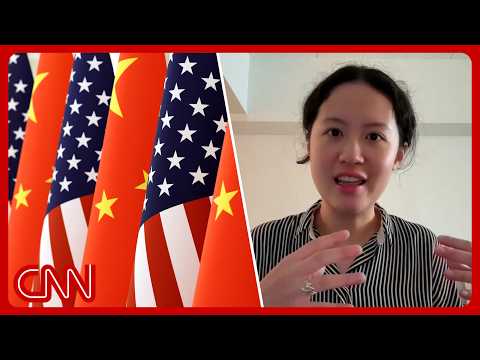
Selina Xu, a China technology analyst, offers a compelling analysis of the AI competition. In a recent Time Magazine piece, she noted that while American frontier labs focus on large language models and cutting-edge AI research, China is embedding AI into physical applications, such as robotics and manufacturing, which she terms the "physical AI future."
Xu emphasizes that these differing strategies mean the US and China are running distinct AI races, each with unique advantages.
Jensen Huang's presence on the trip signals the importance of AI chip sales in China. NVIDIA's H200 chip sales have stalled due to US Department of Commerce security reviews, and Huang's involvement aims to accelerate these sales and maintain NVIDIA's market share in China. Previously holding 95% of the advanced AI chip market in China, NVIDIA's share has dropped below 40% as Chinese companies increasingly adopt domestic alternatives, such as Deepseek's V4 model optimized for Huawei's Ascend architecture.
Elon Musk's agenda centers on leveraging Chinese supply chains for his commercial ventures, including Tesla's Shanghai Gigafactory and Optimus humanoid robots. Maintaining and expanding access to the Chinese market and supply chains is crucial for reducing hardware costs and accelerating the adoption of AI-embedded products like electric vehicles and robots.
Energy availability and infrastructure are critical to powering AI advancements. China is heavily investing in abundant, cheap, and green energy sources, with one in four gigawatts consumed last year coming from renewables. This focus on energy self-sufficiency aims to support the explosive energy demands of future AI development and ensure national security and stability.
In contrast, the US has invested billions in AI infrastructure globally, including major data centers in the Gulf region. However, geopolitical tensions, such as conflicts involving Iran, pose risks to this infrastructure.
A recent report highlights that the performance gap between American and Chinese AI models has nearly vanished despite US chip export restrictions. While the US still leads in releasing top-tier models, China excels in research output and robotics deployment.
Chinese innovators have made significant strides in advanced video generation and have developed efficiency innovations to maximize performance on less cutting-edge chips. These adaptations are partly driven by export control constraints, which have spurred unique innovation paths.
Meanwhile, the White House accuses Chinese AI firms of copying American models through industrial-scale campaigns involving a technique called "distillation," which transfers knowledge from one model to another. Beijing denies these allegations, calling them groundless and deliberate attacks on China's AI progress.
The AI rivalry between the US and China is complex and multifaceted. While the US maintains leadership in advanced AI chips and frontier models, China is rapidly advancing in embedding AI into physical applications and scaling deployment across industries. Both countries are pursuing different strategies shaped by their unique strengths, challenges, and geopolitical considerations.
As the competition intensifies, collaboration and dialogue, such as the discussions on AI guardrails between the two superpowers, will be crucial in shaping the future of AI development and its global impact.
The evolving landscape of AI underscores the importance of understanding not just who leads in raw technological capability but also how AI is integrated into society and industry, setting the stage for the next phase of innovation and competition.
This comprehensive overview draws on insights from industry leaders, analysts, and recent reports to provide a balanced understanding of the US-China AI race, highlighting the stakes, strategies, and implications for the global technology landscape.