The British Museum, housing millions of artifacts, faces growing scrutiny over the ownership of many items, particularly those acquired during colonial times. The debate centers on whether these artifacts should be returned to their countries of origin, highlighting the complex legacy of colonialism and cultural identity.
The British Museum is renowned as the world’s largest museum dedicated to world history, attracting millions of visitors annually. With over 8 million cultural and historical artifacts spanning 2 million years of human history, it showcases a vast array of treasures. However, a significant issue lurks within its walls: the ownership of many of these artifacts is disputed.
Among the museum's star pieces, nearly half of the items on the recommended “Don’t Miss” list have contested ownership. While the British Museum asserts that these artifacts belong in its collection, there is a growing movement advocating for their return to their countries of origin. This raises a critical question: Should cultural artifacts be returned to their home countries, or should they remain in Western museums?
To understand the current debate, it is essential to consider the historical context. The British Empire, at its height in the late 1600s, became the largest empire in history, controlling about a quarter of the world’s land and population. During its expansion, the empire extracted vast resources and wealth from various countries, including thousands of cultural artifacts that now reside in the British Museum, founded in 1753.
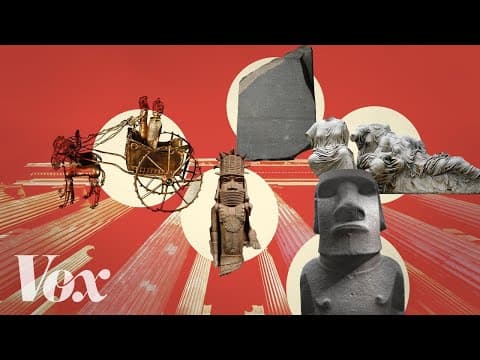
While many items in the museum were legally acquired, such as a 2,000-year-old Roman vase purchased from a Duke in 1945, numerous artifacts were taken under dubious circumstances. For instance, the Rosetta Stone was seized by British troops from the French in Egypt, and the Parthenon Sculptures were removed from Athens by a British Lord.
One of the most contentious groups of artifacts in the British Museum is the Benin Bronzes. These items, which include engraved ivory tusks, brass sculptures, and plaques, were produced in the Kingdom of Benin (present-day Nigeria) starting in the 1500s. They served not only as decorative pieces but also as visual archives of the kingdom's history, narrating the political and social life of a society that did not develop a written script.
In 1897, during the colonial expansion known as the “Scramble for Africa,” the British launched a punitive expedition against Benin after local guards killed British emissaries. This expedition resulted in the conquest of the city, where British soldiers looted thousands of artifacts, which were then transported to the British Museum and sold worldwide. The once-prosperous Kingdom of Benin fell under British colonial control until Nigeria gained independence in 1960, yet its historical artifacts remained scattered across Western institutions.
Art historian Professor Chika Okeke-Agulu, who teaches at Princeton University, recalls his first encounter with ancient Benin artwork at the British Museum in 1995. He describes a mix of pride in the achievements of ancient artists and anger at the loss of cultural heritage, noting that most Nigerians will never have the opportunity to see these artifacts in person.
In March 2000, the royal family of Benin formally requested the return of cultural property taken illegally. However, the British Museum has largely ignored these requests, citing a government act that restricts the return of objects. In a statement to Vox in July 2020, the museum emphasized its commitment to lending artifacts rather than restituting them, asserting that its value lies in its comprehensive collection.
Chika Okeke-Agulu argues that the British Museum continues to operate as a colonial institution, claiming ownership of stolen objects. Despite some efforts to address this issue, such as the return of items by descendants of British soldiers involved in the 1897 expedition and the formation of the Benin Dialogue Group in 2007, no Benin Bronzes have been returned to date.
The legacy of contested artifacts extends beyond the Benin Bronzes, encompassing hundreds of other items in the British Museum with rich histories and original owners seeking their return. This issue reflects a broader legacy of colonial power and raises questions about cultural and historical identity.
The debate over the ownership of artifacts in the British Museum is not merely about physical objects; it is about cultural identity and the recognition of historical injustices. As discussions continue, it is clear that the process of cultural reconstitution must begin now, rather than waiting for future generations to address these complex issues. The journey toward restitution and reconciliation is long, but it is a necessary step in acknowledging and rectifying the impacts of colonialism on cultural heritage.