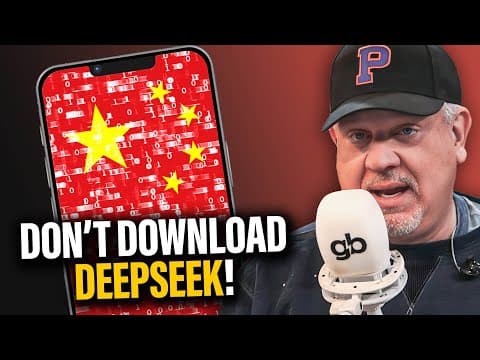
DeepSeek AI, a new Chinese app, raises significant concerns regarding censorship, manipulation, and potential threats to national security. Experts warn that its capabilities may surpass those of Western AI, posing risks to information integrity and privacy.
In recent news, President Trump issued an executive order aimed at directing federal agencies to override California's water management practices if necessary. This move, while controversial, highlights the ongoing tensions between state and federal governance, particularly regarding the allocation of federal funds. However, the focus of this article is not solely on water management but rather on a new AI application that has sparked significant concern among experts: DeepSeek AI.
DeepSeek AI is a new artificial intelligence assistant that has been compared to popular AI models like ChatGPT. However, it has garnered attention not just for its capabilities but also for its origins and implications. The app is primarily in Mandarin, indicating its Chinese roots, and has been described as potentially superior to existing Western AI technologies.
Mark Andreessen, a well-known figure in the tech industry, has expressed concerns about DeepSeek AI, referring to it as a "Sputnik moment." This term suggests that the app represents a significant leap in technology that could have far-reaching implications for global AI competition. Experts in the field have noted that DeepSeek AI is not censored in the same way that Western AI models are, raising alarms about the potential for misinformation and manipulation.
One user of DeepSeek AI conducted an experiment by asking the app to provide information on controversial historical figures. Initially, the app provided accurate responses regarding figures like Mao Zedong and Genghis Khan, but these answers were quickly deleted or altered in real-time. This behavior raises serious questions about the app's reliability and the extent of censorship it may be subject to.
The ability of DeepSeek AI to edit its responses on the fly suggests a level of control that could be used to manipulate information. When asked about the historical impact of Mao, the app initially provided detailed information before retracting it, claiming confusion. This pattern of behavior indicates that the app may be programmed to align with the Chinese Communist Party's narrative, potentially compromising the integrity of the information it provides.
As AI technology continues to evolve, the potential for misuse becomes increasingly concerning. Experts warn that if China were to gain a technological advantage in AI, it could lead to significant security risks for other nations. The fear is that advanced AI could be used to infiltrate critical infrastructure, banking systems, and other vital sectors, posing a threat to national security.
The current landscape of AI development shows that China is not lagging behind the West as previously thought. With DeepSeek AI ranking number one in the App Store, it is clear that this technology is gaining traction. The implications of this are profound, as it suggests that the balance of power in AI development may be shifting.
Given the potential dangers associated with DeepSeek AI, experts strongly advise against downloading the app. The risks of censorship, manipulation, and the potential for national security threats are too significant to ignore. As we navigate this new era of AI technology, it is crucial to remain vigilant and informed about the tools we choose to engage with. The future of AI is uncertain, and the stakes have never been higher.