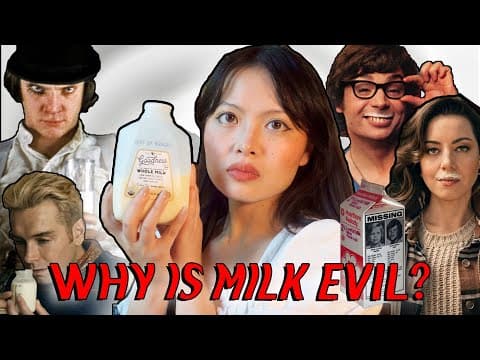
This blog post explores the complex symbolism of milk in culture and media, highlighting its associations with innocence, purity, and childhood, as well as its subversion to represent evil and toxicity. It delves into historical perspectives on milk consumption, its portrayal in films, and the ongoing debate about its health benefits and cultural significance.
Milk has long been a staple in many diets, often associated with childhood innocence and purity. However, its symbolism is far more complex, intertwining themes of evil, toxicity, and societal norms. This blog post explores the multifaceted representations of milk in culture and media, tracing its historical significance and examining its portrayal in various narratives.
The narrator begins with a personal anecdote about their childhood aversion to milk, feeling isolated in their dislike during the height of the "Got Milk?" campaign. They recall classmates, particularly a boy named Henry, who would drink milk in a way that only reinforced their distaste. Despite their protests, parental pressure to consume milk for its supposed health benefits persisted, leading to a lifelong ambivalence towards the beverage.
In fiction, milk often symbolizes innocence and childhood. Its white color is associated with purity, making it a fitting choice for children. For instance, in Steven Spielberg's Catch Me If You Can, Leonardo DiCaprio's character drinks milk in a cockpit, emphasizing his youth and immaturity. Similarly, James Dean's character in Rebel Without a Cause drinks milk from a bottle, highlighting the tension between youthful innocence and the challenges of adulthood.
Conversely, milk can also represent evil and corruption. A notable example is Malcolm McDowell's character in A Clockwork Orange, who drinks drug-laced milk before committing acts of violence. This juxtaposition of milk's innocent connotations with its association with malevolence is further explored in the character of Homelander from The Boys, whose milk consumption reflects his twisted need for maternal affection and his corrupted childhood.
Artists have also played with the symbolism of milk. Photographer Ellen von Unwerth's series Heimat features provocative images that challenge the purity associated with milk, while the Got Milk? campaigns have faced criticism for their sexual undertones. These artistic interpretations highlight the tension between milk's innocent image and its potential for subversion.
The belief in milk's nutritional value has deep historical roots. In the early 1700s, Scottish physician George Cheney promoted a "Milk Diet" as a remedy for various health issues. This idea gained traction, especially as early nutritional science began to validate the health benefits of milk, particularly its calcium content. By the mid-20th century, milk consumption was institutionalized in schools through programs aimed at improving children's diets while supporting the dairy industry.
Despite its historical significance, milk consumption has declined since its peak during World War II. Factors contributing to this decline include the rise of soft drinks, changing dietary beliefs, and the questioning of milk's health benefits. The 1960s and 70s saw a shift towards low-fat diets, further diminishing milk's status as a dietary staple. Today, many people are turning to alternative sources of calcium and plant-based milk options, reflecting changing attitudes towards dairy.
Milk's symbolism extends beyond nutrition; it has been intertwined with societal issues, including race and gender. The whiteness of milk has been co-opted by white supremacist ideologies, linking it to toxic masculinity and colonialist narratives. Films like Inglourious Basterds and Get Out utilize milk to symbolize characters' adherence to oppressive ideologies.
Milk has also held a sacred place in mythology. In Greco-Roman tales, Juno's breast milk is said to have created the Milky Way, while Christian legends depict milk as a source of spiritual nourishment. This mystical quality contributes to the unsettling portrayal of milk in horror films, where it can symbolize danger and death.
As the dairy industry faces challenges from health-conscious consumers and environmental concerns, the future of milk remains uncertain. While some predict a resurgence of dairy, others embrace plant-based alternatives. Regardless of its fate, milk's rich symbolism and cultural significance will likely endure, continuing to provoke thought and discussion in society.
In conclusion, milk is not just a simple beverage; it is a complex symbol woven into the fabric of our culture, representing innocence, evil, and everything in between. Whether loved or loathed, its impact on our lives and narratives is undeniable.