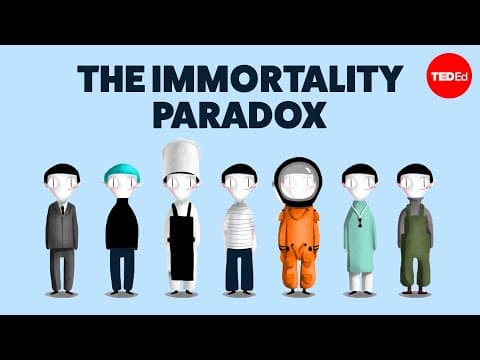
Exploring the philosophical implications of immortality, this post discusses the potential joys and pitfalls of eternal life, including boredom, loss of meaning, and the evolution of personal values.
Imagine stumbling upon a chest in your eccentric uncle's attic, containing a sparkling potion that promises immortality. The tag attached declares that drinking this liquid will freeze your body at its current age, making you immune to disease and serious injuries. The effects are irreversible, ensuring your existence until the heat death of the universe. The question arises: do you drink the potion?
Death is often viewed as a negative outcome, leading many to take precautions against it. We avoid dangerous activities and accept inconveniences to reduce our chances of dying. The allure of immortality suggests a life free from the fear of death, allowing for a boundless exploration of experiences, pleasures, and goals.
Despite the enticing prospect of eternal life, British ethicist Bernard Williams presents compelling reasons to reconsider. He argues that an immortal life could become unbearably boring. For instance, the joy of indulging in your favorite chocolate truffle diminishes with each repetition. Williams posits that engaging in the same activities for eternity would lead to a monotonous existence.
Philosopher John Martin Fischer counters Williams' argument by suggesting that not all pleasurable experiences diminish over time. For example, the beauty of a sunset may remain captivating even after thousands of years. Additionally, our human tendency to forget could allow us to rediscover joy in previously exhausted experiences after centuries.
Fischer, along with Benjamin Mitchell-Yellin, points out that an immortal individual could never read every novel ever written while keeping up with new releases. The pursuit of knowledge and personal goals could provide endless engagement. J.J. Wisnewski imagines an immortal musician who learns every existing instrument and any new ones that emerge, highlighting the potential for continuous growth and exploration.
Another perspective suggests that the novelty of an immortal life could stem from internal changes. Over decades, one might shift interests from painting to becoming an astronaut, chef, or farmer, each transformation offering new experiences. However, Williams raises a critical question: would anyone genuinely desire to live such a constantly changing lifestyle?
Sampling every experience could lead to a lack of core values or ambitions, destabilizing one's sense of self. Over an extended timeline, conflicts with past selves might arise, leading to existential questions about the desire for continued survival.
Skeptics of immortality often cite the emotional toll of outliving loved ones as a reason to remain mortal. However, the prospect of becoming a completely different person over time raises another concern. Williams argues that living within the constraints of our individual character is essential for a meaningful life.
Philosopher Samuel Scheffler emphasizes that temporal scarcity—the limited nature of our time—plays a crucial role in shaping our values. The finite nature of life compels us to determine what is worth pursuing. For Scheffler, immortality undermines the possibility of a meaningful existence, as it removes the urgency that drives us to create value in our lives.
Given these philosophical considerations, some theorists view eternal life as more of a curse than a blessing. Yet, the idea of spending a couple of centuries learning, loving, and enjoying life's pleasures, like chocolate truffles, remains appealing. So, the ultimate question remains: will you drink your uncle's potion?