The Brewarrina Fish Traps, a significant cultural site, are rooted in the Dreamtime stories of the Indigenous people, particularly the tale of Baiame, who created the river and the traps to sustain his people during a time of famine. This narrative highlights the importance of storytelling in preserving cultural heritage and the connection between the land and its people.
For thousands of years, Indigenous elders have shared stories that explain the origins of their land and culture. One such story is that of Baiame, a significant figure in the Dreamtime narratives of the Aboriginal people, particularly in relation to the Brewarrina Fish Traps.
In the beginning, there was only flat red ground. This was the start of the Dreamtime, a period filled with creation and transformation. According to the stories, Baiame entered the land of the moon and the sun, embarking on a journey that would shape the landscape and provide for his people.
Baiame, while on walkabout, took a giant step from Kobar to Ganda, a sacred place for the Nimar people. He then stepped over to Baro, where he left the mark of his footprint on a stone. His journey continued to Briara, where he stopped at a waterhole known as the Gangra. Here, he encountered a large black fish swimming in a pool of water.
Feeling hungry, Baiame raised his spear and struck the fish, but only managed to wound it. The black fish, desperate to escape, crashed through the rock wall, causing water to gush out after it. Baiame, determined to catch the fish, dug into the hard ground, creating large holes as he chased it. The rushing waters filled these holes, forming bends in the river as the fish tried to evade capture.
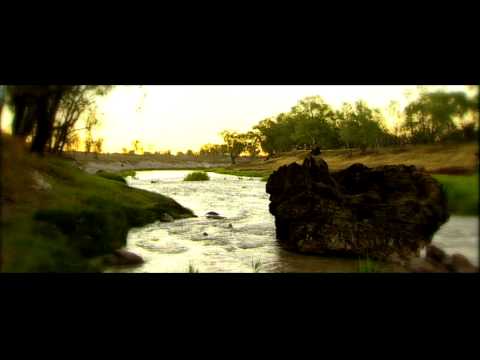
Despite his efforts, the black fish ultimately escaped, but in doing so, it helped Baiame create the mighty river that flows as far as the eye can see. For a time, life was good for the people, but then the Big Dry set in.
The sun scorched the earth, and the waters began to shrink, leading to a famine. Without water, there was no food or animal life, and the people faced dire circumstances. Recognizing the plight of his people, Baiame returned to Bwar with his two sons. Together, they scattered large stones and dug up boulders, arranging them into the pattern of a great fish net, known as the nunu.
Despite their efforts, the water was still absent. That evening, the people gathered on the riverbank to hold a big crowberry for Baiame and his sons. Baiame demonstrated to the elders how to call for rain. For hours, the ground rumbled under the old men’s stamping feet, kicking up dust that rose high into the sky. Exhausted, they eventually fell to the ground.
While they slept, the dust clouds drifted higher, swirling around Baro, the moon. The moon filled these clouds with rain, which began to pour down for days. The people watched as the water rushed into the Gangra, covering Baiame's stone fish traps, the nunu.
When the rain stopped and the floodwaters receded, the fishermen, known as the Hippies, saw the fins and mouths of thousands of fish in the water. Overjoyed, they rushed into the river and drove the fish into the nunu. The Hippies caught many fish with their sticks and spears, and among them, they heard one fish grunt like a wounded animal. To their surprise, it was Baiame's black fish, which still grunts today when caught.
Once again, Briara had plenty of water, and the story of how the nunu, Baiame's stone fish traps, came to be is a vital part of the cultural heritage of the Indigenous people. This Dreamtime story is not just a tale of the past; it is a legacy to be passed on to children and future generations, ensuring that the connection between the land and its people endures.