This article explores how early Greek philosophy, particularly through figures like Pythagoras and Parmenides, laid the foundations for Western esotericism alongside rationalism and logic. It challenges the traditional narrative of philosophy's origins by highlighting mystical, initiatory, and occult elements embedded in early philosophical traditions, such as Pythagorean numerology and the concept of the soul's transmigration.
The history we choose to tell and how we tell it often reflects the stories we want to believe about ourselves. This is especially true in the history of philosophy. The common narrative portrays Western philosophy as a tradition rooted in rationalism, skepticism, democracy, and analytical thought, tracing a continuous chain of values back to antiquity. But is this story entirely accurate? When we examine the early origins of philosophy closely, the picture is more complex.
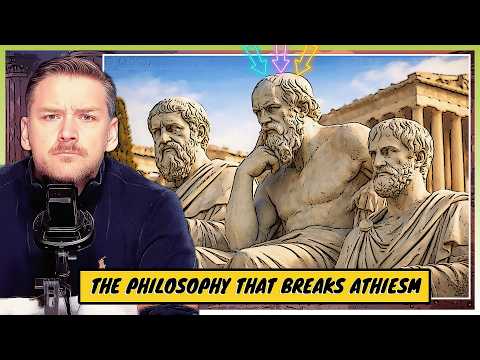
This article explores how mystical insight, magic, and occult initiation were foundational alongside logic, democracy, and rationalism in early Greek philosophy. We focus on two key figures: Parmenides and Pythagoras, whose ideas contributed to the development of Western esotericism.
Typically, the history of philosophy is told as a progression from mythos to logos. Before the 6th century BCE, myth dominated human understanding, with gods seen as the origin and arbiters of reality. Then came the so-called "Greek Miracle," where rational thought, philosophy, science, and democracy supposedly triumphed over irrational myth.
However, this narrative is somewhat simplistic and Eurocentric. It often ignores the intellectual contributions of ancient civilizations like Egypt and Mesopotamia. Many philosophers today are unaware of these earlier traditions or dismiss them because they do not fit neatly into the framework of logic and rationalism.
While the breakthroughs in naturalism, physics, metaphysics, ethics, and logical argumentation in ancient Greece are undeniable, focusing exclusively on these aspects overlooks an important, more arcane side of early Greek philosophy. This esoteric dimension forms part of the foundation for Western esotericism.
Parmenides is known for introducing the concept of revelatory initiation or gnosis, a form of mystical insight that transcends ordinary rational understanding. His philosophy suggests that true knowledge comes from an inner revelation, a theme that resonates with esoteric traditions emphasizing initiation and secret wisdom.
Though this article focuses more on Pythagoras, Parmenides' role in shaping esoteric philosophy is significant and will be explored further in subsequent discussions.
Most people recognize Pythagoras of Samos for the Pythagorean theorem, though the mathematical relationships known as Pythagorean Triplets were documented centuries earlier in Mesopotamia and Egypt. What is less known is that Pythagoras was among the first to call himself a philosopher and founded a mystical monastic order.
He introduced the concept of reincarnation (metempsychosis) into Western thought and established initiatory religious communities where mathematical, spiritual, and philosophical teachings were revealed progressively to initiates.
Details about Pythagoras' early life are shrouded in legend and mystery, making it difficult to separate fact from myth. He flourished in the early 5th century BCE in Southern Italy, an area with many Greek colonies. He likely traveled extensively around the Mediterranean, including Egypt and possibly Mesopotamia, absorbing advanced mathematical and spiritual ideas.
While the Greeks had notions of a disembodied soul, Pythagoras appears to have transformed this idea by asserting that the soul is the seat of personality and persists after death, migrating from life to life. This doctrine of reincarnation was a significant departure from earlier Greek beliefs and may have been influenced by Egyptian concepts of the soul.
Pythagoras founded communities with strict ritual laws emphasizing purity. Members were vegetarians, avoided eating beans, refrained from standing on their fingernail clippings, and would not urinate facing the sun, among other practices. These rules underscored a spiritual discipline integral to their philosophical and mystical pursuits.
The core Pythagorean doctrine, "Panta arithmos," means "all is number." Although our earliest sources, like Aristotle, were opponents and non-initiates, the Pythagoreans believed that nature's phenomena—from celestial movements to musical harmonics—were unified by hidden mathematical relationships.
They viewed space and time as fundamentally mathematical and geometrical, constructed from points, lines, figures, and solids, all flowing through infinite time. This perspective bridges the gap between mathematics describing reality and mathematics constituting reality itself.
One of the most significant Pythagorean contributions to esotericism is the Tetractys, a triangular figure composed of ten points arranged in four rows. It symbolizes the decimal system and embodies fundamental arithmetic and geometric principles.
The Tetractys likely represents a complex set of secret mathematical and mystical doctrines, making it perhaps the earliest esoteric symbol in Western tradition. It has influenced countless occult and mystical systems throughout history.
The early history of Western philosophy is not solely a story of rationalism and logic triumphing over myth. Instead, it includes a rich esoteric tradition rooted in mystical initiation, numerology, and spiritual doctrines. Figures like Pythagoras and Parmenides exemplify this dual heritage, blending rational inquiry with occult insight.
Understanding this esoteric dimension enriches our appreciation of philosophy's origins and challenges the simplistic narratives often taught. It reveals that the foundations of Western thought are as much about mystery and initiation as they are about reason and democracy.
This exploration invites further study into other early philosophers and the esoteric traditions they influenced, highlighting the complex interplay between rationalism and mysticism in the development of Western intellectual history.
This article is part of a series exploring the arcane side of history, philosophy, and religion.