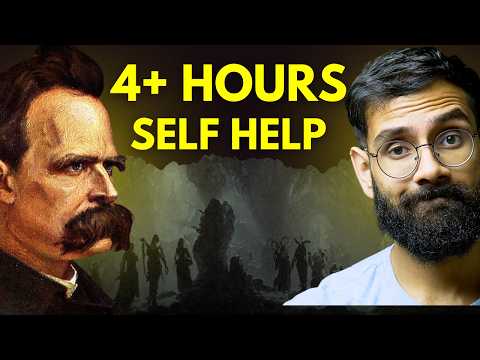
This blog post explores Friedrich Nietzsche's views on science and its limitations in providing true meaning, emphasizing that while science describes the world, it does not explain its ultimate purpose, urging a critical examination of knowledge itself.
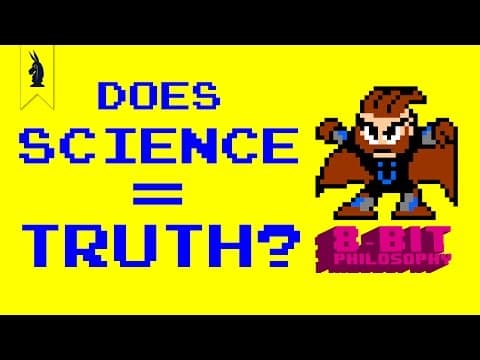
Science is often hailed as humanity's greatest tool for understanding the world around us. However, the question arises: does science lead us to truth? This inquiry is at the heart of the thoughts of German philosopher Friedrich Nietzsche, who, despite being an enthusiast of science, recognized its inherent limitations.
Nietzsche argued that while science excels at describing the world, it falls short of explaining it. For instance, when science explains why fire burns, it might describe the process as an exothermic reaction between a combustible material and oxygen. This explanation provides a detailed account of how fire operates, but it does not address the deeper question of why fire exists in the first place.
This distinction is crucial: science can articulate the mechanics of phenomena but does not delve into the meaning behind them. As a result, despite the advancements in scientific understanding, humanity remains largely in the dark regarding the ultimate significance of existence.
Nietzsche, known for his provocative declaration that "God is dead," does not critique science in favor of religion. Instead, he highlights a profound dilemma: while religion seeks to provide answers to questions of meaning, the achievements of science have cast doubt on traditional beliefs. Science attempts to fill the void left by the decline of religious explanations, yet it cannot fulfill this role. Nietzsche asserts that science lacks consideration for ultimate purposes, which leaves a gap in our understanding of meaning.
One of Nietzsche's concerns is that many people fail to recognize the limitations of science. Instead, they elevate it to a status akin to a new religion, treating it as an objective authority in a godless age. This phenomenon is evident in popular culture, where phrases like "And that is a scientific fact" or "Proven by real science" are commonplace. Such statements reflect a tendency to evangelize science, blurring the lines between empirical evidence and dogma.
Nietzsche challenges us to think critically not only about religion but also about knowledge itself. He warns against the dangers of worshipping knowledge for its own sake, suggesting that this mindset can lead to dire consequences. He famously stated, "man shouldn't be the servant of knowledge. Knowledge should be the servant of man." This perspective encourages a more nuanced relationship with knowledge, advocating for its use as a tool to enhance human experience rather than a master that dictates our understanding of the world.
In conclusion, while science is an invaluable tool for describing the world, it is essential to recognize its limitations in providing ultimate truths or meanings. Nietzsche's insights remind us to approach knowledge with a critical eye, ensuring that it serves humanity rather than enslaves it. As we navigate the complexities of existence, embracing this philosophy may lead to a deeper understanding of both science and the human experience.