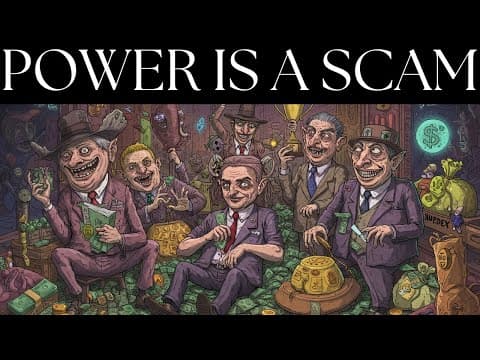
This blog post explores the unsettling reality that ruthless individuals often achieve success and power, drawing on Nietzsche's concepts of master morality and slave morality. It discusses the nature of power, the psychological traits that predict success, and the importance of balancing integrity with strategic thinking in a competitive world.
Imagine a room full of people, all striving for success. Some play fair, work hard, and stay true to their values, while others lie, manipulate, and trample over anyone in their way. Yet, it is often the ruthless ones who climb the highest. This raises an uncomfortable question: is the world truly rigged in favor of the worst among us?
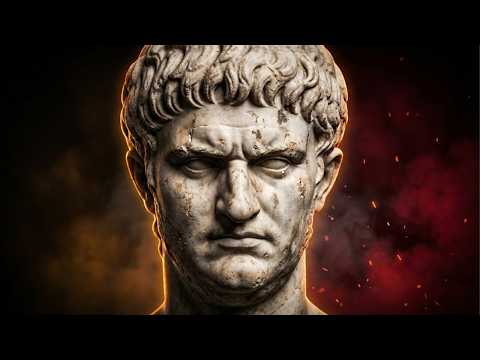
Throughout history, we see examples of individuals who, despite their lack of morality, have achieved extraordinary power. From ruthless emperors to cutthroat CEOs, the pattern repeats itself. This is not merely a coincidence; it is a feature of human nature, deeply embedded in our evolutionary psychology and social structures. In a world where resources are scarce, competition is inevitable. Those who hesitate or seek fairness often find themselves left behind, while those willing to exploit, deceive, and dominate rise to the top.
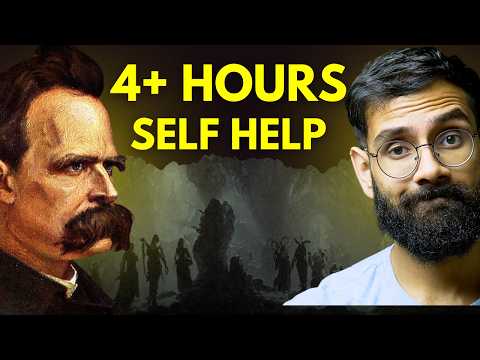
This harsh reality forces us to confront the question: is morality a weakness in the game of power? While the worst people often succeed in the short term, history is also filled with stories of their downfall. The question is not just why they rise, but whether their success is sustainable. Friedrich Nietzsche viewed power as an undeniable force of life, neither good nor evil, but simply a truth of existence.
To understand why the worst people succeed, we must delve into Nietzsche's controversial ideas of master morality versus slave morality. Imagine two warriors on a battlefield: one is strong, decisive, and fearless, while the other is hesitant, seeking external validation and fairness. Which of these two is more likely to survive and rule?
Nietzsche argued that morality itself is not a universal truth but a creation of power struggles throughout history. Master morality is the morality of the strong—the rulers and conquerors—based on values like strength, courage, ambition, and power. To the masters, what is good enhances their ability to dominate and assert their will. They do not seek approval; they define their own worth.
In contrast, slave morality is the morality of the oppressed, glorifying humility, obedience, and self-sacrifice. It teaches that suffering is noble and that power is inherently evil. Nietzsche saw this as a psychological adaptation that allowed the powerless to survive in a world controlled by the strong. However, slave morality does not prevent the rise of the ruthless; it enables it by condemning ambition and shaming the pursuit of power.
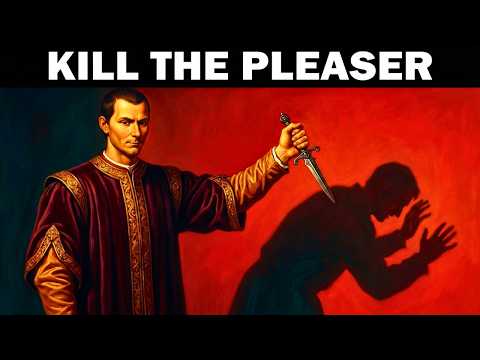
In a world where hesitation equals defeat, the results are inevitable. Those who rise to power often share a defining trait: ruthlessness. This does not necessarily mean cruelty, but rather the ability to act decisively, unburdened by hesitation or guilt. Psychologists have studied traits that predict success in competitive environments, revealing patterns of high ambition, low sensitivity to fear, and a reduced sense of empathy for those in the way.
Consider historical figures like Julius Caesar or modern business moguls. The pattern is clear: hesitation is a liability, and power is taken, not given. The strong do not wait for permission; they step forward, take risks, and face consequences later.
However, ruthlessness alone is not enough. Those who wield power without wisdom often face spectacular downfalls. A leader who rules through fear will eventually be consumed by the very forces they once controlled. History is littered with tyrants who believed they were invincible until they weren't.
Does this mean that morality and fairness are doomed to fail? Not necessarily. To understand why, we must challenge the illusion of fairness that permeates modern society. From childhood, we are told that the world is fair, that good people are rewarded, and that justice will prevail. Yet, as we step into reality, a brutal contradiction emerges: the hardest workers are not always the wealthiest, and the most honest do not always lead.
This disconnect is not a flaw in the system; it is the system. The idea of fairness is a social construct, a narrative designed to maintain order rather than reflect reality. Power and success are not handed out based on merit alone; they are taken, fought for, and often hoarded by those who understand the game better than others.
Psychological research reveals the just world fallacy—the tendency to believe that life is inherently fair and that people get what they deserve. This belief is dangerous because it encourages passivity. If we assume that goodness alone will lead to success, we risk ignoring the realities of competition, strategy, and power. While we wait for justice, those who do not share our illusions are already moving forward.
Should we abandon all principles in the pursuit of power? Not quite. The key is to understand the game without becoming a slave to it. Those who suffer the most are often those who believe that simply playing nice will be enough. However, those who learn to balance integrity with strategic thinking—combining kindness with strength—are the ones who rewrite the rules.
Nietzsche pointed to a higher ideal: the Ubermensch, or Overman. This individual rises beyond morality, illusions, and limitations. They forge their own path and redefine power on their own terms. The Ubermensch embodies the will to power, embracing their deepest instincts to create and transform, imposing meaning upon a meaningless world.
Unlike tyrants who seek power out of insecurity, the Ubermensch does not need validation. Their strength comes from within, independent of external approval or fleeting success. They build rather than take, creating value that makes them indispensable.
So, how do we navigate a world that rewards the ruthless while refusing to become one of them? The answer lies in understanding power not as a weapon but as a tool. In a high-stakes game where the rules are written by those who play to win at any cost, hesitation leads to loss. The mistake most people make is believing they only have two choices: be ruthless or be a victim. There is a third path that blends strategic thinking with integrity.
One of the biggest weaknesses people have is their belief that life should be fair. It shouldn't; it never was. The strongest competitors accept this early on. They learn the rules of the game and use them to their advantage. This does not mean abandoning ethics; it means recognizing that power is neutral and those who understand it wield it best.
Strategic empathy allows individuals to read people deeply, recognizing motives and anticipating moves. This enables navigation through deception without becoming deceptive themselves. Most people are controlled by fear—fear of failure, rejection, or standing alone. The Ubermensch, however, develops internal power, embracing discomfort and taking risks.
The ruthless often rise fast but fall hard because their power is built on exploitation, not creation. The true Ubermensch builds—whether a business, an idea, a movement, or personal transformation. When you create value, your power is earned, not stolen.
Can you succeed in a world that rewards the ruthless? Absolutely, but only if you stop playing by the old rules. Stop expecting fairness and start mastering power on your own terms. Power itself is not inherently evil; it is a tool that, when wielded by a person of integrity, can lead to unimaginable greatness. Nietzsche challenges us to rethink power—not as something to fear, but as something to master through discipline, strength, and an unwavering commitment to becoming more than we are today.