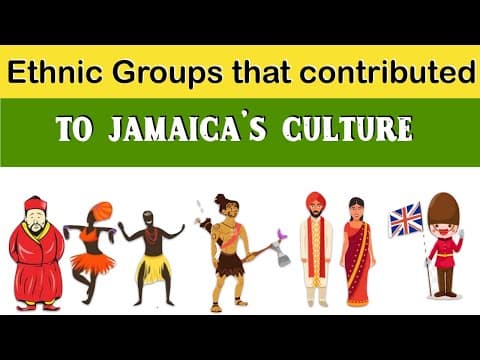
Jamaica's culture is a vibrant blend shaped by various ethnic groups including the Tainos, Spanish, British, Africans, Indians, Chinese, and Syrians. Each group has contributed unique elements to the island's cuisine, language, traditions, and social structure, creating a rich cultural mosaic.
Jamaica's culture is a vibrant blend shaped by various ethnic groups that have settled on the island over centuries. This article explores the significant contributions made by the Tainos, Spanish, British, Africans, Indians, Chinese, and Syrians to Jamaica's unique cultural identity.
The Tainos were the first inhabitants of the Caribbean, arriving approximately four thousand years ago. They settled mainly in the Greater Antilles and named Jamaica "Yamane," which translates to "land of wood and water." Their influence is still felt today, particularly in Jamaican cuisine, where they contributed dishes such as pepper pot soup and barbecue sauce. Additionally, they introduced the use of hammocks, which remain popular in Jamaica.
The Spanish arrived in Jamaica in May 1494 and significantly impacted the island's culture. They introduced a variety of foods, including sugarcane, bananas, oranges, figs, lemons, plantains, and coconuts. The Spanish also brought animals such as horses, sheep, and cows, which transformed local agriculture and transportation.
They were responsible for naming several places in Jamaica, including Ocho Rios, Rio Grande, Morant Bay, and Santa Cruz. Furthermore, the Spanish introduced their language and religion, specifically Roman Catholicism, and constructed notable infrastructure like the Flat Bridge.
The British colonized Jamaica in 1655 and ruled for over 300 years. Their influence is evident in various aspects of Jamaican life. They introduced foods such as Christmas cakes, June plums, patties, and various spices, enriching the local cuisine. The British also brought sports like football, cricket, and netball, which are now integral to Jamaican culture.
The education system in Jamaica is based on the British model, and the political framework follows the Westminster system of government, reflecting the lasting impact of British colonial rule.
Africans were brought to Jamaica primarily as laborers on sugar plantations starting in 1513. Their arrival marked a significant diversification of Jamaican cuisine, introducing dishes like dukuno, fufu, and mackerel run down. African cultural practices also influenced local music and dance, with styles such as Chankunu emerging.
Traditional African dress, including cornrows and tie heads, has become a part of Jamaica's cultural identity, showcasing the rich heritage brought by African ancestors.
Indians began arriving in Jamaica in 1845 as indentured servants on sugar plantations. They introduced several plants and trees, including cool plum, mango, and jackfruit, which have become staples in Jamaican cooking. The introduction of spices like curry powder has also enriched the local cuisine.
Culturally, the Indians brought the celebration of Diwali and the bandana fabric, which is now used as part of Jamaica's national costume. Their innovative farming methods, particularly in rice cultivation, have had a lasting impact on Jamaican agriculture.
The Chinese have a long-standing presence in Jamaica, contributing significantly to the island's culture. They introduced culinary staples such as soy sauce and sweet and sour chicken, which have become integral to Jamaican cuisine. The Chinese community is also known for their vibrant celebrations, including dragon and lion dances.
In politics, Chinese Jamaicans have played important roles, with notable figures like Rose Leon and Delroy Chuck serving in government. Additionally, they have influenced the music scene, particularly reggae, with the establishment of VP Records by Vincent Chin and his wife Patricia, which helped launch the careers of artists like Sean Paul and Beenie Man.
The Syrian and Lebanese communities have made significant contributions to Jamaica's business landscape. Their entrepreneurial spirit has helped shape the local economy, establishing businesses that have become integral to Jamaican society.
Jamaica's culture is a rich tapestry woven from the contributions of various ethnic groups. Each group has left an indelible mark on the island's cuisine, language, traditions, and social structures, creating a unique cultural identity that continues to evolve. Understanding these contributions helps appreciate the diverse heritage that defines Jamaica today.