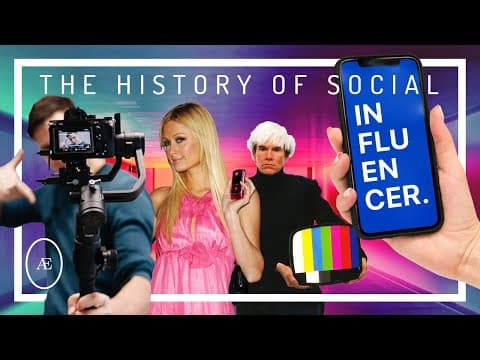
This blog post explores the historical context and cultural significance of social media influencers, tracing their roots from historical figures to modern-day content creators, and examining the impact of influencer culture on society, beauty standards, and personal identity.
In today's digital age, social media influencers have become a significant part of contemporary culture. With the rise of platforms like Instagram, TikTok, and YouTube, we are constantly exposed to a plethora of self-appointed experts in various fields, from makeup tutorials to fitness coaching. This blog post aims to delve into the cultural and historical context of influencers, exploring their origins and the implications of their presence in our lives.
The influencer market was valued at $3 billion in 2017 and was projected to grow to $9.7 billion by 2020. This statistic highlights that influencer culture is not merely a trend but a substantial segment of the economy. Furthermore, the impact of influencers extends beyond financial metrics; they significantly shape our perceptions of beauty standards and can negatively affect mental health.
A 2019 Harris survey revealed that the top career aspiration among children in the US and UK was to become a content creator, surpassing traditional professions like doctor or lawyer. This shift in aspirations reflects the allure of influencer culture, which often appears fun and accessible.
According to Google, a social media influencer is someone who has established credibility in a specific industry and can persuade others through their authenticity and reach. The term "influencer" has historical roots, with its first recorded use dating back to 1662. Throughout history, many figures have wielded influence, from political leaders to artists, often intertwining influence with power and fame.
One of the earliest examples of a social influencer is Beau Brummell, a 19th-century British figure known for his impeccable style and grooming. Brummell's influence on men's fashion was so profound that tailors would create garments for him free of charge to advertise their work to high society. His ability to dictate fashion trends makes him a precursor to modern influencers.
Another historical figure, Rasputin, rose from obscurity to become a significant influence in the Russian Empire. His charisma and spiritual persona allowed him to manipulate the Empress, ultimately contributing to the fall of the Russian Empire. Like modern influencers, Rasputin understood the power of self-presentation and leveraged it for social mobility.
Historically, sex has also played a role in gaining influence. Figures like Madame de Pompadour, the mistress of King Louis XV, used their relationships to secure power and patronage in the arts. This notion that "sex sells" has persisted through history, influencing how individuals navigate social landscapes.
The concept of self-presentation is not new. Historically, individuals have sought to document and curate their identities through various means. Matthaus Schwarz, a 16th-century German merchant, created a book titled "Klaidungsbüchlein," which meticulously documented his outfits over 40 years. This early form of self-documentation mirrors the curated feeds we see on social media today.
Images have long been a tool for self-perception and social currency. The tradition of commissioned portraits in the Baroque era allowed individuals to present idealized versions of themselves. This practice has evolved into the modern phenomenon of social media, where individuals curate their lives for public consumption.
The rise of reality television in the early 2000s, exemplified by figures like Kim Kardashian, marked a shift towards broadcasting personal lifestyles. This trend can be traced back to the courts of Louis XIV, where public life was meticulously curated and performed. The desire to be seen and to witness others has deep historical roots, shaping our current obsession with influencer culture.
The intertwining of lifestyle and consumption has been a hallmark of modern society. In the 1950s, consumption was promoted as a patriotic duty in the US, leading to a culture of consumerism that Andy Warhol famously critiqued. Warhol's work blurred the lines between celebrity and consumer goods, emphasizing how identity is often tied to consumption.
The advent of the internet has democratized fame, allowing anyone with a smartphone to become an influencer. This shift has transformed attention into a form of currency, where individuals can monetize their lifestyles through social media. However, this phenomenon raises questions about authenticity and the pressure to maintain a curated image.
French theorist Guy Debord's concept of the "Society of the Spectacle" critiques how modern society prioritizes representation over authenticity. Debord argues that our social relations are mediated by images, leading to a culture where appearances often overshadow reality. This critique is particularly relevant in the context of social media influencers, who may prioritize curated identities over genuine self-representation.
The phenomenon of social media influencers is deeply rooted in cultural history, reflecting a long-standing human desire for identity and recognition. From Beau Brummell to modern content creators, the quest for influence has evolved but remains fundamentally tied to self-presentation and societal perceptions.
As we navigate this complex landscape, it is essential to remain vigilant about the implications of influencer culture on our lives and mental health. Ultimately, the journey of self-discovery and representation is a shared human experience, reminding us to find our identities and express them authentically in a world that often prioritizes the spectacle over substance.