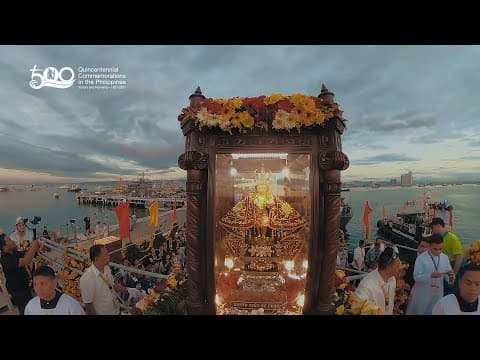
The Santo Niño, a representation of the child Jesus, plays a significant role in the cultural and historical landscape of the Philippines, symbolizing the fusion of indigenous beliefs and Catholicism since the arrival of Spanish explorers in the 16th century. This blog explores its origins, significance, and the enduring devotion surrounding this beloved figure.
The Santo Niño, or the Child Jesus, holds a profound place in the hearts of many Filipinos, symbolizing not only religious devotion but also the rich tapestry of cultural history in the Philippines. This blog post delves into the origins, significance, and enduring legacy of the Santo Niño, tracing its journey from the arrival of Spanish explorers to its current status as a cherished figure in Filipino culture.
In 1521, Ferdinand Magellan and his crew arrived in the Philippines after a grueling trans-Pacific voyage. They faced severe hardships, including hunger and scurvy, prompting them to anchor near the island of Homonhon. This marked the beginning of a significant chapter in Philippine history, as it was during this time that the first mass was celebrated on Easter Sunday, March 31, 1521, in Limasawa. This event was attended by local chieftains, including Raha Columbo, who requested the erection of a cross to signify the introduction of Christianity to the region.
Magellan's interactions with local leaders were pivotal in the spread of Christianity. He promised to ally with them against their enemies, offering protection and the promise of becoming the supreme chief if they converted to Christianity. This led to the conversion of Raha Humabon, who accepted Spanish sovereignty and baptism, although the depth of this conversion was questionable due to the lack of catechism at the time.
The Santo Niño's significance grew when it was introduced to the local population. Juana, the wife of Raha Humabon, was particularly taken by the Santo Niño, which resembled the diwatas, or local deities, in her household. This connection made it easier for the locals to embrace the Santo Niño, as it represented a familiar and accessible image of divinity. Magellan's demonstration of the Christian God’s power through miracles further solidified the Santo Niño's place in local belief systems.
In 1565, the image of the Santo Niño was rediscovered in Cebu by Spanish explorer Miguel López de Legazpi. The image, preserved in a pine box, was recognized for its resemblance to European religious art, particularly from Flanders. This discovery led to the establishment of the Basilica del Santo Niño, where the image is now housed, and the initiation of the annual feast celebrating its discovery.
The Santo Niño is not just a religious icon; it embodies the fusion of indigenous beliefs and Catholicism. The image's size and childlike form resonate with the Filipino people's affection for children, making it a relatable figure. The devotion to the Santo Niño has evolved, with various festivals and celebrations, particularly in Cebu, where the Sinulog Festival honors the Santo Niño with vibrant parades and religious ceremonies.
The Santo Niño continues to be a central figure in Filipino spirituality, representing hope, healing, and protection. Its image is often dressed in various attires, reflecting the diverse professions and aspirations of the Filipino people. The Santo Niño's accessibility and the personal connection many Filipinos feel towards it highlight a unique aspect of Filipino Catholicism, which blends traditional beliefs with Christian practices.
The Santo Niño stands as a testament to the rich cultural and historical narrative of the Philippines. From its introduction by Spanish explorers to its current status as a beloved figure, the Santo Niño encapsulates the enduring spirit of the Filipino people. Its significance transcends mere religious devotion, representing a unique blend of faith, culture, and identity that continues to thrive in the hearts of millions.