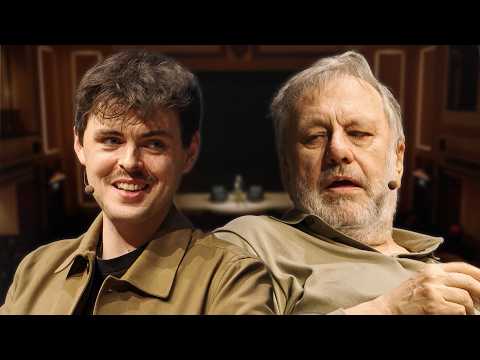
Robert Sapolsky argues that free will is an illusion, rooted in our biological and environmental history. He critiques the philosophical notion of free will, emphasizing that our decisions are deeply influenced by genetics, upbringing, and societal factors, challenging the foundations of morality and justice in our society.
In a thought-provoking discussion, Robert Sapolsky presents a compelling argument against the concept of free will, suggesting that we are merely biological machines shaped by a complex interplay of genetics, environment, and history. This article delves into his insights, exploring the implications of rejecting free will on our understanding of morality, justice, and personal responsibility.
Sapolsky begins by addressing the contentious definition of free will, particularly in contrast to the views of philosophical compatibilists. These individuals argue that free will can coexist with a materialistic understanding of the universe. However, Sapolsky insists that any argument for free will ultimately relies on a flawed premise, which he describes as a "magical step of nonsense."
When examining behavior, Sapolsky emphasizes the need to consider a multitude of factors:
He argues that to claim free will, one must demonstrate that a behavior could occur independently of all these influences. In other words, if altering any of these factors still results in the same behavior, then free will could be said to exist. However, Sapolsky contends that this is impossible to prove, as our actions are inextricably linked to our history.
Sapolsky critiques the common belief that while we may lack control over certain biological traits, we still possess the ability to choose how to respond to them. This perspective creates a false dichotomy between inherent attributes and the choices we make. He argues that even our responses to our circumstances are rooted in biology, particularly in the functioning of the frontal cortex, which governs decision-making and self-control.
A striking point made by Sapolsky is the influence of socioeconomic status on brain development. Research indicates that children from lower socioeconomic backgrounds often exhibit differences in frontal cortex development by age five, largely due to elevated stress hormone levels. This early disadvantage can significantly impact their ability to make decisions later in life, further complicating the notion of free will.
The rejection of free will has profound implications for our understanding of morality and justice. Sapolsky argues that if free will does not exist, then concepts such as blame, punishment, and reward become meaningless. He challenges the foundations of the legal system, which often relies on the assumption that individuals have the capacity to choose their actions freely.
Sapolsky advocates for a radical rethinking of how we view personal responsibility. If we accept that no one is truly entitled to better treatment based on their circumstances, we must confront the hypocrisy inherent in our societal structures. He suggests that hating individuals for their actions is as irrational as blaming a virus for its behavior, as both are products of their biological and environmental contexts.
In conclusion, Robert Sapolsky's arguments against free will challenge deeply held beliefs about personal agency and responsibility. By framing humans as biological machines shaped by a myriad of influences, he invites us to reconsider the foundations of morality, justice, and societal treatment of individuals. This perspective not only reshapes our understanding of human behavior but also calls for a more compassionate and equitable approach to how we view and treat one another in society.