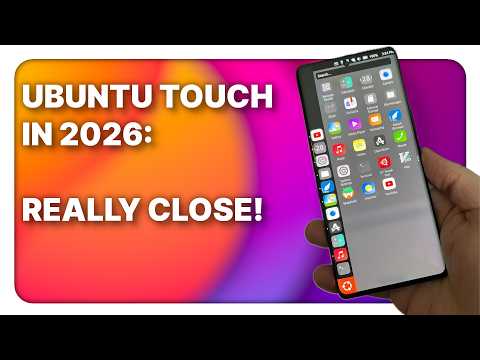
Ubuntu Touch, a community-driven mobile Linux OS, has evolved significantly since 2021. Running on devices like the Volla Phone Quintus, it offers a smooth, polished interface with gesture navigation and regular updates. While default apps are basic and the app ecosystem limited, the integration of Waydroid allows running many Android apps. Ubuntu Touch remains ideal for enthusiasts seeking a privacy-focused, alternative smartphone experience in 2026.
The last time Ubuntu Touch was reviewed was back in 2021. Since then, the operating system has evolved considerably. In 2026, Ubuntu Touch remains one of the smoothest and most accomplished mobile Linux efforts, with a polished user interface and the ability to run some Android apps. This article explores the current state of Ubuntu Touch, its features, usability, and how it fares as a mobile OS in 2026.
Ubuntu Touch was tested on the Volla Phone Quintus, a mid-range Android phone with the following specifications:
The phone is solidly built but tall, which affects one-handed usability, especially with the back button placement in Ubuntu Touch.
Ubuntu Touch is a project nearly 15 years old, originally started by Canonical in 2011 with ambitions for convergence—using a phone as a full computer via docking. After Canonical ceased official development, the community-driven UBports took over, maintaining and updating the OS regularly. Updates are frequent, with releases in February and May 2026, making it a living and actively maintained system.
The Ubuntu Touch interface has remained largely unchanged since its inception:
While the interface is functional and intuitive, some aspects feel dated:
Despite these quirks, the UI is polished, visually appealing with the Yaru theme and squircle icons, and remains competitive with Android and iOS interfaces.
Ubuntu Touch offers a basic but functional settings menu:
The system is designed to be "set-it-and-forget-it," with limited customization options and a focus on stability.
Ubuntu Touch includes essential apps:
The camera performs decently on the Volla Phone Quintus, capturing good photos and videos even in challenging lighting.
However, the default browser is slow, clunky, and lacks an ad blocker, making mobile browsing difficult.
The Open Store provides a limited selection of apps, mostly unofficial web apps for services like YouTube, WhatsApp, and Spotify. These rely on web views and require trusting third-party developers with login credentials.
There is a notable absence of many popular apps, including banking apps, which limits Ubuntu Touch's usability for mainstream users.
Ubuntu Touch is not intended to replace Android or iOS feature-for-feature but serves enthusiasts seeking a privacy-focused alternative.
A significant advancement since 2021 is the integration of Waydroid, which allows running a full Android environment on top of Ubuntu Touch.
sudo waydroid init.Limitations include:
Despite these, many apps run well, including Firefox (a better browser than the default), and some games like Subway Surfers. However, games requiring additional downloads or Google APIs may not work.
Waydroid significantly enhances Ubuntu Touch's app compatibility but is still not a complete replacement for a mainstream smartphone OS.
Ubuntu Touch aims for convergence, allowing the phone to be used as a full PC when connected to a monitor. However, attempts to use this feature on the Volla Phone Quintus with various docks and cables were unsuccessful.
Wireless display features also failed to detect compatible TVs.
While theoretically possible, desktop mode remains unreliable in practice.
Ubuntu Touch supports around 31 devices, including:
Installation is facilitated by an official installer available for Windows, macOS, and Linux (snap, Debian package, AppImage). The installer requires enabling developer mode on the phone.
Support for the latest flagship phones, especially Samsung models, is limited.
Ubuntu Touch is the longest-developed mobile Linux OS, offering a smooth, polished, and visually appealing experience in 2026. Its core interface and gesture navigation remain competitive, though some usability improvements are needed, such as larger fonts and better back button placement.
The default app set is basic but functional, and the integration of Waydroid greatly expands app compatibility by allowing many Android apps to run.
Ubuntu Touch is best suited for enthusiasts and users seeking a privacy-focused, alternative smartphone experience, especially those willing to live without many mainstream apps.
For users needing a full suite of apps and seamless ecosystem integration, Ubuntu Touch may not yet be a practical daily driver.
If you are interested in trying Ubuntu Touch, check the supported devices list and use the official installer to flash your phone.
Overall, Ubuntu Touch in 2026 is a mature, actively maintained OS with a passionate community, offering a unique mobile experience that continues to improve.
Thank you for reading this comprehensive review of Ubuntu Touch in 2026. Whether you are a Linux enthusiast or simply curious about alternative mobile operating systems, Ubuntu Touch presents an intriguing option worth exploring.